






Serpentine Swing Mirror
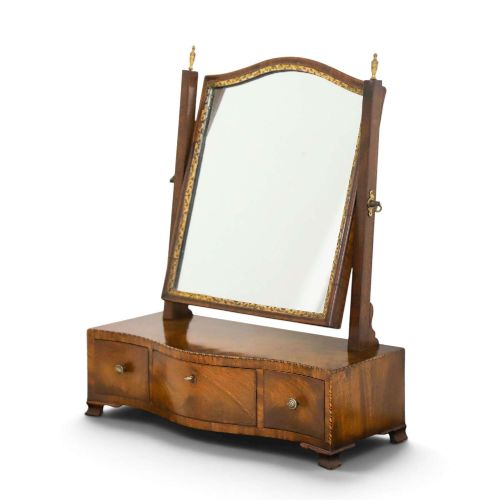
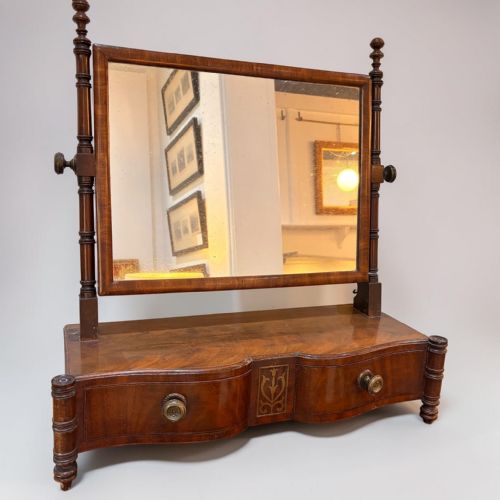
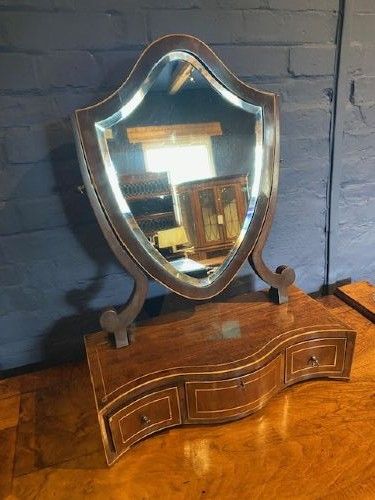
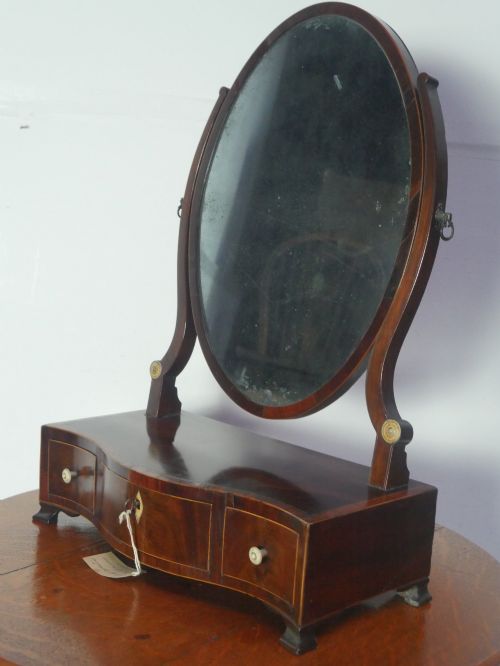
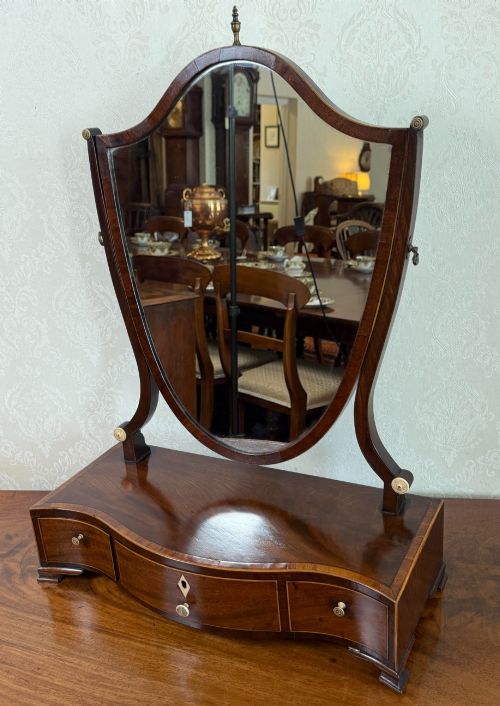
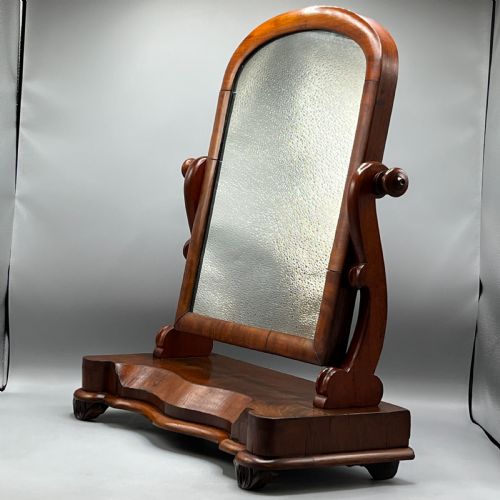
A serpentine swing mirror brings subtle curves and rich mahogany timber to the dressing table.
Serpentine Swing Mirror
A serpentine swing mirror sits on a tabletop or dressing table, offering an adjustable glass for grooming and reflection. These pieces feature distinctive undulating front bases that curve outward at the sides and inward at the centre.
Most examples found here date from the Georgian and Victorian periods, constructed primarily in mahogany with pivoting mirror frames. Buyers encounter various base configurations, ranging from simple box frames to those fitted with small drawers for trinkets.
Makers shaped these dressing mirrors in distinct regional and period styles, including George III Sheraton interpretations and later 19th century revivals. The combination of curved woodwork and tilting glass provides both practical utility and decorative elegance.
Materials and construction methods
Cabinet makers relied heavily on solid and veneered mahogany, frequently enhanced by boxwood inlay and decorative stringing along the edges. Brass fittings such as finials, pivot screws and small drawer knobs secure the glass frame and accent the dark timber.
The distinctive serpentine profile requires careful sawing and shaping of the thick wooden base blocks before applying French polish or wax finishes. Mirror glass is set within a pivoting frame supported by upright arms rising from the stepped or shaped plinth.
Serpentine Swing Mirror Retail Price Guide 2026
Typical asking prices for serpentine swing mirror among the pieces listed under this phrase on Sellingantiques today, from the lower quarter to the upper quarter. They describe what is for sale here now, not the wider market.
Listings feature mahogany, brass, boxwood inlay, and mirror glass across Georgian, Regency, and Victorian periods.
Distinctions in craftsmanship
Superior pieces display fluid, harmonious curves across the serpentine front rather than rigid or abruptly cut timber angles. The choice of mahogany grain, particularly flame figure varieties, elevates the visual presence of the mirror frame and base.
Fine construction is evident in the neat dovetailing of the small accessory drawers and the original patination of the brass hardware. The proportion between the swinging glass frame and the supporting base dictates the overall visual balance.
The Serpentine Swing Mirror Glossary
- Serpentine
- A curved furniture front characterised by a convex centre flanked by concave wings, creating an undulating wave shape. This contour requires skilled woodworking to achieve fluid lines.
- Swing mirror
- A tabletop looking glass mounted on vertical pivots that allow the user to tilt the angle of reflection. These frames sit atop dressing boxes or miniature chests.
- Toilet mirror
- A traditional period term for a small dressing table mirror designed to sit on a bureau or low chest. They often incorporate small drawers beneath the main glass frame.
- Boxwood inlay
- Narrow strips of pale contrasting wood inserted into recesses in the darker mahogany surface for decoration. Cabinet makers used this technique to define borders and geometric panels.
- Flame mahogany
- A highly figured wood grain pattern resembling flickering flames, produced by cutting across the branch junctions of the tree. It was prized for principal display surfaces.
Serpentine Swing Mirror: Frequently Asked Questions
What is a serpentine swing mirror?
A serpentine swing mirror is a tabletop dressing glass featuring an undulating curved front base and a tilting frame.
These pieces were designed for bedrooms and dressing rooms to assist with personal grooming.
How do I date these mirrors?
Dating relies on observing timber choices, construction methods like drawer dovetailing, and the specific style of the mirror frame.
Georgian examples tend to show lighter proportions and boxwood stringing, while Victorian pieces often feature heavier flame mahogany.
Where should I place one?
These mirrors suit dressing tables, chest of tops, or sideboards where their compact footprint adds architectural interest.
Ensure the surface is level and stable to support the pivoting weight of the frame.
Are the mirror plates original?
Many older mirrors retain their original mercury or early silvered glass, which often exhibits gentle foxing and age spots.
Replacement glass is sometimes fitted during conservation to restore clear reflection.