

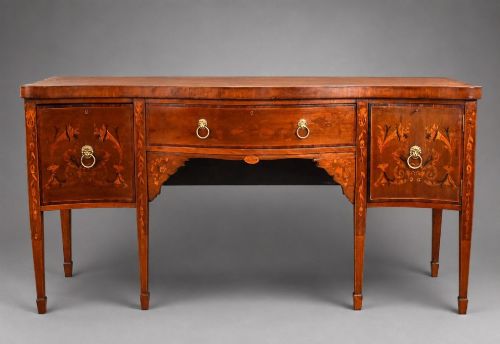
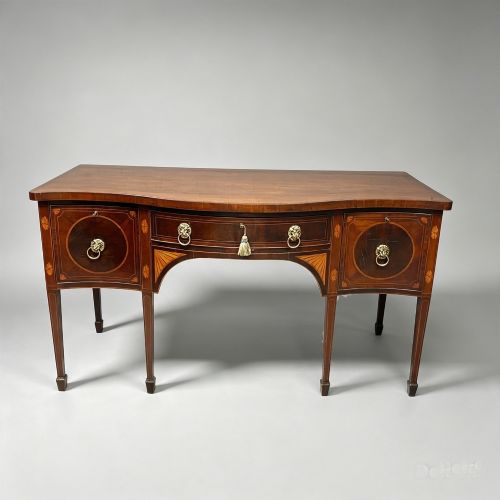
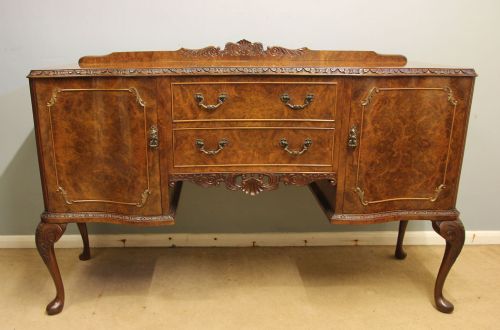
Serpentine Sideboard
A serpentine sideboard brings fluid mahogany curves and formal presence to a dining room, uniting generous storage with Georgian and Victorian craftsmanship.
Serpentine Sideboard
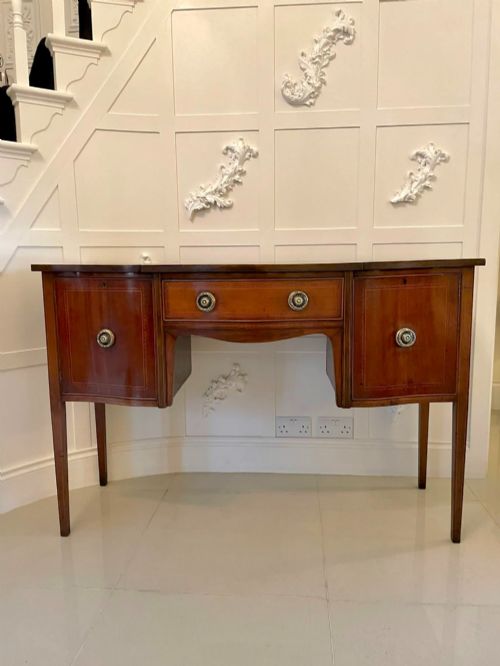
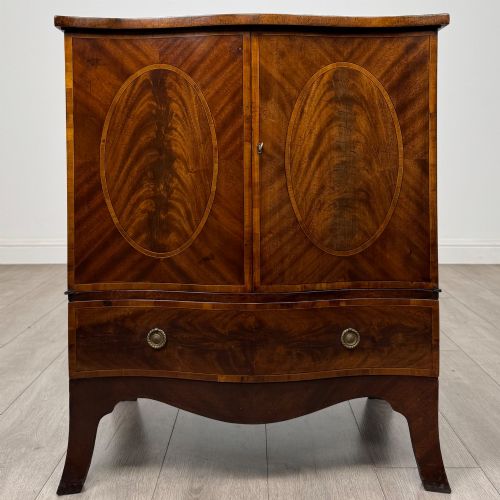
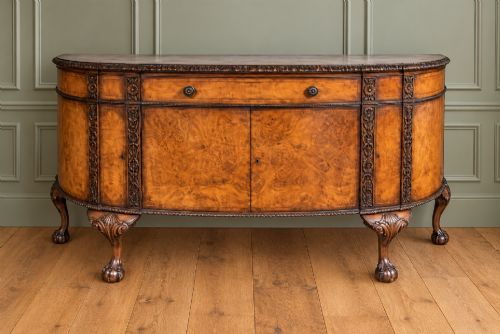
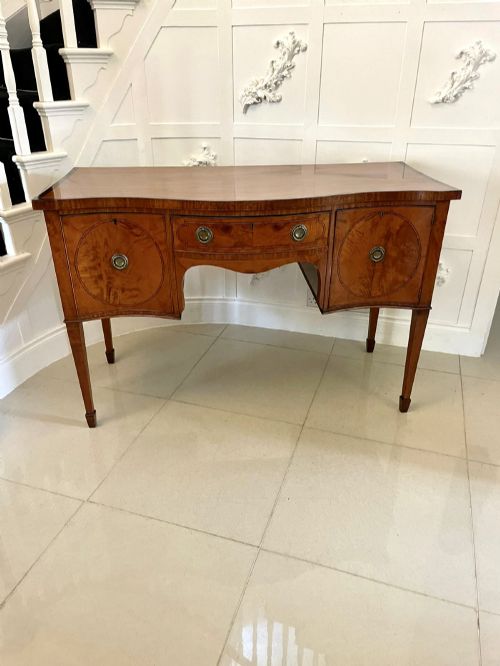
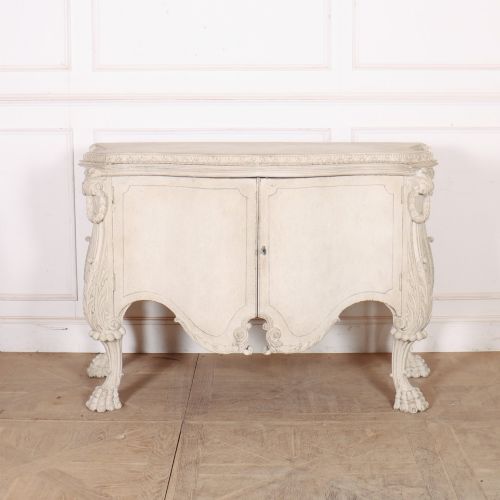
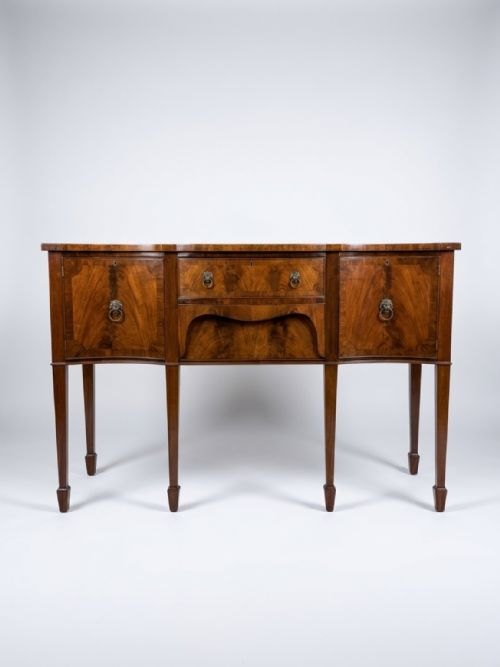
A serpentine sideboard is a substantial dining room storage piece defined by its undulating front, which sweeps outward at the centre and recedes toward the ends. The pieces found on this page span several centuries and design revivals, moving from formal Georgian dining rooms into Victorian parlours and Edwardian drawing rooms.
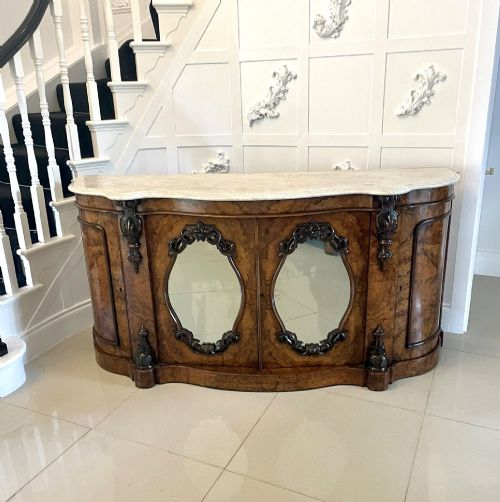
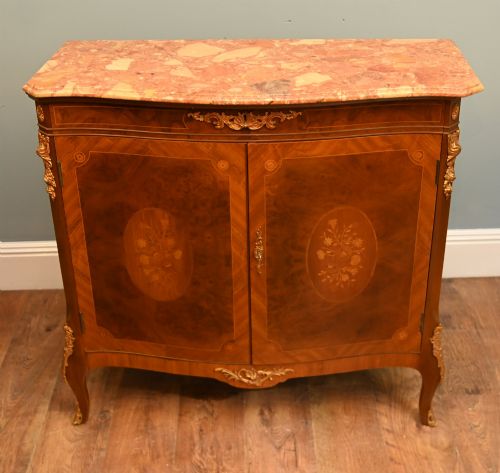
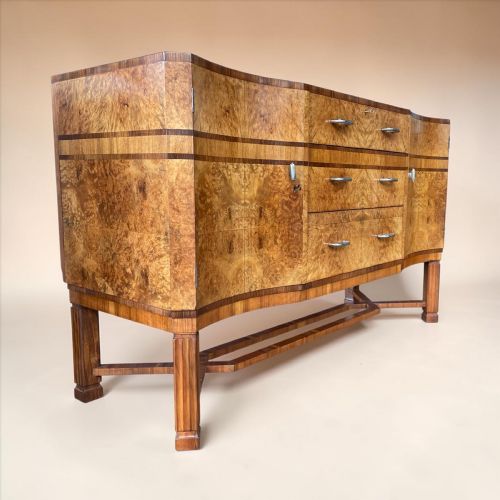
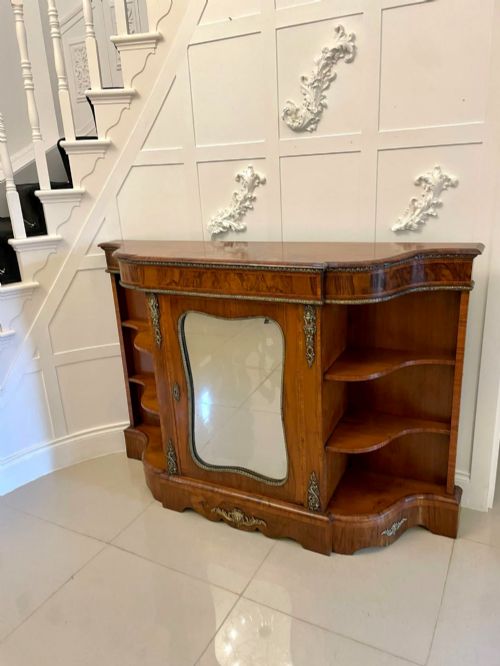
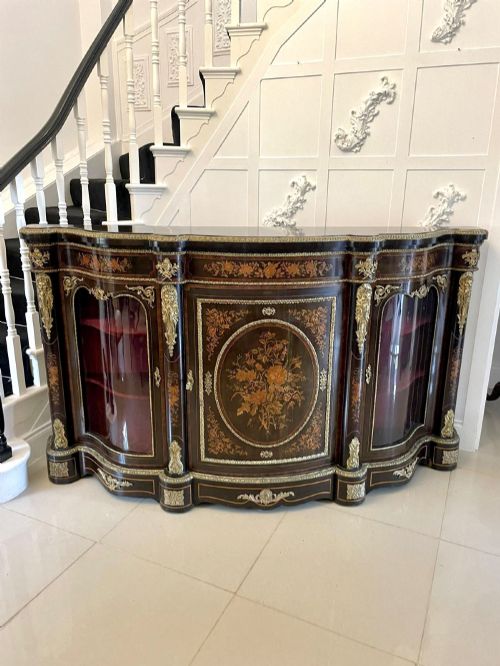
Most examples encountered here are rendered in rich mahogany or burr walnut, often complemented by intricate satinwood inlay or floral marquetry. Alongside traditional sideboards, buyers frequently meet related credenzas, side cabinets, and serving tables that share the characteristic undulating outline.
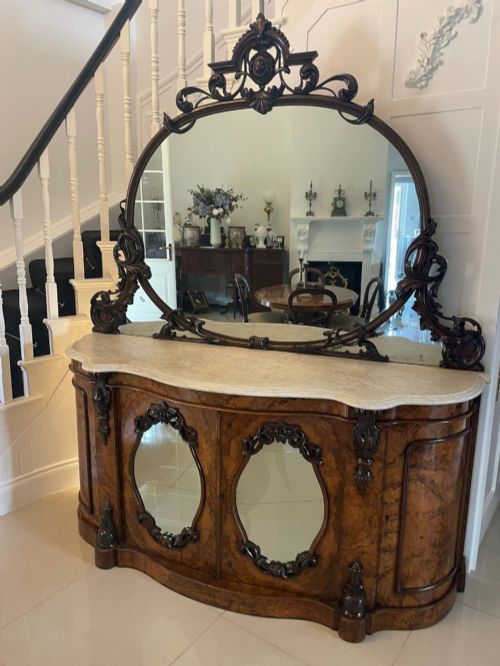
The form developed primarily to provide a graceful serving surface and discrete storage for dining silver and linens while occupying less visual weight than a straight-fronted cabinet. Pieces range from austere George III originals to elaborate Victorian revival iterations fitted with mirrors and ormolu mounts.
Materials and construction
Cabinetmakers constructed these pieces using dense timber carcases overlaid with figured mahogany, burr walnut, or kingwood veneers to create striking surface patterns. The curved fronts required specialist woodworking skill to shape solid timber and bend matched veneers across the undulating facade without splitting.
Metal mounts in brass and ormolu frequently accent Victorian and revival pieces, while inlaid stringing in satinwood and ebony defines the borders of Edwardian and Sheraton revival examples. Marble tops appear on several credenza variants, providing a cool, durable surface above carved wooden bases.
Some serpentine sideboards come accompanied by matching knife boxes, ensuring your cutlery travels in matching architectural style.
Assessing quality and execution
Quality rests in the precision of the timber matching across the curved front and the crispness of any inlaid marquetry or carved detail. Superior examples display continuous grain flow around the undulating contours and employ heavy, well-figured veneers that have been carefully selected by the maker.
The sophistication of the internal framing and the weight of the brass or ormolu mounts also signal a higher grade of production. Pieces intended for exhibition or grand households typically exhibit finer hand-carved mouldings and more complex decorative programs than domestic utility furniture.
Maison Gagneau·Epstein
The Serpentine Sideboard Glossary
- Serpentine
- A curved shape that bends outward in the middle and inward at the sides, creating a wave-like front profile. This contour requires advanced cabinetmaking technique to execute properly.
- Marquetry
- The art of applying decorative pieces of veneer to a structure to form intricate pictorial or geometric designs. Craftsmen use various coloured woods to achieve naturalistic floral patterns.
- Ormolu
- Gilt bronze mounts applied to furniture for decorative effect, prevalent in nineteenth-century cabinet work. These metal elements add brightness and architectural definition to dark timber carcases.
- Credenza
- A low cabinet or sideboard, often featuring glass doors or central cupboards flanked by curved compartments. The form evolved during the Victorian era to display porcelain and decorative objects.
- Burr walnut
- Timber taken from the warted growths on walnut trees, yielding highly figured grain patterns with swirling knots. It commands attention for its rich texture on drawer fronts and cabinet doors.
Serpentine Sideboard: Frequently Asked Questions
What is a serpentine sideboard?
A serpentine sideboard is a large dining room cabinet distinguished by its undulating front, which curves outward centrally and sweeps inward toward the ends. It provides serving space and storage for dining essentials while adding architectural grace to a room.
Craftsmen produced these pieces primarily in mahogany and walnut across the Georgian, Victorian, and Edwardian periods. Their distinctive shape differentiates them from straight-fronted serving tables and standard sideboards.
How do I date a serpentine sideboard?
Dating relies on examining the timber species, construction methods, and decorative motifs such as inlay, hardware, and leg style. Georgian examples often feature straight tapered legs and subtle stringing, while Victorian iterations incorporate heavy burr veneers, marquetry, and ormolu mounts.
Revival pieces from the early twentieth century often copy eighteenth-century proportions but employ machine-cut dovetails and modern finishing techniques. Comparing the secondary woods inside the drawers provides further clues to the manufacturing era.
Where should I place a sideboard?
These pieces suit formal dining rooms, large hallways, or spacious living areas where their curved profiles can be appreciated without obstruction. They function effectively against a primary wall as a serving station or display surface.
Because of their substantial depth and length, measuring the available floor space and clearance for opening drawers or doors is essential before positioning the piece.
How do I care for antique wood?
Maintaining antique mahogany and walnut requires keeping the furniture away from direct sunlight and sudden temperature changes that can dry out the timber and crack veneers. Regular dusting with a soft, dry cloth preserves the polished surface without building up residue.
Applying a traditional beeswax polish occasionally feeds the wood and enhances the natural grain figures. Avoid placing wet items or unsealed planters directly on the timber or marble surfaces.