
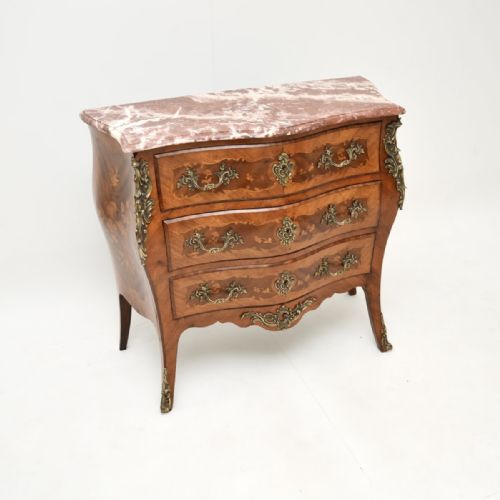

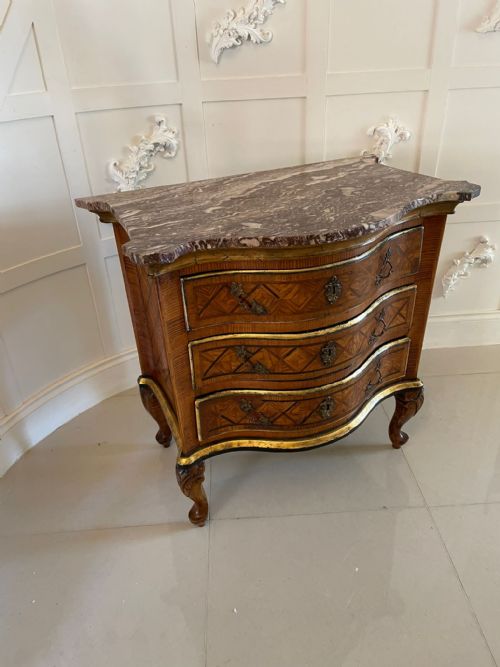

Serpentine Marble Commode
A serpentine marble commode brings sweeping French curves and heavy stone tops together in a storage piece built for formal rooms.
Serpentine Marble Commode
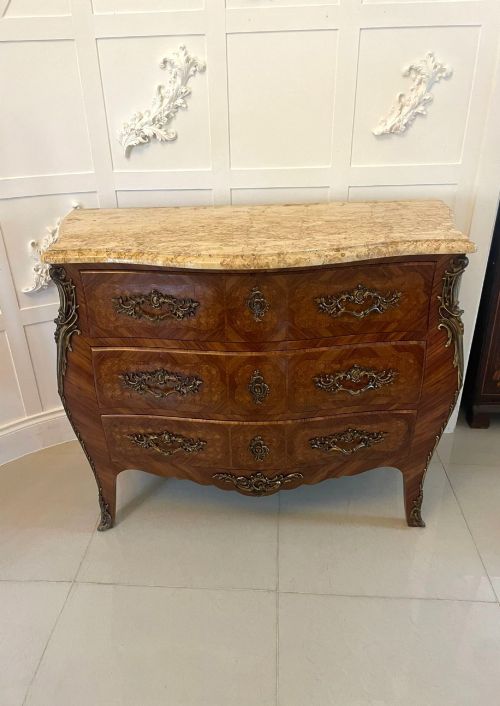
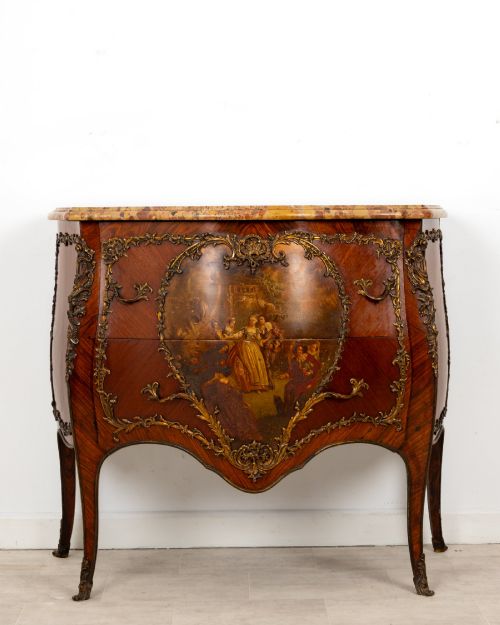
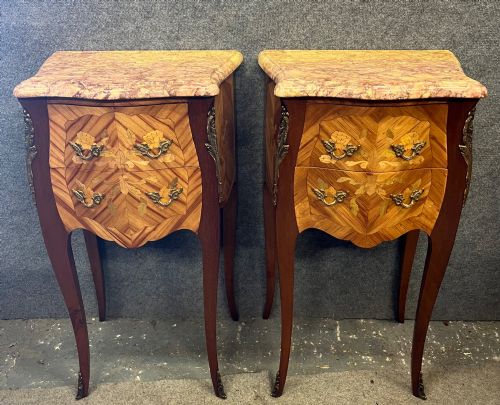
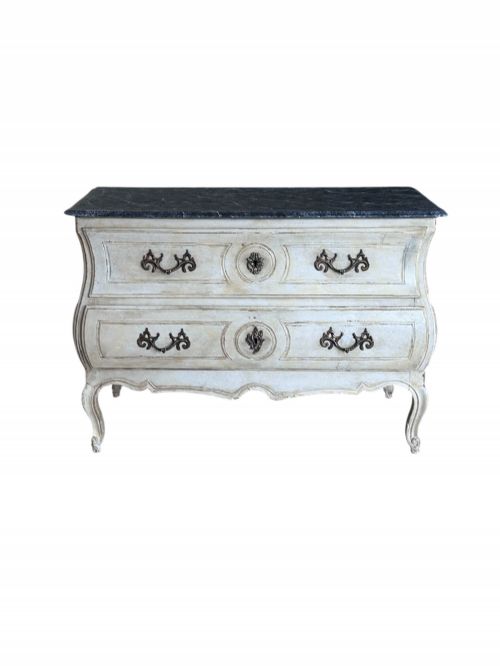
A serpentine marble commode is a low chest of drawers or cabinet featuring a distinctly undulating front edge and a fitted stone slab on top. The form emerges strongly in eighteenth-century French workshops, developing a pronounced bombé profile where the sides and front swell outward.
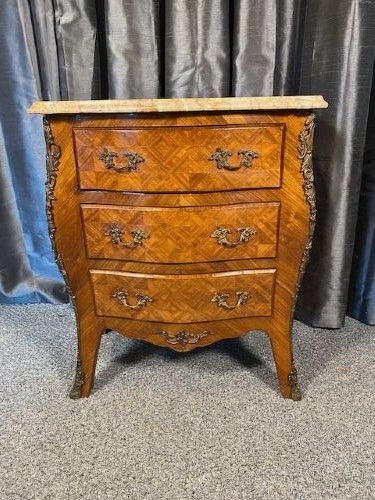
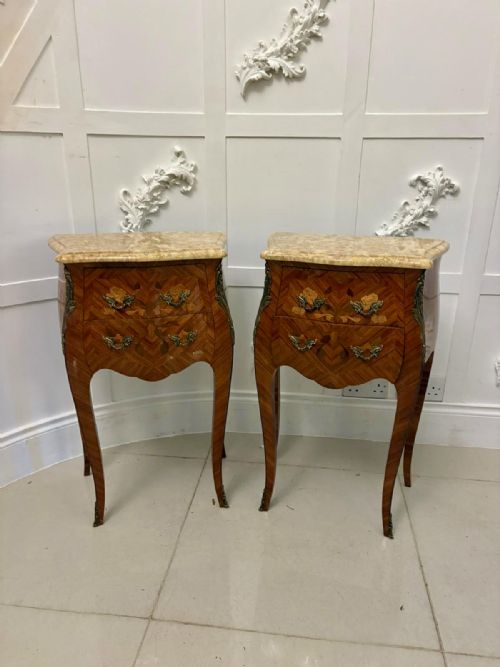
Most examples seen here date from the nineteenth and early twentieth centuries, drawing heavily on Louis XV and Louis XVI design vocabulary. Alongside full-sized chests, buyers frequently encounter smaller bedside tables and side cabinets sharing the same characteristic marble surface.
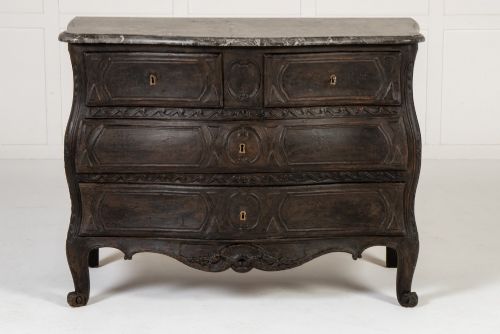
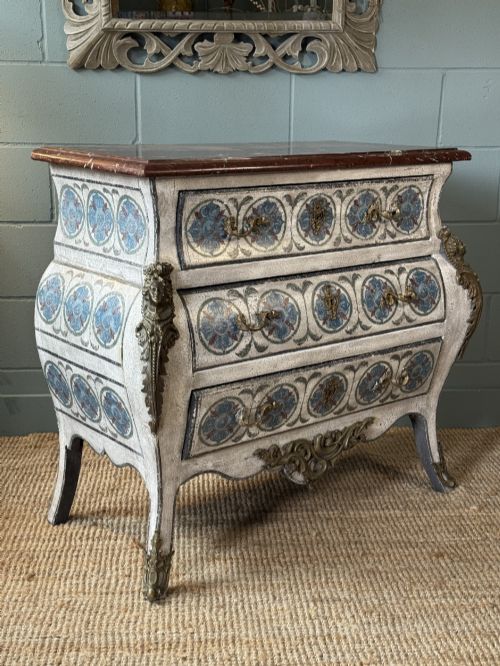
Origins stretch across French provincial centres and Parisian ateliers, though occasional Italian and Dutch pieces appear in walnut, painted finishes, or fruitwoods. The underlying timber carcass supports elaborate surface decoration rather than plain utility.
Materials and construction
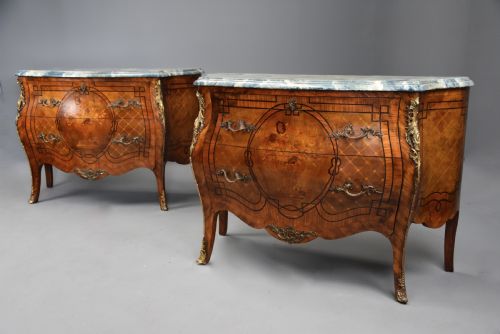
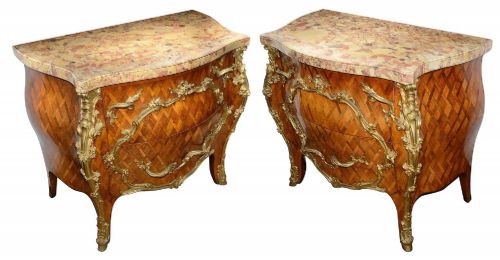
Carpenters built the curved carcasses using native and exotic timbers including kingwood, rosewood, walnut, and mahogany, often applied as marquetry or parquetry veneers. Shaping the undulating serpentine drawer fronts required meticulous skill in cutting and fitting timber over robust pine or oak foundations.
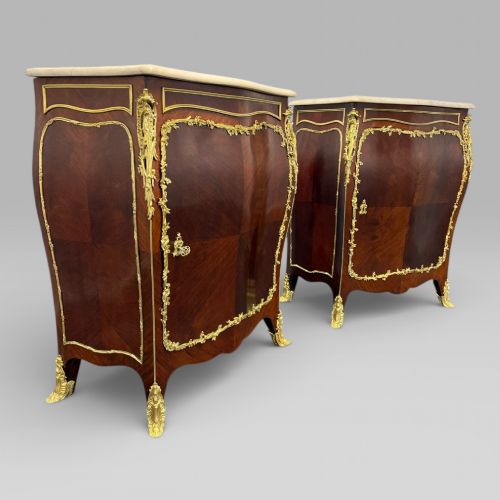
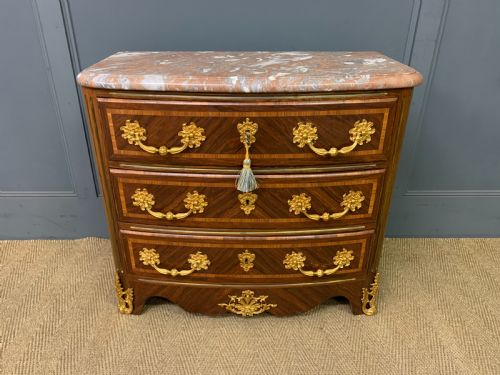
Heavy marble slabs, sometimes breccia or scagliola, were individually channelled and hand-polished to follow the complex contours of the wooden top. Cast or chased ormolu, bronze, and brass mounts were then pinned to the corners, feet, and aprons to accent the structural lines.
Materials recorded across the inventory range from exotic kingwood and rosewood veneers to solid cherrywood, walnut, and painted finishes.
What separates the grades
Quality rests in the harmony between the stone top and the wooden carcass, where lesser examples show mismatched joints or replacement marble slabs that fail to follow the exact serpentine sweep. The crispness of the gilt-bronze or ormolu mounts also divides standard production from exceptional cabinet work.
Veneer selection dictates visual depth, with finer pieces displaying complex geometric parquetry or intricate floral marquetry that matches precisely across the drawer divides. The weight and thickness of the original marble surface, alongside the fluidity of the bombé curves, mark the upper tiers of craftsmanship.
E. Kahn·Gaudreaux·Charles Cressant
The Serpentine Marble Commode Glossary
- Bombe
- A swollen or bulging outward profile characteristic of continental furniture. This curving shape demands advanced woodworking techniques to ensure structural stability.
- Ormolu
- Gilt bronze mounts applied to the corners, feet, and handles of fine furniture. The technique involves coating cast bronze in a layer of gold amalgam.
- Marquetry
- Inlaid patterns using various coloured woods, shells, or ivories to create pictorial designs. Artisans cut these veneers meticulously before gluing them onto the carcase.
- Parquetry
- Geometric wood inlay forming repeating patterns such as cubes, lozenges, or squares. It provides a structured decorative surface across drawer fronts and tops.
- Breccia
- A composite stone made of broken fragments cemented together in a fine-grained matrix. Its varied natural patterns made it a favoured material for luxury furniture tops.
Serpentine Marble Commode: Frequently Asked Questions
What is a serpentine marble commode?
A serpentine marble commode is a decorative chest of drawers or cabinet featuring a wavy, curving front and a shaped stone top. These pieces originated primarily in continental Europe for storing clothing or displaying objects in principal rooms.
Cabinetmakers shaped the timber carcasses with outward-swelling profiles, mounting heavy marble slabs designed to match the specific contours of each piece.
How do I spot an 18th century piece?
Eighteenth-century examples typically display hand-cut dovetails, native timber secondary woods like oak or walnut, and original fire-gilt bronze mounts. The construction methods show individual hand assembly rather than standardised manufacturing.
Examining the interior linings, drawer runners, and the underside of the marble reveals the hand-tooled marks characteristic of period workshops.
Where should I place a commode?
These pieces suit living rooms, large hallways, or bedrooms where their sculptural profiles and polished stone tops can function as focal points. Their finished backs and sides often allow them to sit away from walls.
Avoid placing them in direct sunlight or near heat sources, which can dry out exotic veneers and cause timber shrinkage or veneer lifting.
How do I clean the marble top?
Clean the marble surface using a soft cloth dampened with warm water and mild, neutral soap. Avoid acidic cleaners, vinegar, or harsh abrasives that can etch or dull the polished stone.
Dry the surface thoroughly after wiping to prevent water marks, and consider applying a specialised stone sealer for long-term protection.