


Serpentine Glass Display Cabinet
A serpentine glass display cabinet brings curved elegance to a room, showcasing fine objects through shaped glass panels.
Serpentine Glass Display Cabinet
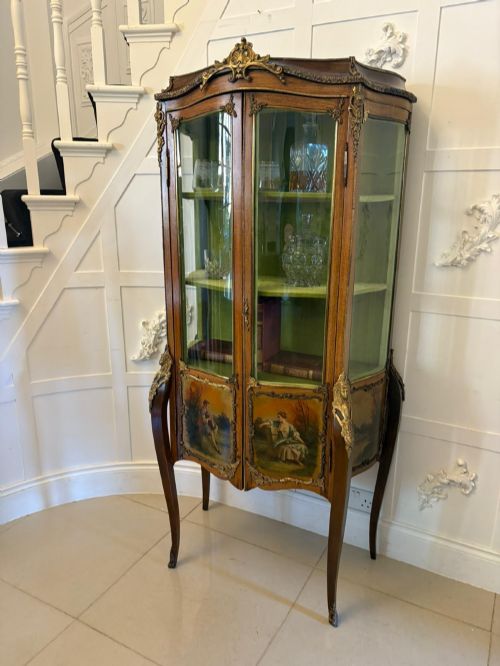
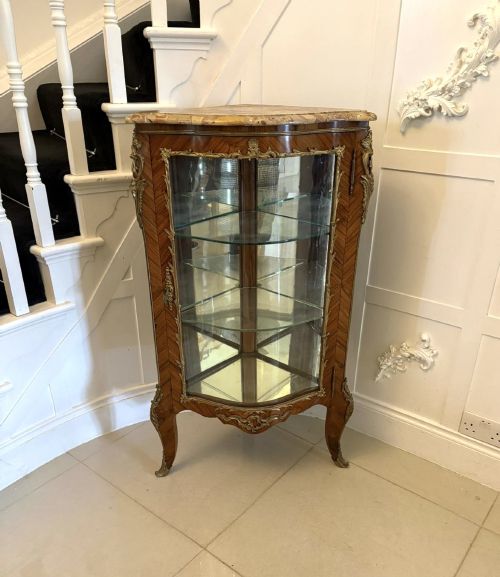
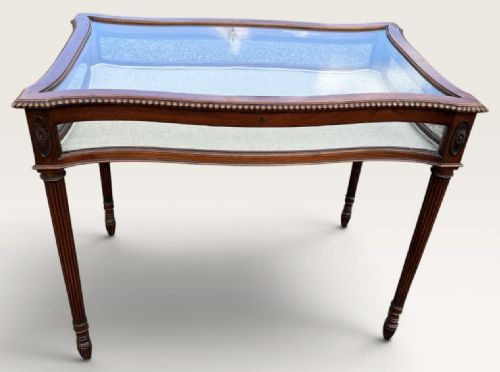
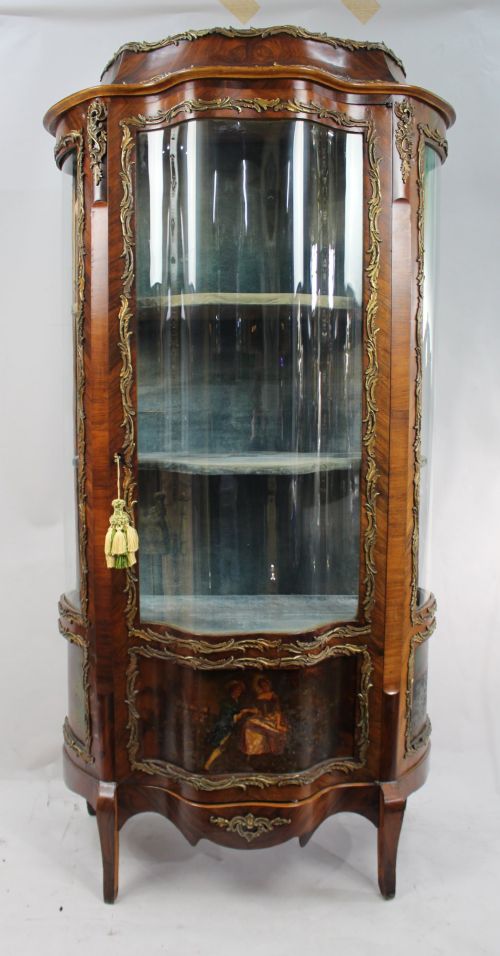
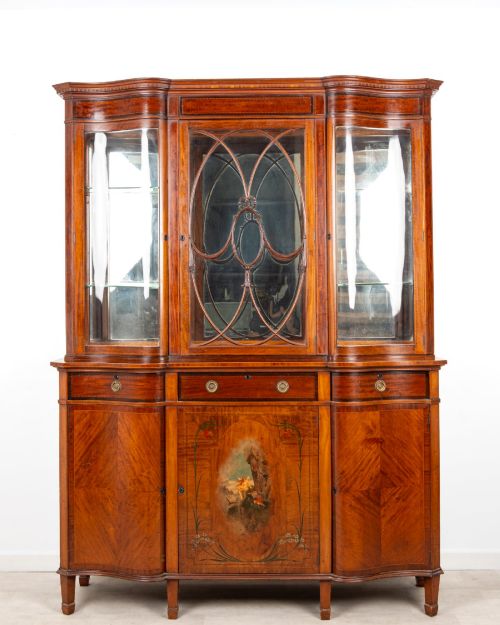
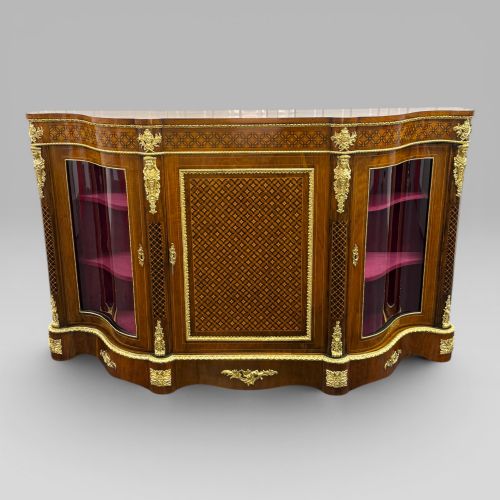
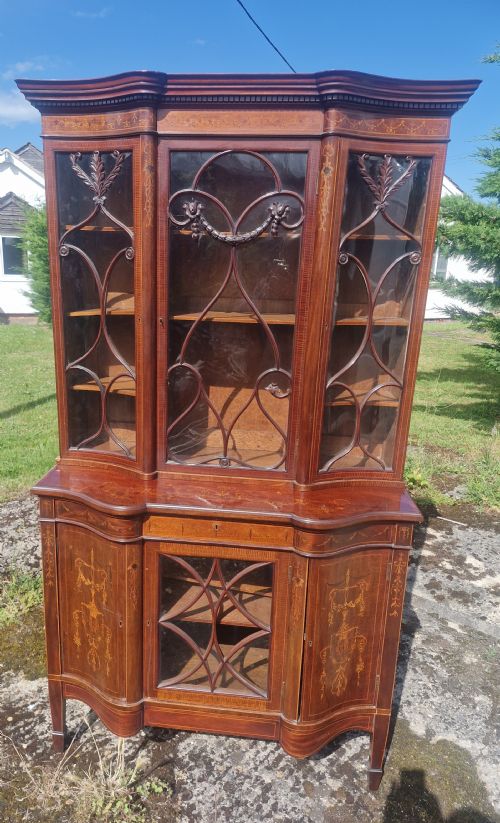
The objects seen here range from French Louis XV revival models to English mahogany and satinwood creations. Makers constructed them primarily to display delicate porcelain, silver, and curiosities while adding sculptural presence to a drawing room or parlour.
Materials and construction
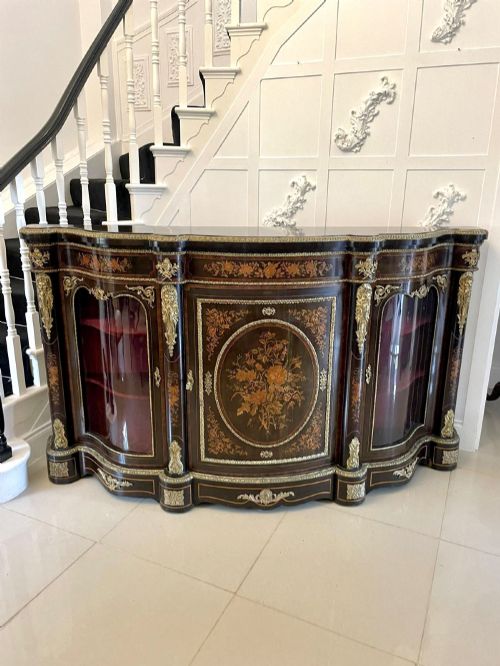
Cabinet makers utilised dense hardwoods like mahogany, walnut, and kingwood as foundations for these curved carcasses. Marquetry inlay in fruitwoods and satinwood decorated the surfaces, while gilt-bronze ormolu mounts highlighted the undulating borders.
Curved glass panels required specialist bending techniques to fit the sweeping wooden frames. Internal fabric linings often complemented the polished timber exteriors and reflected light through the shelved interior.
Materials recorded across the archive include mahogany, walnut, kingwood, ormolu, and delicate fruitwood marquetry.
Judging quality and execution
The precision of the serpentine curve dictates the architectural success of the piece, requiring expert joinery to maintain structural integrity along the winding front. Superior examples integrate cast ormolu mounts that fit flush against the timber contours without gaps.
Marquetry detail reveals the hand of the maker, with finer pieces displaying intricate floral motifs rather than stamped transfers. The quality of the figured walnut or kingwood veneer further separates standard production items from exhibition pieces.
Maison Gagneau·Edwards and Roberts
The Serpentine Glass Display Cabinet Glossary
- Serpentine
- A furniture front characterised by a concave central section flanked by two convex ends, creating a gentle S-shape curve. This profile requires immense skill from the cabinet maker.
- Ormolu
- Gilded bronze mounts applied to furniture edges and feet for decorative effect. These metallic accents catch the light and define the curved lines of the cabinet.
- Marquetry
- Decorative veneer work arranged in pictorial patterns using various coloured woods. Craftsmen cut and fitted these delicate pieces into the primary timber surface.
- Vernis Martin
- A simulated Japanese lacquer technique developed in France, often seen on panels depicting pastoral scenes. It gives a lustrous, painted finish to display cabinets.
- Vitrine
- A glass-fronted cabinet designed specifically for displaying fine porcelain and objets d'art. The term derives from the French word for glass.
Serpentine Glass Display Cabinet: Frequently Asked Questions
What are serpentine glass display cabinets?
These are curved wooden display furniture pieces featuring undulating fronts and glass panels designed for showcasing valuables.
Originating largely in the nineteenth and early twentieth centuries, they combine structural joinery with decorative marquetry and ormolu mounts.
How were these cabinets used?
Victorians and Edwardians used them in reception rooms to protect and display prized collections of ceramics, glassware, and small ornaments.
Shelved interiors and glass doors allowed guests to admire items while keeping dust away from delicate surfaces.
How do I style a serpentine cabinet?
Position the piece against a flat wall where natural light can strike the curved glass and highlight the timber grain. Avoid overcrowding the interior shelves so the undulating woodwork remains the primary focal point.
Pair the cabinet with complementary period seating or side tables featuring similar walnut or mahogany tones.
How can I date these cabinets?
Examine the secondary woods, hinge types, and veneer thickness to determine whether a piece belongs to the Victorian or Edwardian eras. Stylistic cues such as Louis XV revival curves or Sheraton satinwood inlay also point toward specific decades between eighteen-fifty and nineteen-ten.