
Serpentine Fronted Cabinet
A serpentine fronted cabinet brings together rhythmic undulating curves and fine cabinet-making traditions from the eighteenth, nineteenth, and twentieth centuries.
Serpentine Fronted Cabinet
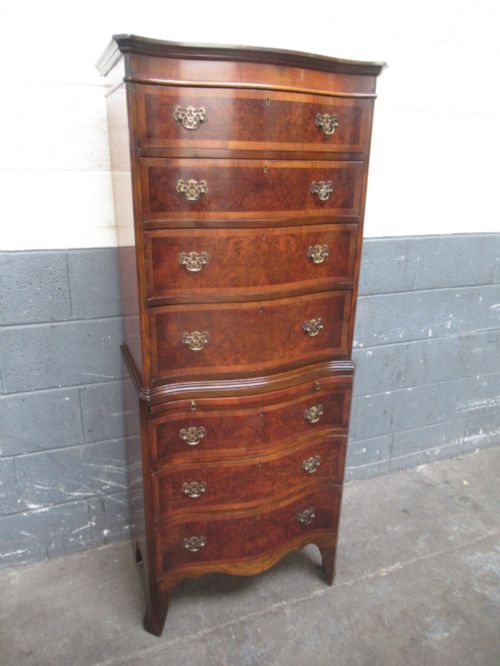
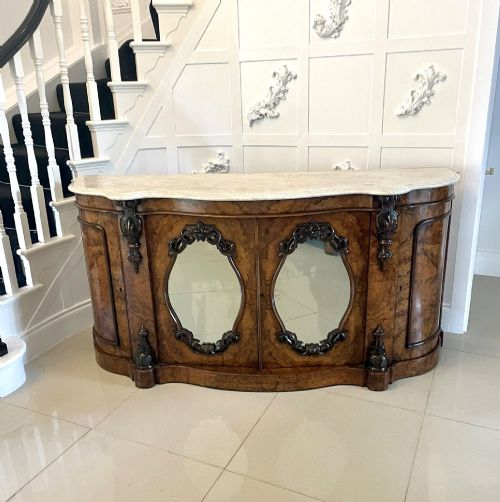
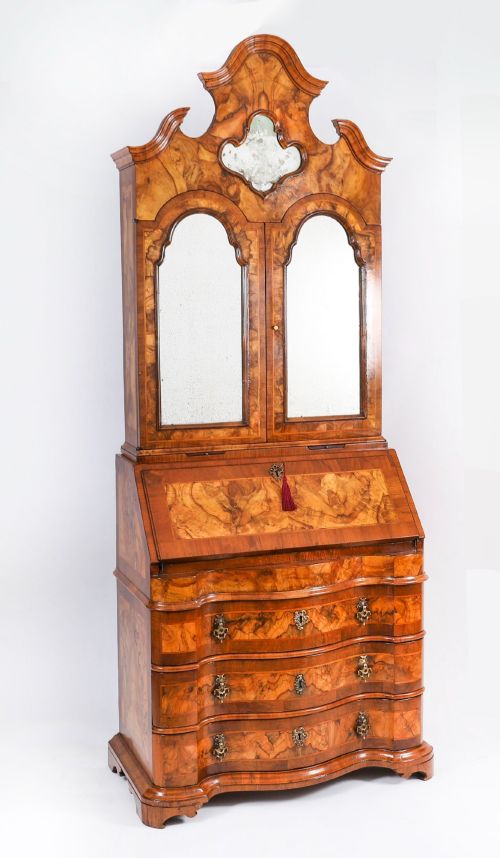
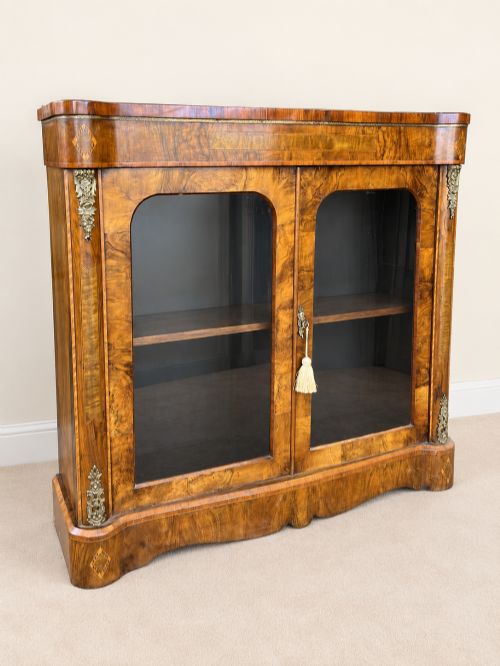
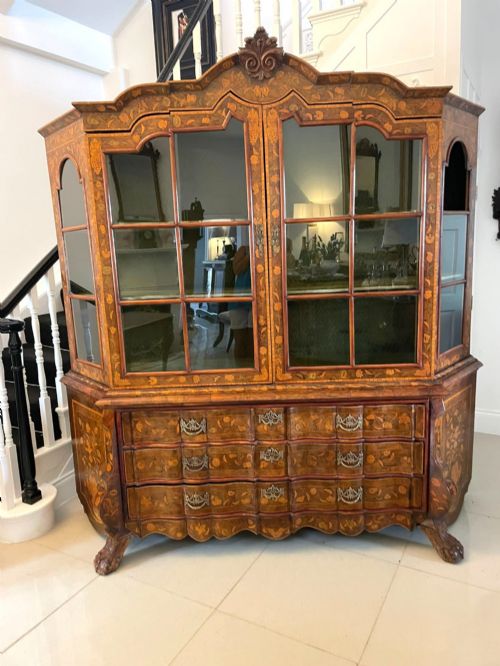
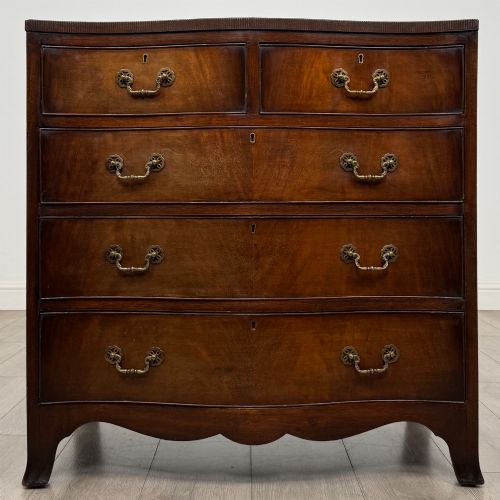
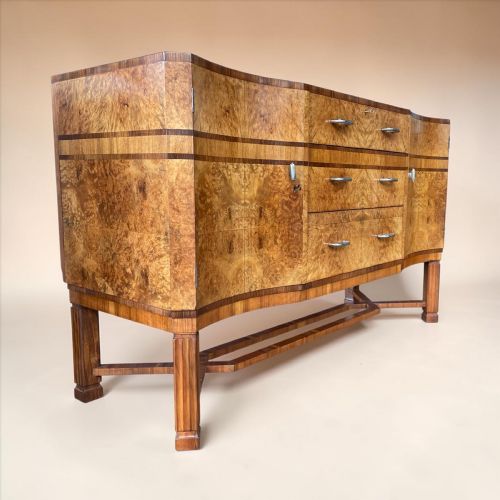
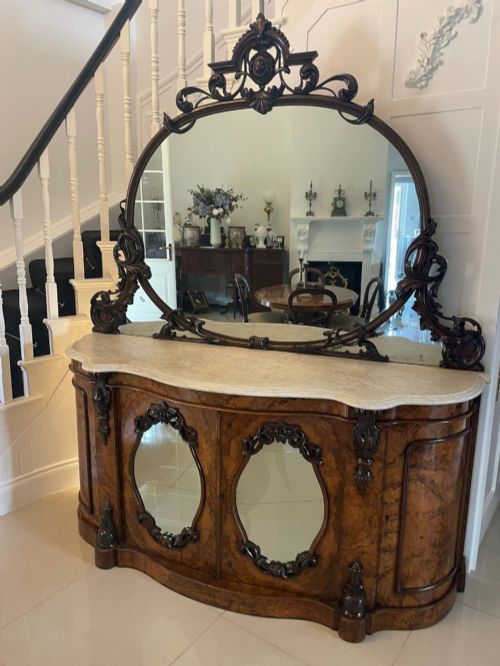
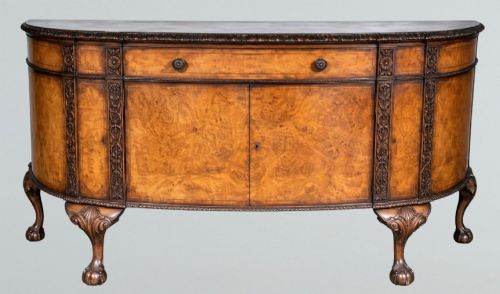
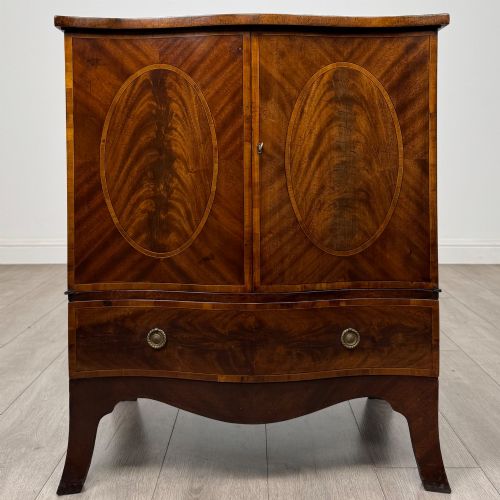
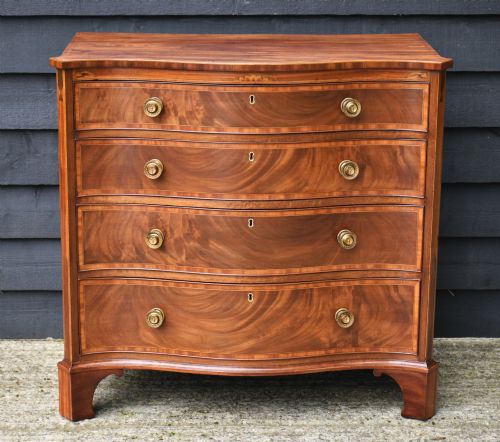
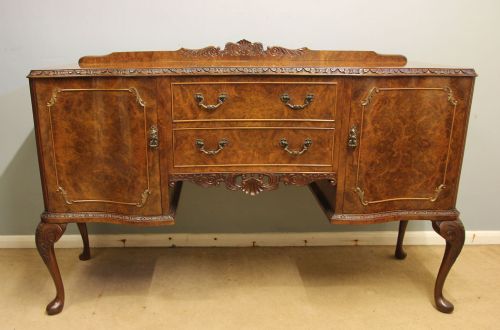
A serpentine fronted cabinet encompasses a range of functional furniture forms designed with a distinct convex-concave-convex curved front profile. The selection includes sideboards, credenzas, display cabinets, bedside tables, and chests of drawers spanning Georgian, Victorian, Edwardian, and Art Deco periods.
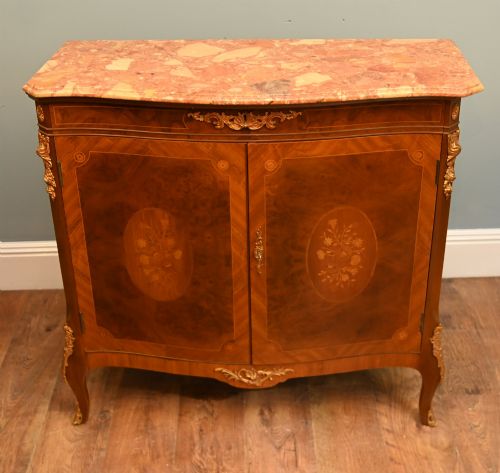
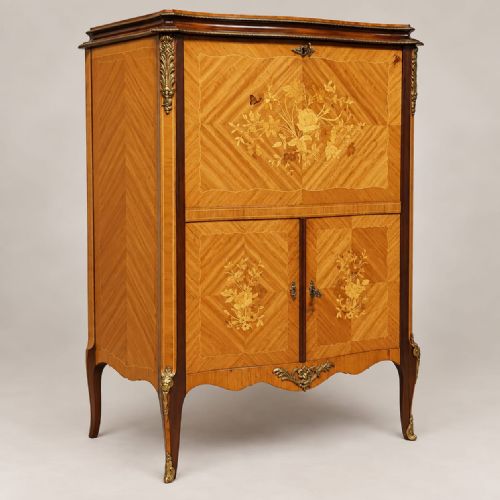
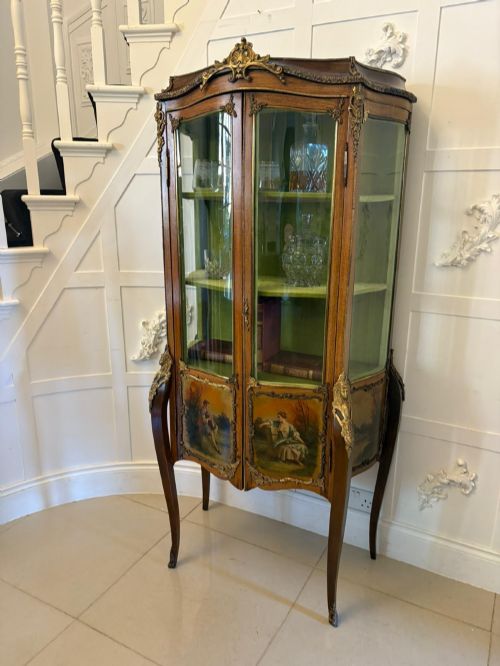
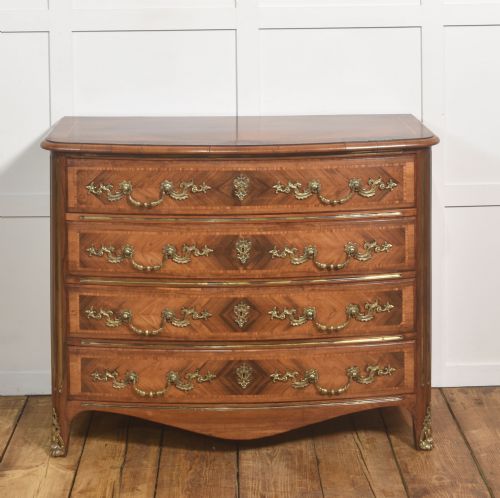
The versions most commonly encountered on this page are mahogany and walnut pieces from the nineteenth and early twentieth centuries, alongside French Louis XV style commodes and vitrines. These items served primarily for storage or display in formal rooms, utilising their shaped fronts to catch light and add movement to domestic interiors.
Origins stretch across English workshops, French ateliers, and Italian makers, recording regional preferences for specific timbers and decorative marquetry. Whether configured as a tall display vitrine or a low bedside cupboard, the unifying element remains the flowing front line.
Materials and Technique
Construction relies heavily on cabinet timbers such as mahogany, walnut, burr walnut, rosewood, kingwood, and tulipwood, often applied as veneers over sturdy secondary woods. Marquetry inlay, floral ornamentation, and fruitwood details add pattern across the curved surfaces of these pieces.
Many examples incorporate cast or chased ormolu mounts, brass hardware, and inset marble tops that sit upon the shaped wooden carcasses. Glass panels feature in display cabinets and vitrines, whilst specialised finishes like Vernis Martin provide polished decorative surfaces on French pieces.
Listings feature mahogany, walnut, burr walnut, rosewood, kingwood, ormolu, marble, and brass across Georgian, Victorian, and Edwardian periods.
Judging Quality
Quality rests upon the precision with which the cabinetmaker handles the challenging curved timber and matches grain patterns across the undulating drawer fronts or doors. Superior examples display seamless integration of ormolu mounts, crisp marquetry, and well-executed secondary framing that maintains structural integrity over time.
The depth of carving, the choice of figured veneers such as burr walnut or kingwood, and the retention of original brass fittings or marble tops elevate certain pieces above standard production. The fluidity of the serpentine line itself defines the visual success of the piece.
Maison Gagneau·Waring s Gillows·Edwards and Roberts
The Serpentine Fronted Cabinet Glossary
- Serpentine
- A furniture front shaped with a central convex curve flanked by two concave curves, creating an undulating profile. This contour requires advanced woodworking skill to construct.
- Ormolu
- Gilded bronze mounts applied to furniture for decorative effect. It appears frequently on French and Victorian pieces alongside marquetry.
- Marquetry
- Decorative patterns formed by fitting together thin slices of various veneers into wood surfaces. Floral designs and geometric motifs are common in this selection.
- Vitrine
- A glass-fronted display cabinet designed to exhibit porcelain, glassware, or small collectibles. They often feature mirrored backs and detailed ormolu mounts.
- Commode
- A low French chest of drawers or cabinet standing on legs. Many period examples feature marble tops and shaped fronts.
Serpentine Fronted Cabinet: Frequently Asked Questions
What is a serpentine fronted cabinet?
A serpentine fronted cabinet is a storage or display piece featuring a front edge curved in a distinct wave pattern. This design creates visual depth and fluid movement across the wood.
Craftsmen applied this profile to sideboards, commodes, and display cabinets across multiple historical periods, utilising figured timbers to enhance the curved surfaces.
How do I style a serpentine cabinet?
A serpentine cabinet works well as a focal point in a dining room, hallway, or living space where its curved silhouette can be appreciated from multiple angles. Placing lamps or decorative objects on top highlights the shaped wooden surface.
Because these pieces often incorporate glass or mirrored elements, positioning them near natural light sources helps brighten surrounding spaces while showcasing stored items.
How do I identify the period?
Period identification relies on observing the combination of primary timbers, hardware styles, and construction techniques used in the carcass. Georgian pieces often display restrained mahogany craftsmanship, whereas Victorian and Edwardian examples frequently incorporate elaborate marquetry and ormolu.
French pieces from the nineteenth century typically show Louis XV influence with shaped marble tops and decorative Vernis Martin finishes.
Were these cabinets used for storage?
These cabinets served various domestic storage needs depending on their specific form and interior layout. Sideboards and credenzas accommodated dining accessories, while bedside tables and chests held personal items.
Display cabinets and vitrines prioritized the exhibition of valuable objects behind glass doors, combining utility with decorative display.