
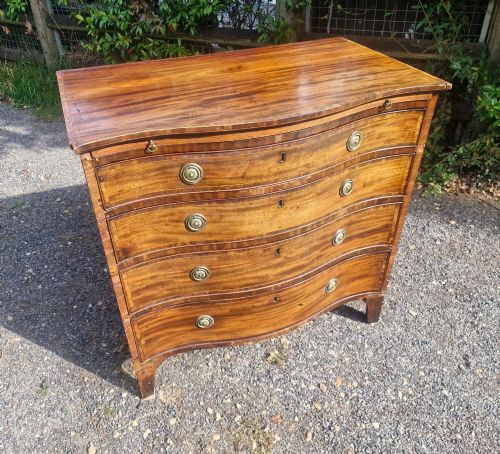
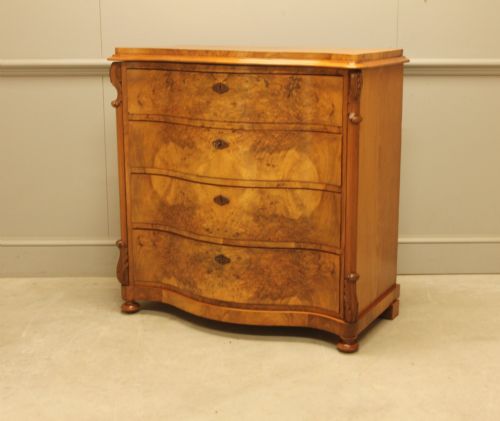
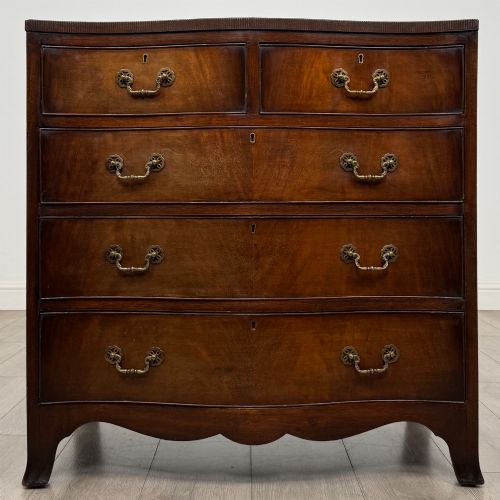
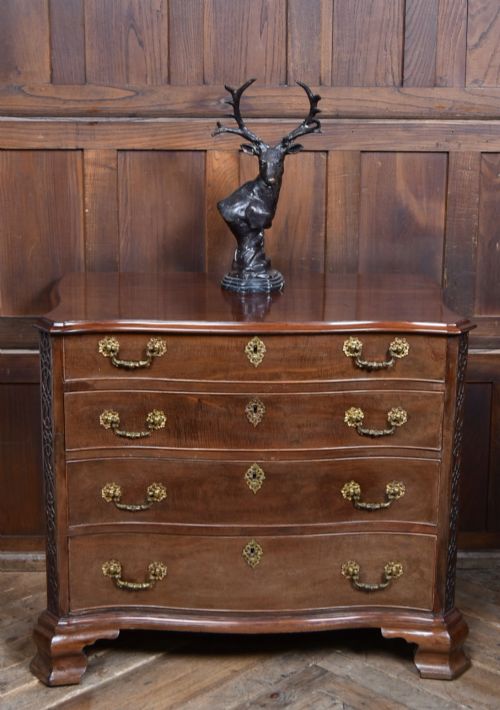
Serpentine Fronted Bureau
A serpentine fronted bureau offers a sweeping, undulating silhouette that brings movement and exceptional cabinet-making skill into any room.
Serpentine Fronted Bureau
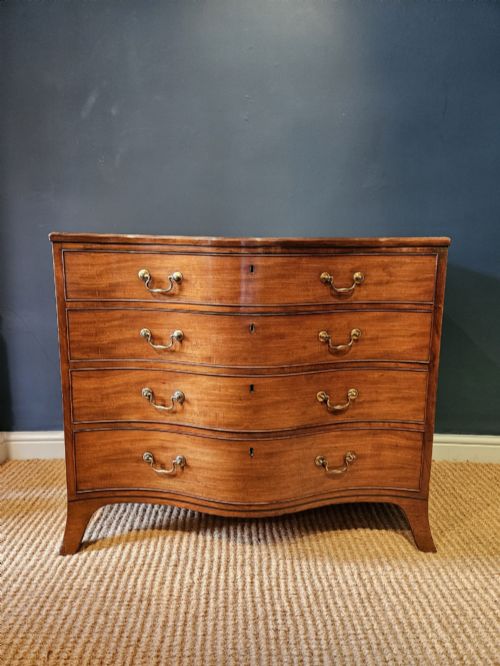
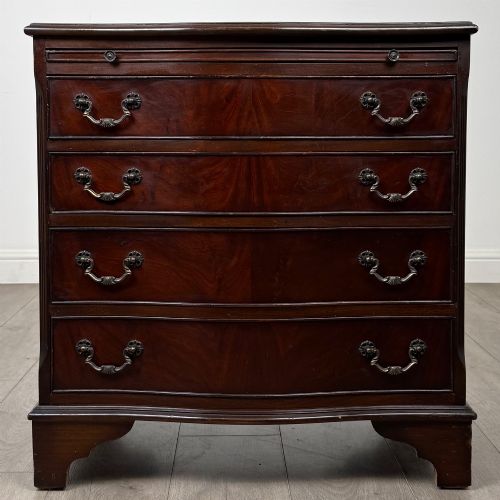
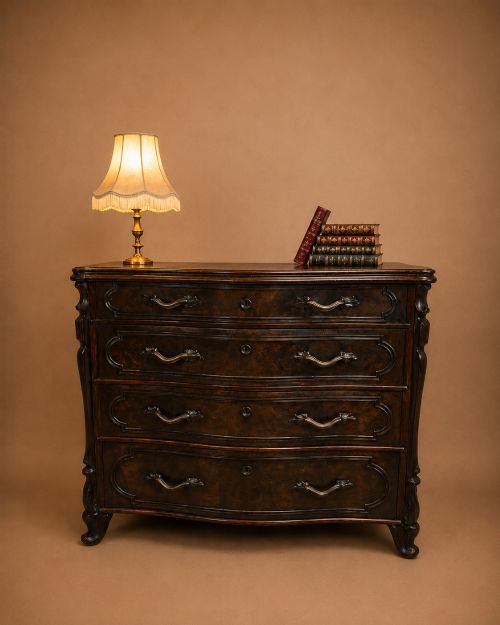
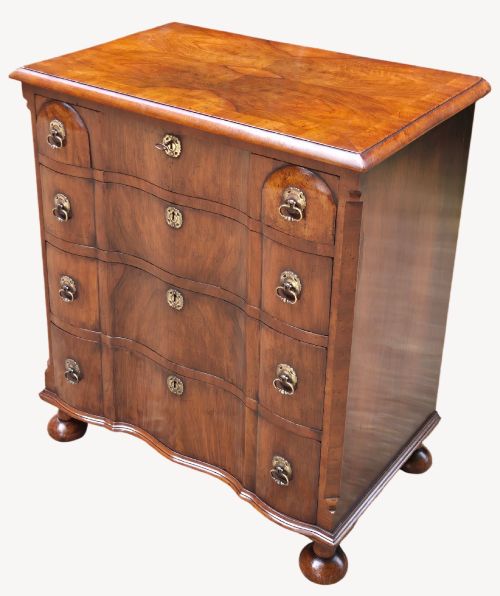
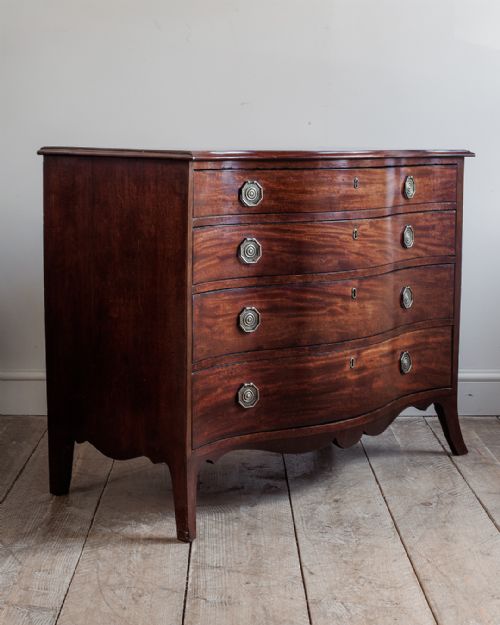
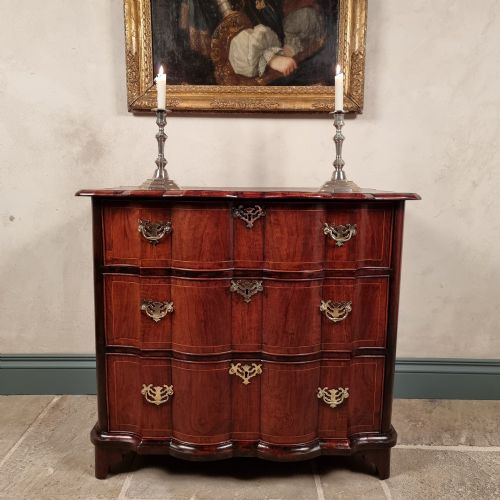
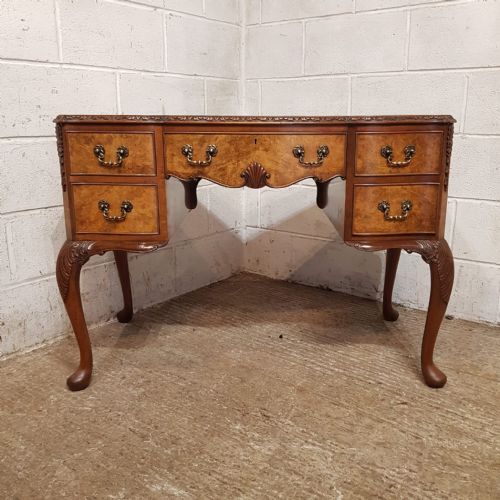
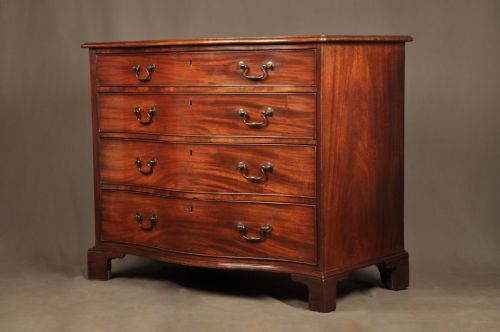
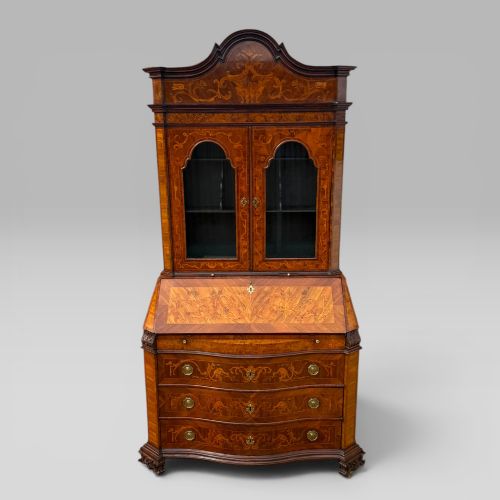
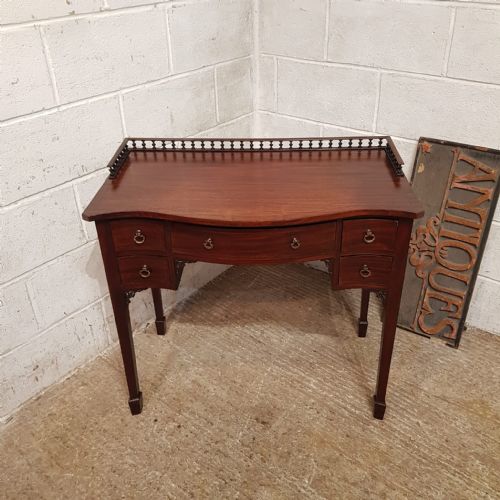
A serpentine fronted bureau presents a distinctive curved facade, where the wood swells outward at the centre and recedes inward at the sides. These pieces combine a writing surface with concealed drawers or pigeonholes, often rising into taller bookcase compartments.
Most examples encountered here date from the Georgian period through to the early twentieth century, utilising traditional forms such as kneehole desks and bureau bookcases. Mahogany and walnut dominate the selection, appearing alongside marquetry details and satinwood accents.
The style spans centuries of craftsmanship, including authentic eighteenth-century examples alongside later Edwardian and revival interpretations. Buyers frequently select these items for their sophisticated profile and practical integration of storage and writing space.
Materials and Construction
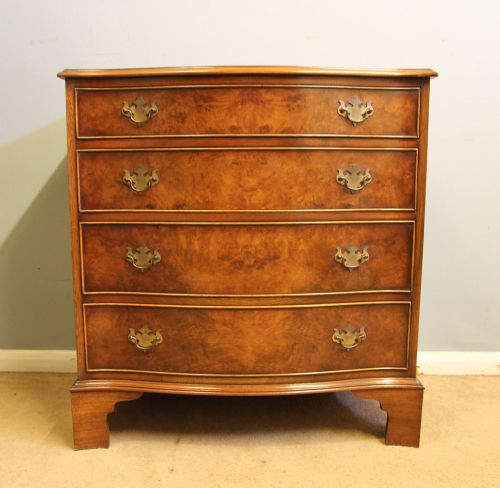
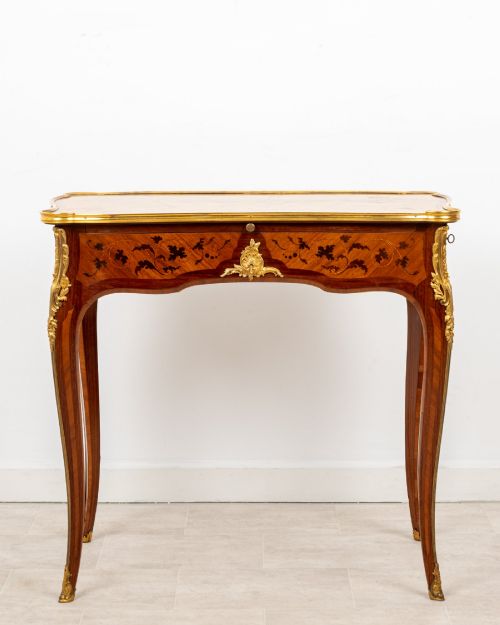
Cabinet-makers relied heavily on dense timbers such as mahogany, walnut, and burr walnut, selecting veneers to accentuate the natural grain across the curved drawer fronts. Solid woods formed the structural framework, while marquetry involved precise inlay work using contrasting exotic woods like tulipwood.
Shaping the serpentine facade required meticulous hand-planing and joining of timber to achieve the undulating profile without compromising the structural integrity of the drawers. Brass hardware, including handles and escutcheons, was fitted by hand to complement the rich tones of the wood.
Listings feature items from the Georgian period, the nineteenth century, and the 1920s, constructed in mahogany, walnut, and satinwood.
Assessing Quality
Quality rests in the precision of the curved drawer fronts and the seamless continuity of the wood grain across the undulating facade. Superior examples display restrained, harmonious proportions and crisp carving that respects the architectural lines of the piece.
The choice of primary timber and the intricacy of secondary veneers, such as fiddleback mahogany or burr walnut, distinguish finer workshops from standard production. Interior fittings, including secret compartments and well-fitted pigeonholes, further indicate the level of care invested by the maker.
Maple & Co.·Durand
The Serpentine Fronted Bureau Glossary
- Serpentine
- A furniture front characterised by a convex centre flanked by concave sides, creating an S-curve shape. This technique demands advanced woodworking skill to execute properly.
- Bureau
- A desk featuring a sloping lid that opens to reveal a writing surface and small interior compartments. It often sits atop a chest of drawers.
- Marquetry
- Decorative veneer work arranged in pictorial or geometric patterns using various coloured woods. Craftsmen cut these pieces precisely to fit flush into a prepared surface.
- Secretaire
- A piece of furniture containing a drawer or compartment designed specifically for writing. The front often pulls down or drops forward to form the desk surface.
- Kneehole desk
- A compact desk featuring a central recessed space for the user's legs, flanked by pedestals of small drawers. They frequently incorporate a serpentine facade.
Serpentine Fronted Bureau: Frequently Asked Questions
How do I distinguish an 18th-century piece?
Examine the drawer construction and timber characteristics closely. Hand-cut dovetails and native woods typically indicate earlier periods.
Secondary woods used inside the drawers also provide reliable clues for dating the construction.
Where should I place a serpentine bureau?
Position it against a flat wall where the curved front can catch sidelight to highlight the grain. Avoid placing it in direct sunlight to protect the polished wood.
Ensure adequate clearance in front of the piece for the fall-front writing flap to open fully.
How do I care for walnut and mahogany?
Dust the surfaces regularly with a soft, dry cloth. Apply a quality beeswax periodically to nourish the timber and maintain its natural lustre.
Keep the furniture away from direct heat sources and maintain stable room humidity to prevent the wood from splitting.