




Serpentine Drawer Toilet Mirror
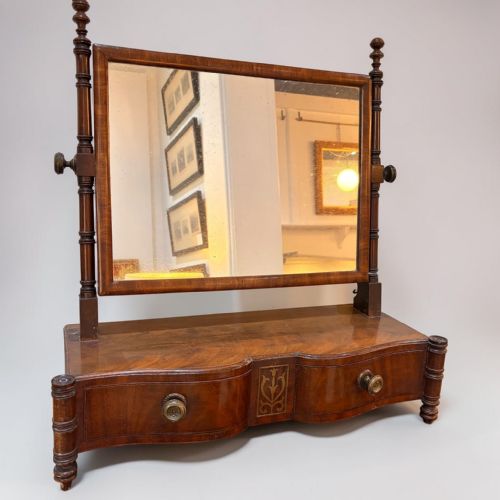
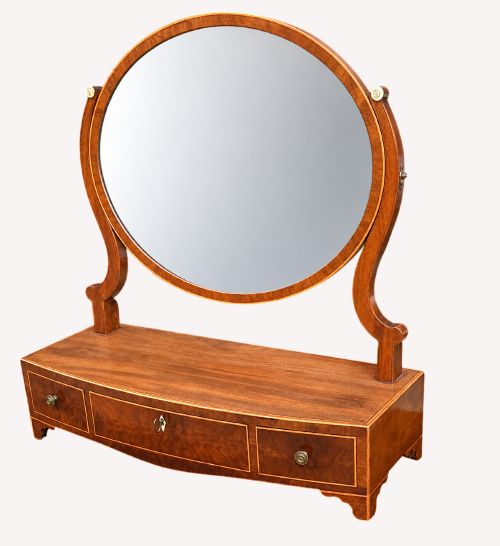
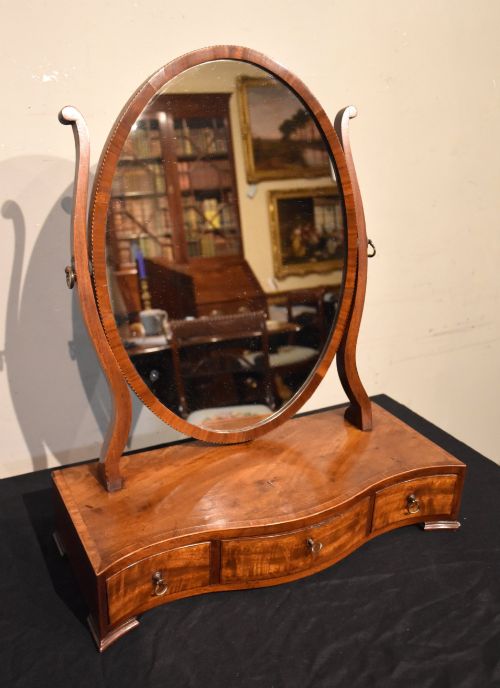
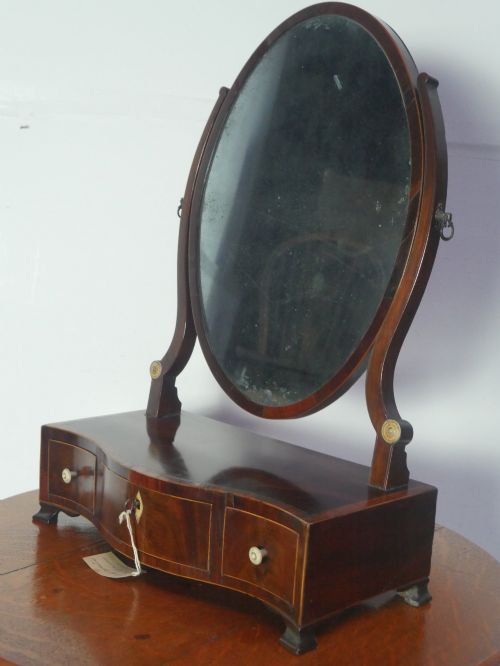
These serpentine drawer toilet mirrors sit low on a chest or dressing table, offering a neat curved base and an adjustable glass for daily grooming.
Serpentine Drawer Toilet Mirror
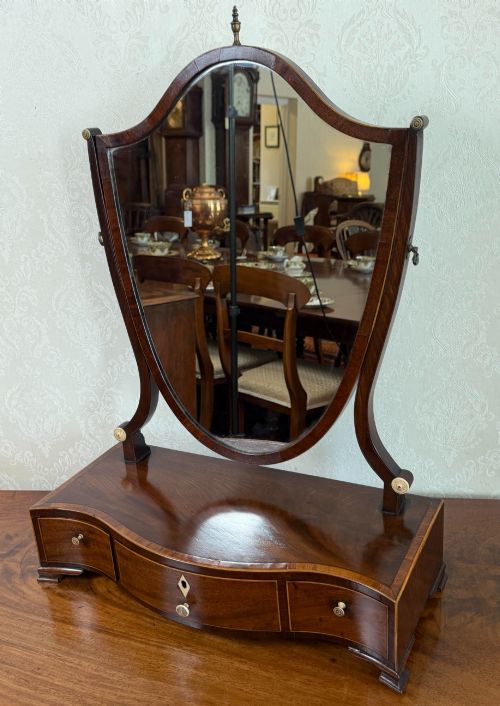
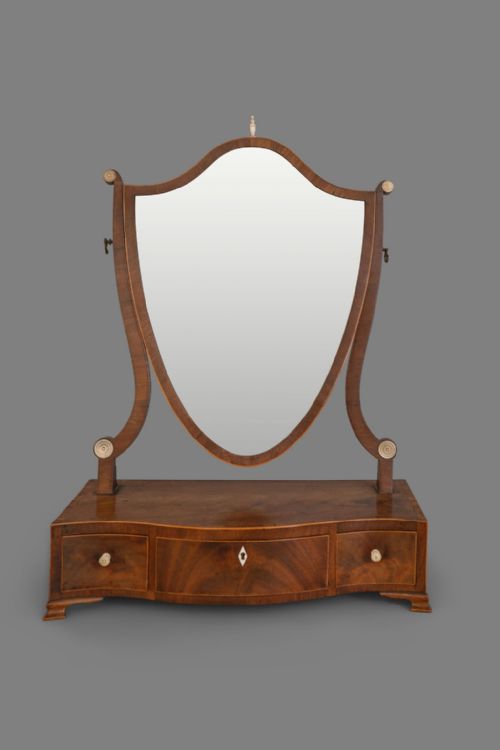
A serpentine drawer toilet mirror sits on a chest or table, combining a pivoting glass with a small compartmentalised base. The form appears primarily in mahogany and walnut, spanning periods from the eighteenth century through to the Edwardian era.
Most examples found here date from the Georgian period, often attributed to the reign of George III. Makers shaped the lower section with a distinct undulating curve, housing small drawers beneath the upright arms that hold the mirror frame.
Alternative forms on this page include oval glasses, shield shapes, and simple box bases without the curved front. Walnut and mahogany dominate the materials, occasionally enriched with boxwood inlay.
Materials and construction
Cabinetmakers constructed these frames using solid mahogany or walnut, frequently selecting dense timber for the serpentine curves of the base. Drawer construction relies on traditional dovetailed joints, with secondary softwoods often used for internal partitions.
Brass fittings such as sconces, adjustment screws, and small drop handles secure the mirror plate and operate the drawers. Inlaid details in boxwood or lighter woods accent the drawer fronts and borders on specific Sheraton and Georgian pieces.
Secret compartments hidden behind the smallest serpentine drawers occasionally turn up, offering a tiny hiding spot for old cufflink studs.
Judging quality in a toilet mirror
The precision of the curved drawer front dictates the success of the base, requiring clean lines where the mahogany or walnut meets the upright supports. Superior examples display finely cut dovetails and matching wood grain selected across the drawer tiers.
Original brass hardware and clear proportions between the mirror plate and the lower cabinet elevate an individual piece. Lesser examples show mismatched woods or replacement fittings that disrupt the balance of the table glass.
The Serpentine Drawer Toilet Mirror Glossary
- Serpentine
- A shaped furniture front featuring a convex centre flanked by two concave curves, creating an undulating outline.
- Toilet mirror
- A smaller tabletop mirror designed for a dressing table or chest, incorporating small drawers in the base.
- Box base
- The rectangular or shaped plinth beneath the mirror frame that houses one or more small storage drawers.
- Dovetail
- A traditional wood joint formed by interlocking wedge-shaped fingers, used here to construct the small drawers.
- Shield shape
- A mirror plate cut to the outline of a heraldic shield, popular during the later eighteenth and Edwardian periods.
Serpentine Drawer Toilet Mirror: Frequently Asked Questions
Where should I place a toilet mirror?
These mirrors suit placement on top of a sturdy chest of drawers, a low sideboard, or a dedicated dressing table in a bedroom or hallway. Ensure the surface is level so the weight distributes evenly across the feet.
Keep the piece away from direct sunlight and damp walls to protect the timber polish and the silvering behind the original glass.
How do I adjust the mirror plate?
Most examples use side screws or threaded brass knobs set into the upright arms. Turn these gently to loosen the grip, tilt the glass to the desired angle, and tighten them again.
Avoid forcing the glass if the mechanism feels stiff, as vintage brass threads can strip or strain the wooden uprights.
Are the mirrors original?
Many eighteenth and nineteenth-century pieces retain their original glass, which may show minor foxing, light silver loss, or tiny blemishes. Other pieces have received replacement mirror plates over the decades to maintain a clear reflection.
Examine the backboards and the putty or glazier's points holding the glass to understand the history of the frame.
How do I clean the wood and glass?
Dust the mahogany or walnut frame with a dry, soft cloth and avoid using modern silicone sprays or heavy liquid polishes. A mild wax applied sparingly helps nourish the dry timber.
Clean the mirror glass with a damp cloth applied directly to the cloth rather than the mirror, preventing moisture from seeping behind the edges of the plate.