




George II Mahogany Mirror
A george ii mahogany mirror brings architectural proportion and rich timber into a room, uniting functional reflection with mid-eighteenth-century design.
George II Mahogany Mirror
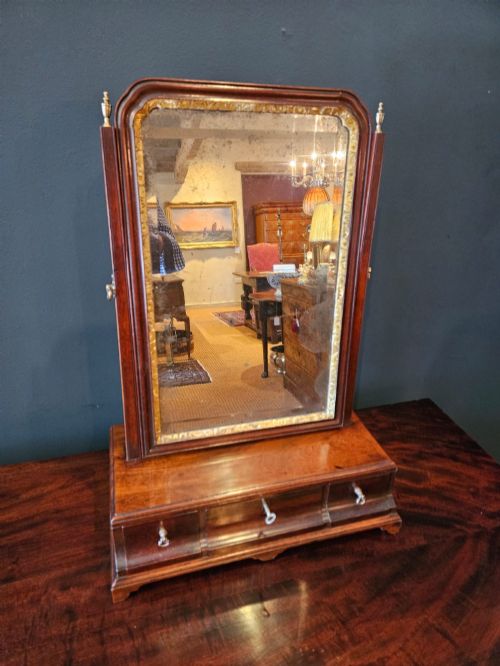
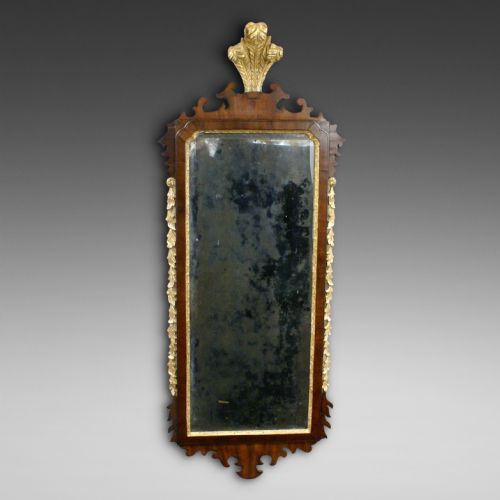
When searching for a george ii mahogany mirror, collectors encounter both compact table-top dressing pieces and large wall-hanging formats. These objects emerge primarily from the eighteenth century, alongside later revival interpretations produced in the nineteenth century.
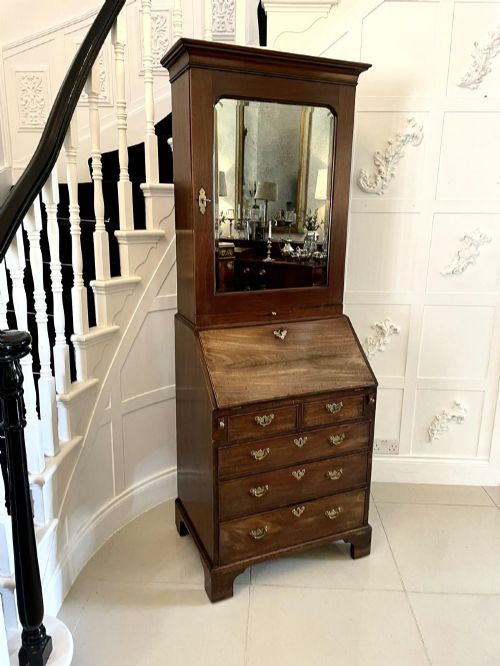
The selection on this page centres heavily on toilet mirrors, dressing mirrors, and wall mirrors. Bureau bookcases and secretaire cabinets also appear, housing mirrored doors or internal compartments.
Origin points span English workshops as well as regional variations such as Irish and Scottish pieces. Revival examples from later decades demonstrate the enduring appeal of the original forms.
Materials and Construction
Makers utilised solid mahogany and walnut timbers, often complemented by secondary woods like oak within internal drawer construction. Timber selection prioritized rich grain patterns and deep natural colour.
Parcel-gilt highlights and gold leaf applied over gesso enhance architectural mouldings, fretwork, and carved details. Brass hardware, including swing-lock pivots and small drawer pulls, secures functional moving parts.
Several mirrors include miniature drawer boxes beneath the glass, perfectly sized for hiding secret love letters or small trinkets from prying eyes.
Assessing Quality and Execution
The refinement of carved detail separates standard examples from exceptional pieces. Crisp execution in parcel-gilt mouldings and fretwork demonstrates the hand of a skilled artisan rather than mechanical production.
Proportion and balance dictate the architectural success of the frame. Superior mirrors maintain harmonious relationships between the glass plate and the surrounding wood, avoiding heavy or clumsy profiles.
The integrity of the timber and the retention of original surfaces govern desirability. Original gilding, untouched patination on the mahogany, and intact backing boards contribute significantly to the standing of an individual piece.
John Franklin London·William Kent
The George II Mahogany Mirror Glossary
- Parcel-gilt
- Partially gilded with gold leaf, usually highlighting carved elements or mouldings against a dark mahogany background. This technique adds visual contrast and reflects candlelight effectively.
- Toilet mirror
- A small adjustable glass mounted on a miniature frame with drawers, designed for placement on a dressing table. These pieces often feature pivoting side brass screws to tilt the glass.
- Fretwork
- Openwork ornamentation cut with a fretsaw, frequently seen on the flat crests and aprons of mid-eighteenth-century frames. It provides geometric or scroll patterns that lighten the visual weight of the timber.
- Pier mirror
- A tall wall glass designed specifically to hang on the narrow pier of wall space between windows. These pieces often incorporate architectural pediments and gilt enrichment.
- Gesso
- A plaster-like mixture applied to wooden frames as a prepared base for gilding. Skilled carvers incise or model details directly into this layer before applying gold leaf.
George II Mahogany Mirror: Frequently Asked Questions
How do I use a toilet mirror?
Toilet mirrors sit atop dressing tables, chests of drawers, or side tables to provide a functional reflection for grooming. Adjust the brass side pivots to tilt the glass plate to the desired angle.
These pieces also introduce light and a sense of depth to smaller spaces. Keep them away from direct sunlight to protect the polished mahogany surface.
Are these mirrors eighteenth century?
The selection includes authentic eighteenth-century examples alongside nineteenth-century revival pieces made in the style of the period. Construction details, timber patination, and framing techniques help indicate the actual age.
Examine the backboards, fixings, and glass plates for signs of period manufacturing methods. Documentation and historical context within listings also clarify the date of origin.
How should I care for the timber?
Maintain mahogany frames by dusting gently with a dry, soft cloth to prevent particulate build-up. Avoid chemical polishes and keep the wood away from extreme temperature fluctuations and moisture.
Checking wall fixings periodically ensures that heavy hanging mirrors remain secure. For table mirrors, ensure the pivot screws are neither too tight nor too loose.