


Vintage Swivel Mirror Drawers
These vintage swivel mirror drawers combine a tilting glass plate with small storage compartments below, offering a practical dressing piece that sits neatly on a table or chest.
Vintage Swivel Mirror Drawers
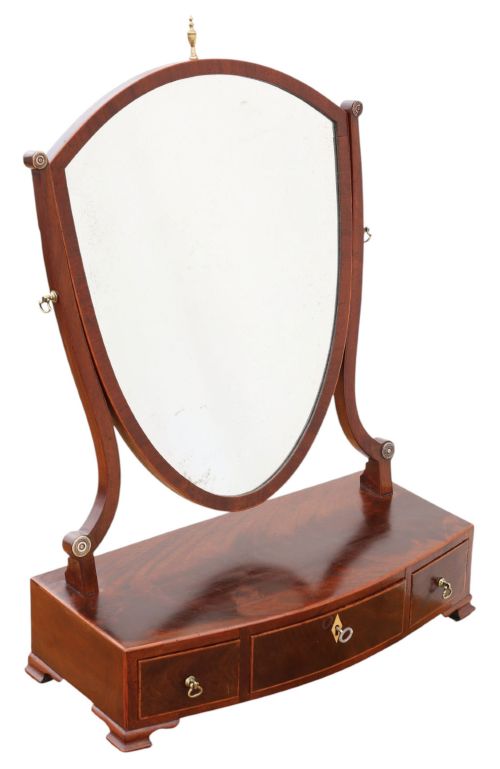
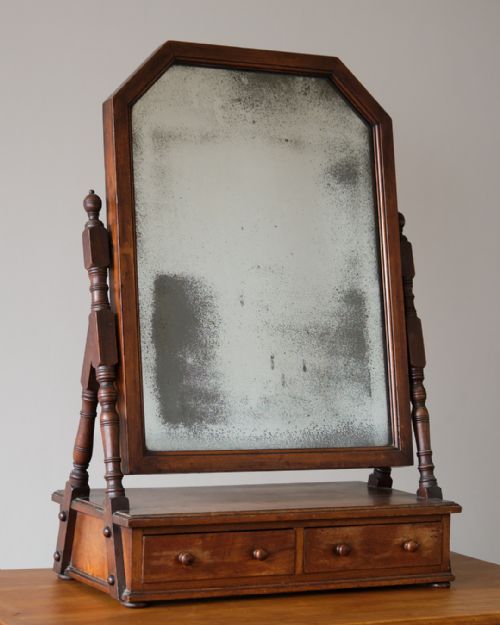
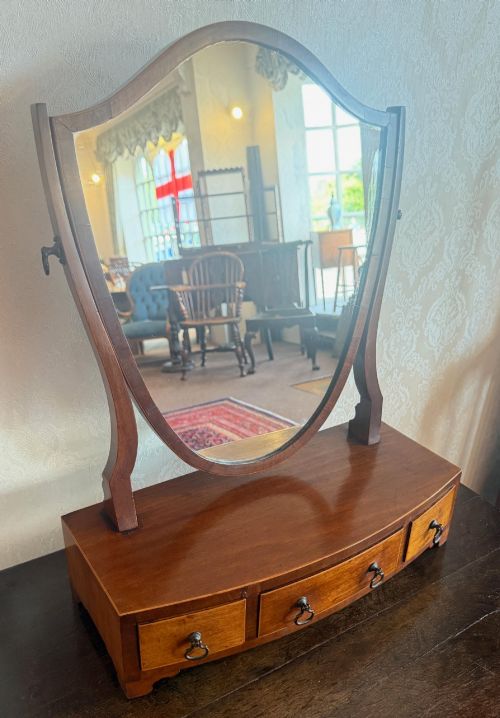
When you search for vintage swivel mirror drawers, you encounter a range of forms designed for grooming and personal care, predominantly appearing as table mirrors, toilet mirrors, and dressing table mirrors. These items span from the mid-eighteenth century through the Edwardian period and into the early twentieth century, capturing distinct design shifts from simple walnut and mahogany frames to more ornate inlaid and painted variants.
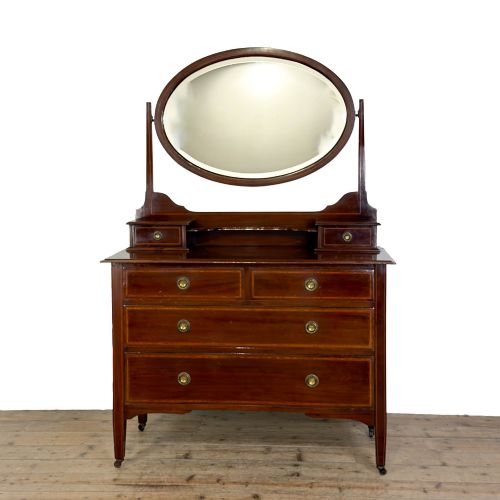
The most common examples on this page are mahogany dressing mirrors resting on small box bases fitted with one to three drawers. You will also find larger pieces like dressing chests and vanity mirrors that incorporate similar pivoting glass assemblies above storage compartments.
Materials and construction methods
Cabinet makers constructed these pieces primarily using timbers such as mahogany, walnut, satinwood, and pine, often enhancing the surfaces with brass fittings, bone escutcheons, and marquetry inlay. The mirror plates themselves are set into pivoting frames supported by upright arms, allowing the glass to tilt to various angles.
The base sections utilise traditional dovetail joinery for the drawers, ensuring durability for daily use. Surviving examples demonstrate careful hand-finishing, with parcel-gilt details or painted decoration applied to specific styles.
Several mirrors come with secret or hidden compartments inside the small drawer bases for storing small valuables.
Evaluating the craftsmanship
Quality in these mirrors rests largely on the choice of timber and the precision of the cabinet work. Superior examples feature well-figured mahogany or walnut veneers, finely cut dovetails on the drawer boxes, and well-cast brass hardware that operates smoothly.
Proportion and balance also distinguish the finer pieces from simpler utilitarian versions. A well-designed mirror plate matches the scale of the base drawers without appearing top-heavy, and the pivoting mechanism holds its position securely.
Heal And Sons
The Vintage Swivel Mirror Drawers Glossary
- Toilet mirror
- A small mirror designed to sit on a dressing table or chest, typically featuring a base with small drawers.
- Swivel mirror
- A glass plate hung on pivots between two upright arms so that it can tilt back and forth.
- Shield mirror
- A dressing glass cut into the shape of a shield, popular during the Georgian and Edwardian periods.
- Serpentine front
- A piece of furniture or mirror base featuring a gently curving front outline with a convex centre and concave sides.
- Marquetry
- Decorative woodwork where small pieces of veneer are fitted together to form geometric or floral patterns on a surface.
Vintage Swivel Mirror Drawers: Frequently Asked Questions
What is the difference between a toilet mirror and a dressing table mirror?
A toilet mirror typically refers to a smaller tabletop glass with drawers that sits on top of an existing chest or table.
A dressing table mirror often relates to the larger standalone glass assemblies integrated into full dressing tables or vanity units.
How do I secure a loose swivel mirror?
Most pivoting mirrors use threaded brass screws or peg nuts set into the upright support arms. Adjusting these tension fasteners usually restores the ability of the glass to hold its angle.
If the original hardware is worn, careful placement of thin washers can help stabilise the movement without altering the timber.
Where should I place a table mirror in a room?
These pieces require a stable surface such as a chest of drawers, sideboard, or dedicated dressing table. Positioning them near a natural light source helps with daily grooming tasks.
Ensure the base sits flat and away from direct heat sources to protect the wooden veneers and joints.
How do I date an antique swivel mirror?
Dating relies on examining the secondary woods, the construction of the drawer boxes, and the style of the mirror frame. Earlier eighteenth-century pieces often show walnut or early mahogany with hand-cut dovetails.
Later Victorian and Edwardian examples incorporate machine-sawn elements, different brass fixtures, and distinct decorative motifs like painted wood or satinwood.