

Serpentine Bedside Chest
A serpentine bedside chest brings sinuous curves and rich cabinet timbers beside the bed, offering compact storage with distinct period character.
Serpentine Bedside Chest
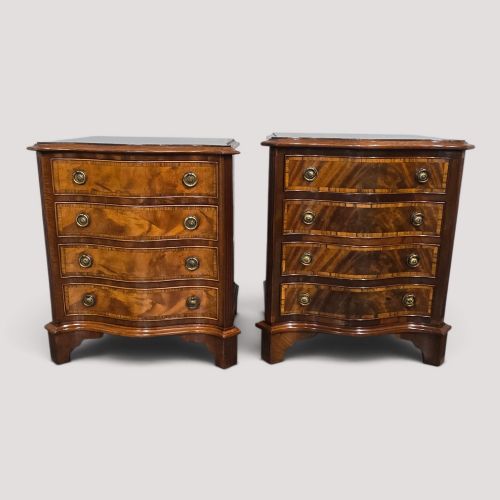
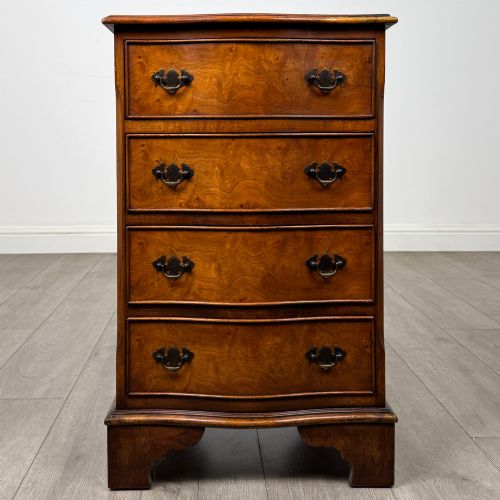
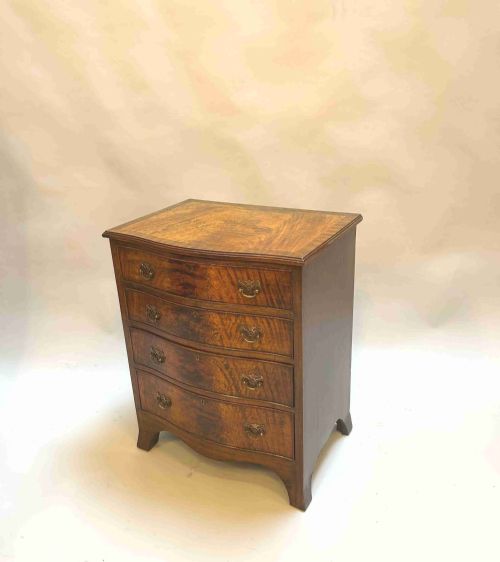
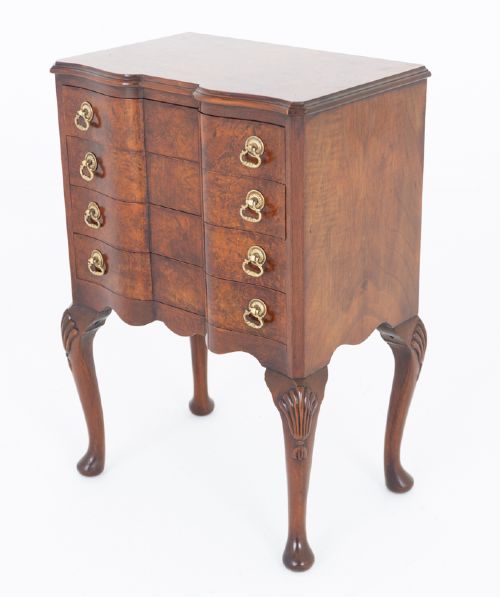
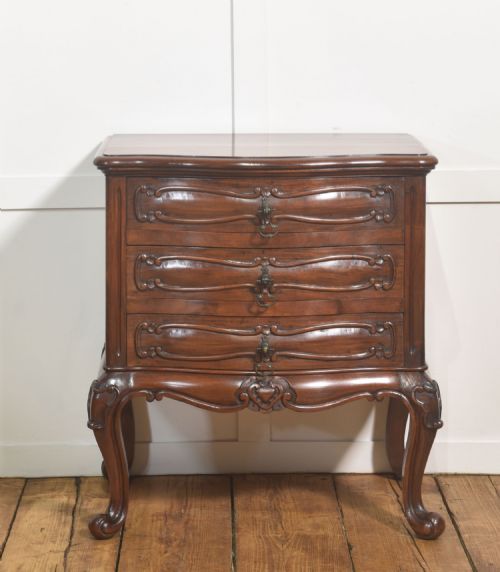
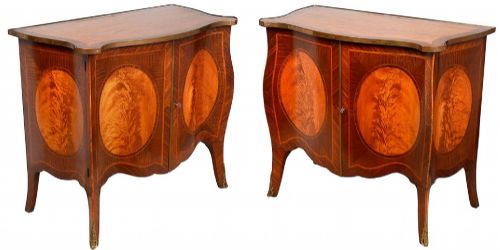
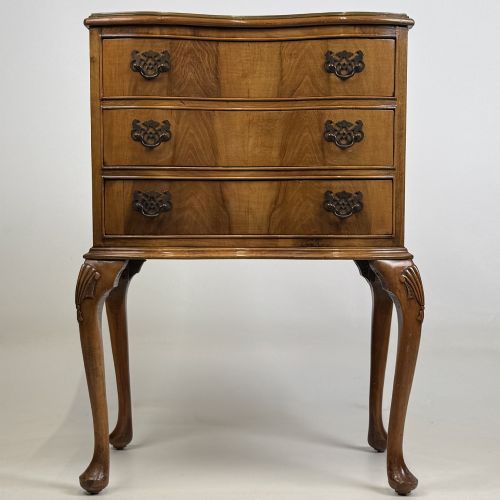
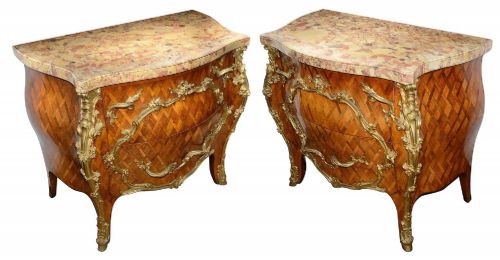
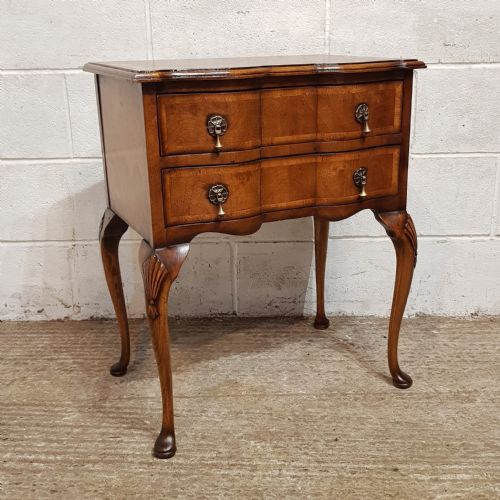
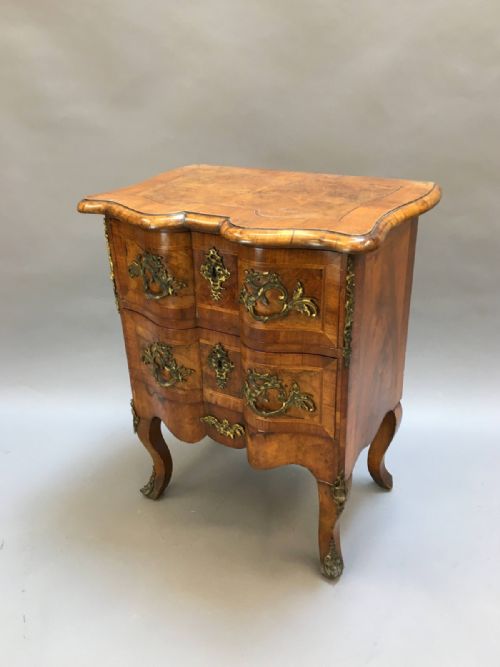
When you search for a serpentine bedside chest, you encounter small-scale case furniture defined by a convex centre flanked by concave ends. These diminutive chests and commodes originate from periods spanning the eighteenth century through to the early twentieth century, incorporating Georgian designs and continental revival styles.
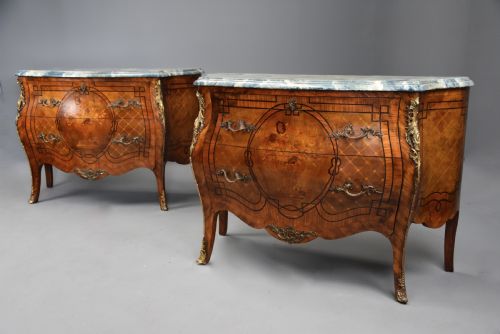
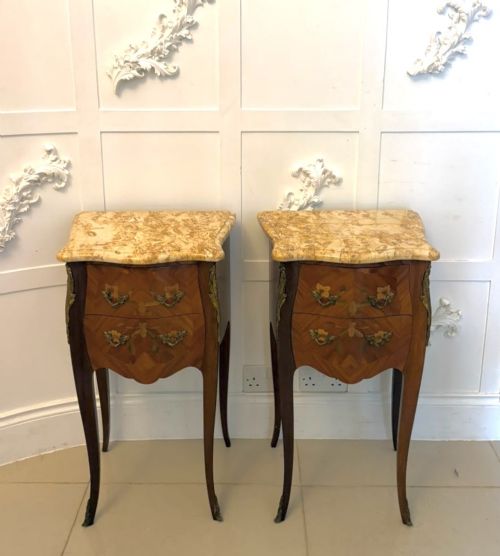
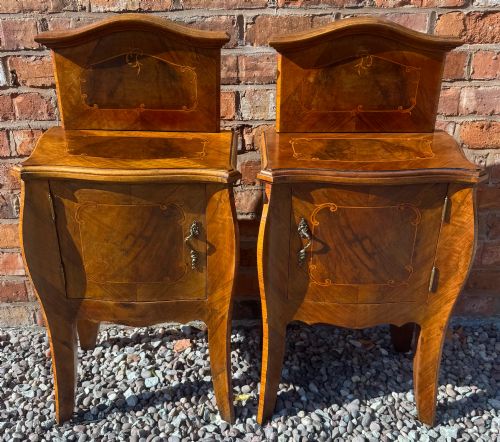
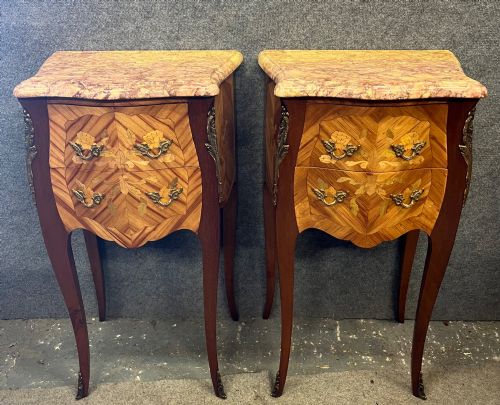
The pieces appearing most frequently take the form of compact bedside cabinets, lamp tables, and small chests of drawers. Walnut and mahogany provide the primary English vernacular, while French and Italian variants utilise exotic timbers like kingwood, tulipwood, and burr walnut.
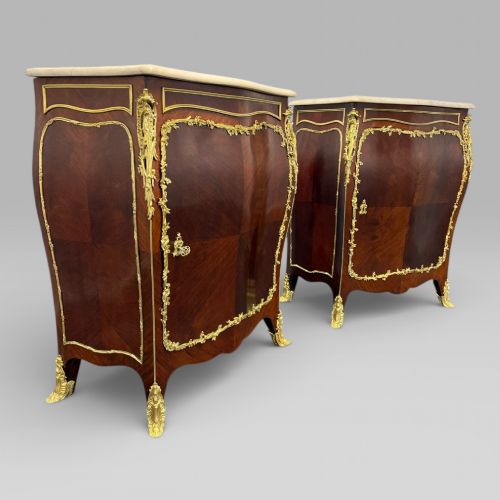
Makers often fashioned these items in pairs, intended to flank a bed, though single chests appear with equal regularity. They balance practical bedside storage with decorative cabinet work, employing shaped drawer fronts and frequently topped with marble.
How they were made
Cabinet makers constructed the serpentine carcass by shaping solid timber or bending laminates to create the characteristic undulating front. Veneers of burr walnut, kingwood, and mahogany were meticulously laid over oak or pine carcases, creating intricate grain patterns across the curved drawer fronts.
Marquetry and parquetry techniques added geometric and floral patterns using contrasting woods, while brass handles, mounts, and ormolu details accented the drawer pulls and corners. Marble tops were cut and polished to fit the exact contours of the shaped wooden frames beneath.
The inventory spans the eighteenth century through to the nineteen-thirties.
What varies in quality
The standard of a serpentine bedside chest rests upon the precision of its curved joinery and the selection of its veneers. Superior examples display seamless continuity of grain across the undulating drawer fronts and tight, hand-cut dovetails within the drawers.
Lesser pieces may exhibit flat or stiffly curved lines that lack the fluid grace of master craftsmanship, alongside simpler secondary timbers inside. The refinement of the cast brass mounts and the quality of the marble top further distinguish standard production from exceptional cabinet work.
E. Kahn
The Serpentine Bedside Chest Glossary
- Serpentine
- A front contour characterised by a convex central section flanked by two concave curves. This shaping requires advanced woodworking skill to execute properly across drawers and carcases.
- Bombe
- A swelling, bulging outward profile characteristic of continental commodes and bedside cabinets. It gives the piece a voluptuous, rounded appearance.
- Marquetry
- Decorative veneer work arranged in pictorial or ornamental patterns using various coloured woods. It adorns the surfaces of many continental chests.
- Ormolu
- Gilded bronze used for decorative mounts, handles, and feet on French revival furniture. It adds metallic highlights to the timber surfaces.
- Commode
- A low chest of drawers or cabinet, often of French origin, adapted for domestic storage use. Many examples feature marble tops and intricate parquetry.
Serpentine Bedside Chest: Frequently Asked Questions
What is a serpentine bedside chest?
A serpentine bedside chest is a small storage cabinet featuring a curved front with a convex centre and concave sides. These pieces provide compact bedside storage while introducing decorative period character to a bedroom.
Craftsmen produced them in various timbers and styles, ranging from Georgian mahogany designs to continental revival commodes with marble tops.
How were they used historically?
Historically, these small chests served beside the bed to hold personal items, nightwear, or lighting. Their compact proportions made them suitable for smaller dressing rooms and bedrooms.
Over time, many functioned equally well as lamp tables or small side cabinets in reception rooms.
How do I identify the period?
Dating relies on examining the construction methods, timber choices, and prevailing stylistic revivals seen in the piece. Georgian and eighteenth-century examples display restrained mahogany or walnut forms, whereas Edwardian and early twentieth-century pieces often reflect French Louis XV or XVI revival tastes.
Drawer linings, handle types, and secondary woods offer further clues to the exact era of manufacture.
Do they come in pairs?
Many of these chests were manufactured as matched pairs to flank a bed symmetrically. Finding a matching pair remains common among Edwardian and continental revival pieces.
Single chests also appear frequently for buyers seeking an accent piece for a specific corner or beside a single bed.