



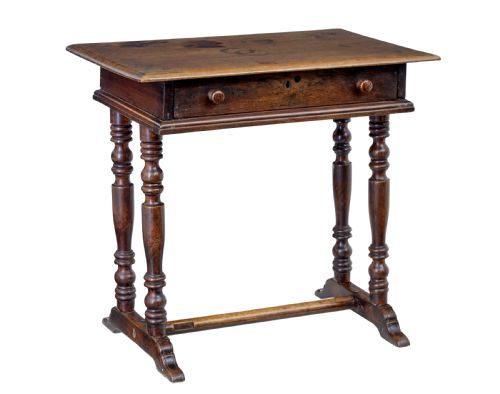
Traditional Walnut Nightstands
Traditional walnut nightstands offer practical bedside storage while anchoring a bedroom with rich grain and classic form.
Traditional Walnut Nightstands
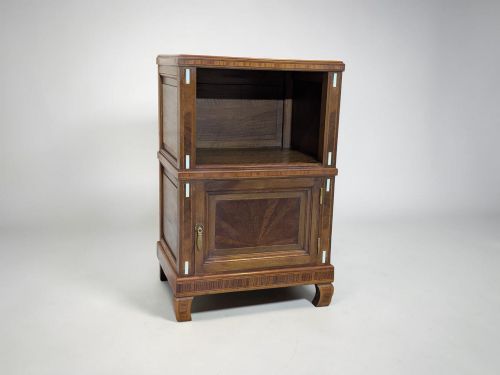
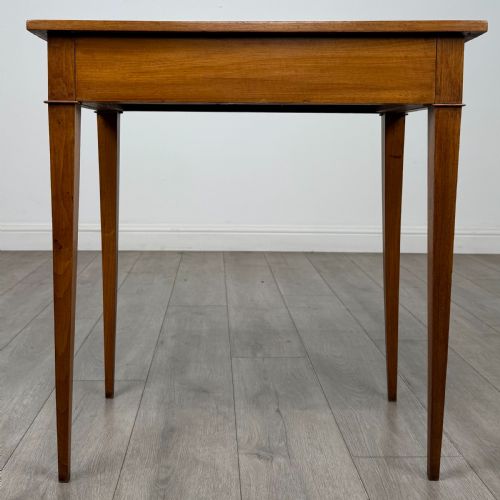
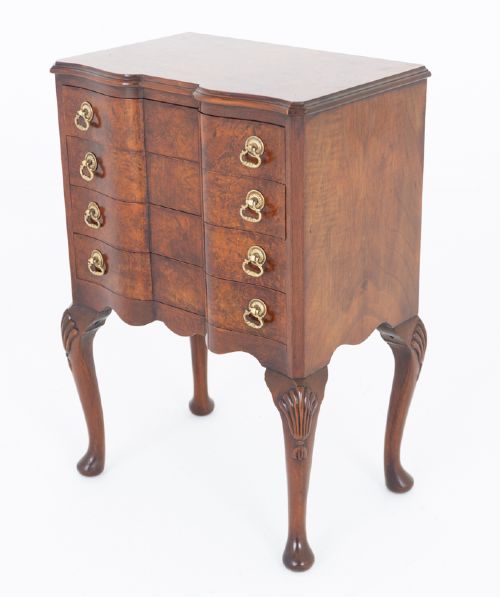
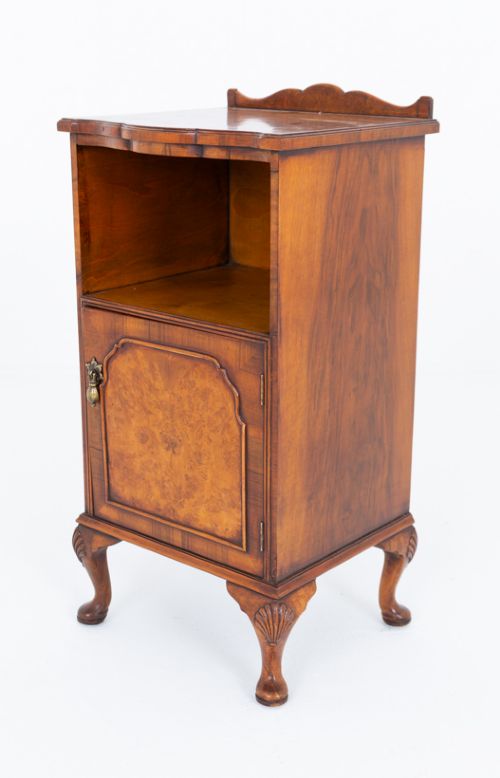
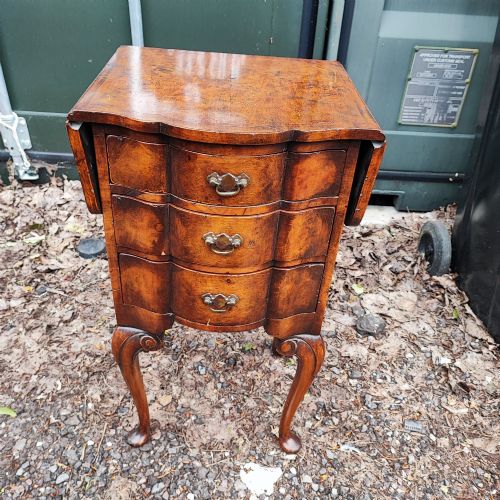
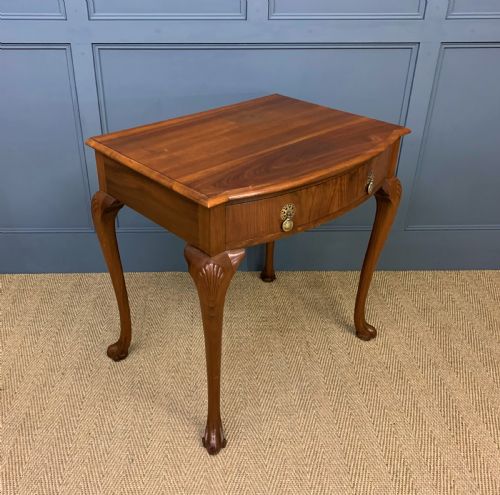
Traditional walnut nightstands include bedside cabinets, bedside tables, and side tables designed for domestic sleeping quarters. Buyers searching for traditional walnut nightstands encounter forms spanning from the eighteenth century to the nineteen-thirties.
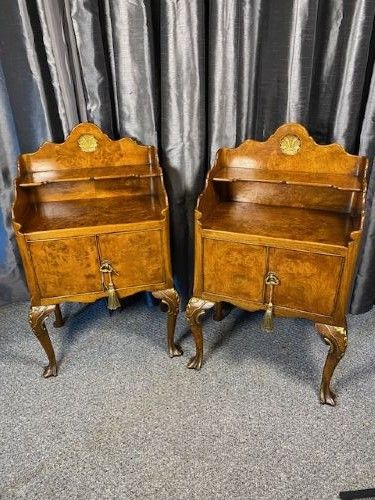
The most common examples on this page follow the Queen Anne style and revival aesthetics from the early twentieth century. These pieces frequently appear as matched pairs featuring cupboard doors, drawers, or open surfaces.
Construction and materials
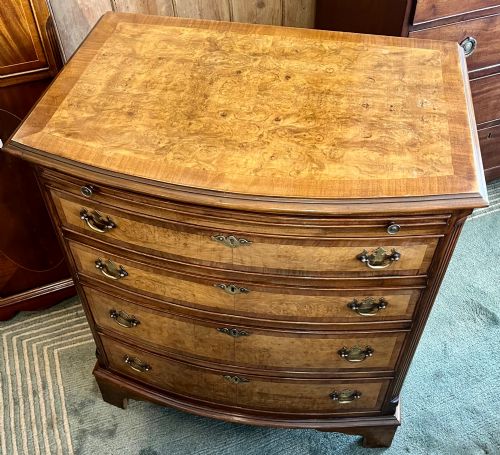
Cabinet makers utilised solid walnut alongside burr walnut veneer to create patterned surfaces on doors and tabletops. Figured walnut timber provides natural decorative movement across the primary panels.
Details such as brass hardware, fruitwood accents, and floral marquetry inlay appear on selected Victorian and twentieth-century examples. Carving adorns specific cupboard tables and revival pieces.
The listings span periods from the 18th century through to 1930, utilising walnut, burr walnut veneer, fruitwood, and brass.
Assessing quality and craftsmanship
Superior examples display carefully matched veneer grains across drawer fronts and cabinet doors, ensuring visual continuity. Finer pieces incorporate crisp hand-carving and substantial brass furniture rather than stamped metal.
Structural integrity depends on stable timber selection and traditional joinery within the carcase. Age-related patination on the polished walnut surface distinguishes honest period examples from later interpretations.
The Traditional Walnut Nightstands Glossary
- Burr walnut
- A specialised timber cut from the abnormal growth of a walnut tree, yielding swirling patterns. This highly decorative veneer is prized for cabinet fronts.
- Marquetry
- The art of applying pieces of veneer to a structure to form decorative patterns. Floral motifs frequently decorate high-grade Victorian cabinets.
- Queen Anne style
- A design movement characterised by cabriole legs and curved lines, revived extensively during the early twentieth century. Bedside cabinets of this form often feature smooth bowed fronts.
- Bedside cabinet
- An enclosed piece of furniture designed to hold night-time essentials behind a door. These items provide more concealed storage than an open lamp table.
Traditional Walnut Nightstands: Frequently Asked Questions
Are pairs difficult to find?
Matched pairs of traditional walnut nightstands appear frequently from the early twentieth century, particularly within revival pieces. Single cabinets also surface regularly from various decades.
Sourcing a true pair from earlier periods requires patience, as most antique items were originally manufactured individually or separated over time.
What is burr walnut?
Burr walnut comes from a growth on the tree that produces intricate, swirling grain patterns. Cabinet makers prized this wood for its decorative qualities.
It was typically sliced into thin veneers and applied to the primary surfaces of superior bedside chests and tables.
How do I date a cabinet?
Dating relies on construction methods, timber preparation, and stylistic markers such as Queen Anne revival shapes or Victorian marquetry. Hardware and secondary woods also offer clues to the period.
Comparing the internal linings and drawer joints helps distinguish Edwardian and nineteen-thirties production from nineteenth-century work.
How do I maintain the finish?
Polished walnut surfaces require protection from direct sunlight and excessive moisture to prevent fading and veneer lifting. Regular dusting with a soft cloth preserves the natural lustre.
Occasional application of appropriate wax polish maintains the timber without building up heavy residues.