


Sepia Tones Architectural Artwork
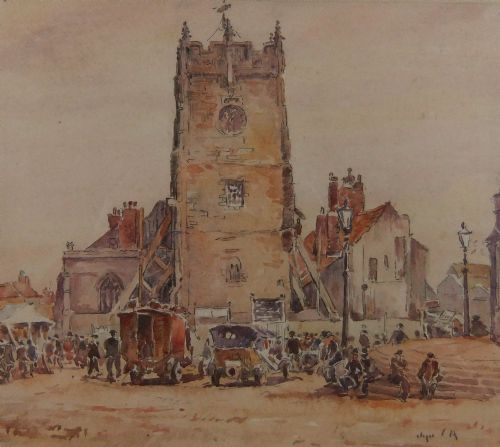
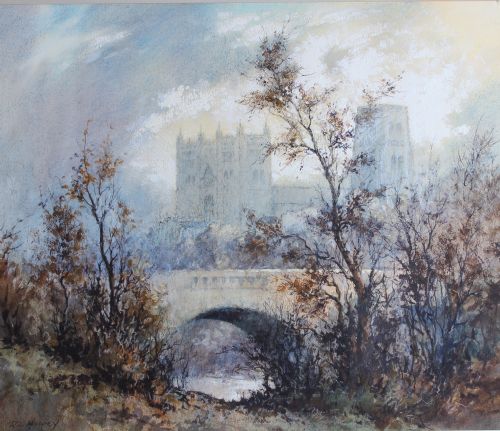
These sepia tones architectural artwork pieces capture historic streets and buildings through monochrome ink and muted watercolour wash.
Sepia Tones Architectural Artwork
When you search for sepia tones architectural artwork, you encounter topographical watercolours and ink drawings recording British cathedrals, colleges and townscapes. The selection spans the nineteenth century through to the mid-twentieth century, capturing familiar urban and rural landmarks in restrained monochrome or brownish wash.
The versions you are most likely to meet on this page include Edwardian views of London squares and cathedral cities executed by regional British artists. These works frequently combine pencil outline with subtle watercolour or ink wash on paper, framed behind glass, often in giltwood frames.
How they were made
Artists created these works on paper using pencil or ink for the architectural line work, followed by watercolour paint applied in monochrome or sepia tones to build depth and shadow. The materials recorded in the evidence consist simply of paper, ink, watercolour, pencil, glass and giltwood frames.
Framing typically involves glass to protect the delicate paper surface from atmospheric moisture and handling. Giltwood frames provide a traditional surround that complements the monochromatic palette of the artwork within.
Listings span the Edwardian period, Victorian era, and the nineteenth and twentieth centuries, utilising paper, ink, watercolour, pencil, glass and giltwood.
What varies in quality
The distinction between standard works and finer examples lies in the precision of the draughtsmanship and the artist's ability to render perspective within complex architectural forms. Stronger pieces demonstrate confident pen work beneath the wash, capturing the structural integrity of historical buildings rather than relying solely on surface tone.
Provenance and attribution also differentiate the range, with signed works by known regional practitioners or exhibited artists commanding greater attention. The condition of the paper and the integrity of the original framing elements further distinguish individual pieces.
John Smith Atherton·Robert Leslie Howey·Charles James Lauder·Sir William Nicholson·Tom Dudley·Fred Lawson·John Thirttle
The Sepia Tones Architectural Artwork Glossary
- Topographical
- Depicting specific physical locations, buildings or landscapes with accurate local detail. These works serve as visual records of historic towns and architecture.
- Monochrome
- Executed in a single colour or shades of a single colour, such as sepia or brown ink. This approach emphasises line and tonal variation over a full palette.
- Giltwood
- Wood that has been coated with a thin layer of gold leaf or gilt paint. It is commonly found on traditional picture frames enclosing these historic watercolours.
- Watercolour wash
- A thin, semi-transparent layer of pigment diluted with water and applied across paper. Artists use this technique to create subtle shadows and atmospheric background tones.
Sepia Tones Architectural Artwork: Frequently Asked Questions
How should I hang these artworks?
Keep these paper pieces away from direct sunlight to prevent the sepia tones and ink from fading over time. Direct heat sources should also be avoided to protect the paper and frame structure.
Hang them at eye level on interior walls where humidity remains relatively stable. Using secure picture hooks suited to the weight of the giltwood frame ensures safe display.
Are these works original paintings?
Most items listed are original hand-drawn watercolours and ink works on paper created by individual artists. Each piece represents a unique hand-rendered view rather than a mass-produced reproduction.
Careful inspection reveals the physical brushstrokes, pencil underdrawing and ink lines unique to an artist working directly on paper.
What periods do these pieces represent?
The selection spans from the early nineteenth century through the Edwardian era and into the mid-twentieth century. This timeline covers various British artistic movements including Victorian topographical art and the Norwich School.
Each period brings distinct shifts in paper quality, framing styles and architectural rendering techniques.