


Sepia Tone Watercolour Artwork
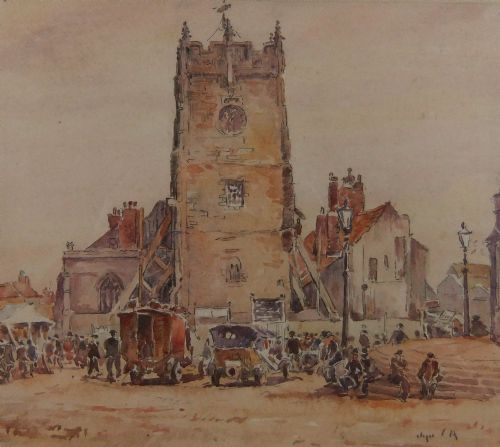
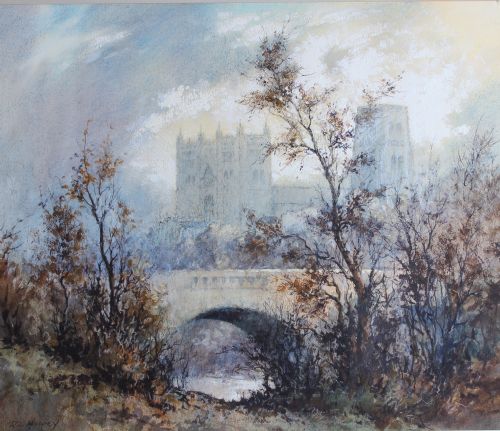
These sepia tone watercolour artwork pieces capture architectural and landscape scenes across centuries through subtle monochrome wash and ink.
Sepia Tone Watercolour Artwork
When you search for sepia tone watercolour artwork, you find original paintings and drawings created primarily in monochrome washes, ink, and pencil. The examples gathered here span from the Georgian period through the Edwardian era and into the mid-twentieth century.
You meet townscapes, cathedral views, and rural landscapes produced by British artists working in watercolour and ink. Many of these works record specific locations such as York, Durham, and London.
The objects take the form of framed paintings, drawings, and sketches on paper support. They reflect centuries of British topographical and landscape traditions.
How they were made
Artists built these compositions using watercolour paint and pigment alongside ink, pen, and pencil on paper. Monochromatic wash created deep shadow and gentle tonal gradation without relying on a full palette of bright colours.
Draftsmanship formed the foundation of the work, with pen and ink lines defining architecture and figures beneath transparent layers of watercolour. Gouache appeared occasionally to add crisp highlights to the paper surface.
The listings on this page include works spanning the 18th, 19th, and 20th centuries, executed on paper using watercolour, ink, and pencil.
What varies in quality
The strength of the underlying drawing and the control of the wash determine the visual success of each composition. Confident pen work and deliberate brushstrokes separate accomplished artistic execution from stiffer topographical recording.
The handling of light and shadow across monochrome tones gives depth to architectural subjects and landscapes. A skilled hand creates atmospheric perspective using only the subtle shifts of sepia pigment.
John Smith Atherton·Robert Leslie Howey·Charles James Lauder·Thomas Rowlandson·Lieutenant Harold E Frecker·Tom Dudley·Dame Laura Knight·Fred Lawson·J.D. Walker·John Thirtle
The Sepia Tone Watercolour Artwork Glossary
- Monochrome
- A painting or drawing executed in a single colour or shades of a single colour such as sepia. This technique emphasises tone, line, and shadow over colour variation.
- Wash
- A thin, fluid layer of watercolour pigment spread evenly across paper to create transparent areas of tone or background sky. It forms the basis of atmospheric depth in these landscapes.
- Topographical
- Artwork that depicts specific real-world locations, buildings, and streets with a degree of accuracy. These views served to record towns and countryside before widespread photography.
- Gouache
- An opaque watercolour paint that dries to a matte finish, sometimes applied over transparent wash to add highlights. It provides dense coverage where pure watercolour remains translucent.
Sepia Tone Watercolour Artwork: Frequently Asked Questions
What is sepia tone watercolour artwork?
These pieces are original British paintings and drawings created using brown or monochrome water-based pigments. They focus on architectural views, townscapes, and rural scenes.
Artists used ink, pencil, and wash on paper to build form and shadow. The resulting works capture historic British locations across the eighteenth, nineteenth, and twentieth centuries.
How should I frame these waterworks?
Watercolour paintings on paper require conservation mounting to prevent direct contact with the glass. Proper framing protects the delicate pigment from moisture and shifting humidity.
Keep these artworks away from direct sunlight to preserve the subtle tones of the sepia wash. Neutral mats complement the historic monochrome palette without overpowering the drawing.
How can I tell the period?
Clothing styles, architectural details, and the framing materials often offer clues to the date of creation. Signatures and inscriptions by the artist help place the work within a specific era.
Works from the Georgian and early nineteenth century display different paper textures and ink qualities compared to Edwardian or mid-century pieces.
Where were these artists working?
The artists represented here painted across various British regions, documenting towns, cathedrals, and riversides. Locations range from London and York to Stirling and Durham.
Many practitioners belonged to regional British schools or captured local landmarks during their travels across the countryside.