


Paris Street Scene Painting
A paris street scene painting captures the kinetic energy and historic architecture of the French capital, offering an enduring window into urban life.
Paris Street Scene Painting
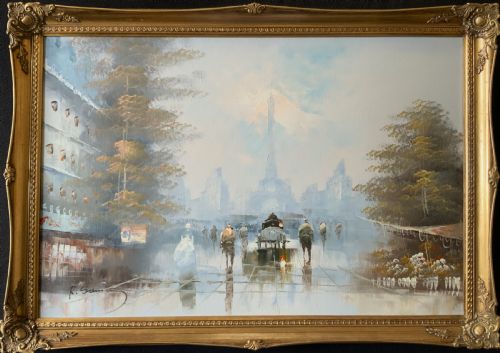
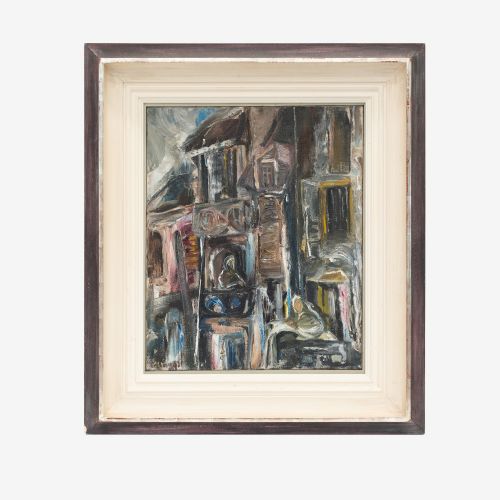
Examples range from early depictions in the nineteenth century through to mid-century expressions. Buyers encounter various interpretations, from bustling cityscapes featuring the Eiffel Tower and the Pont Neuf to quieter glimpses of suburban streets.
The aesthetic vocabulary draws heavily from impressionism, post-impressionism, and French realism. These works allow collectors to acquire a tangible piece of Parisian atmosphere spanning the nineteenth and twentieth centuries.
Assessing Quality and Execution
Quality rests in the artist's ability to manipulate light, shadow, and perspective to capture the specific atmosphere of the French capital. Stronger examples demonstrate confident brushwork and a coherent sense of space, whereas weaker works rely on rigid repetition.
The handling of the frame also contributes significantly to the overall presence of the piece. Period-appropriate gilded wood frames elevate the visual impact, while later or poorly matched surrounds diminish the integrity of the artwork.
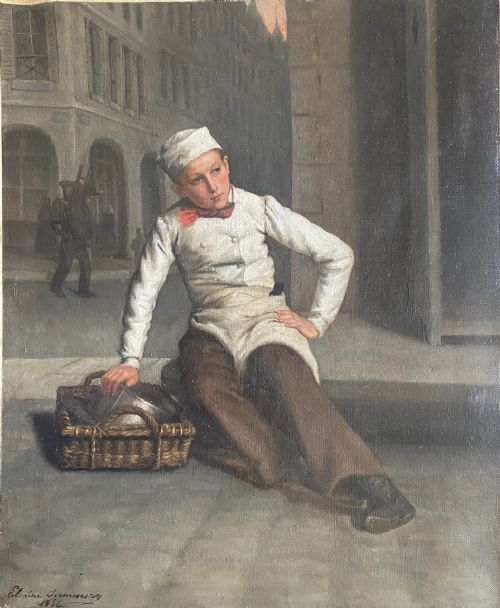
Several canvases capture Parisian cooks and cab drivers taking a brief pause from their bustling daily routines.
Lilian Colbourn·Albert Ludovici Jnr·Caroline Burnett·Victor Gabriel Gilbert·Merio Ameglio·Eduard Leon Cortes·T E Penck
The Paris Street Scene Painting Glossary
- Impressionism
- A nineteenth-century art movement characterised by relatively small, thin, yet visible brush strokes and an emphasis on accurate depiction of light. This style forms the foundation for many urban views of the French capital.
- Gilded Wood
- Wood that has been treated with a thin layer of gold leaf or gilt paint. Frames finished in this manner frequently accompany nineteenth and twentieth-century fine art.
- Oil on Canvas
- A painting technique where pigments suspended in drying oils are applied to a woven fabric stretched across a frame. This medium provides durability and allows for rich textural variation.
- Post-Impressionism
- A predominantly French art movement that developed from impressionism, extending its limitations while retaining its use of vivid colours. Artists in this tradition explored heavier outlines and symbolic content.
- Genre Painting
- The pictorial representation of scenes or events from everyday life, such as markets, domestic interiors, or street activities. These works focus on ordinary people engaged in common pursuits.
Paris Street Scene Painting: Frequently Asked Questions
What periods do these paintings cover?
The available works span from the mid-nineteenth century through the mid-twentieth century, capturing shifting artistic movements across decades.
Collectors will find pieces created during the Belle Epoque alongside later mid-century expressions.
How should I frame an unframed canvas?
Selecting a period-appropriate frame, such as a gilded wood moulding, ensures the artwork is displayed in keeping with its historical context.
Consulting a professional framer protects the edges of the canvas and secures proper tension.
Are these works original paintings?
The selection consists of original hand-painted works executed in oil or watercolour by listed artists and painters.
Printed reproductions are not part of this inventory, ensuring each item is a unique handmade creation.
How do I identify impressionist street scenes?
Impressionist works typically feature loose brushwork, vibrant colour palettes, and a focus on natural light effects in urban settings.
Subjects often include bustling boulevards, cafes, and famous Parisian monuments rendered with expressive energy.