


Framed Parisian Street Scene
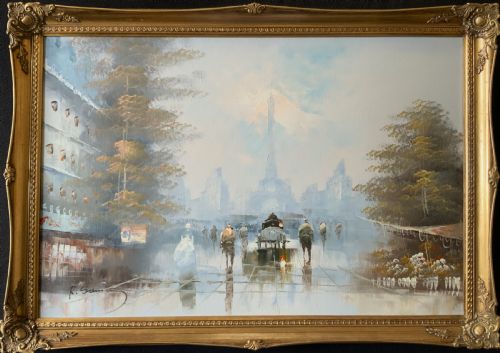
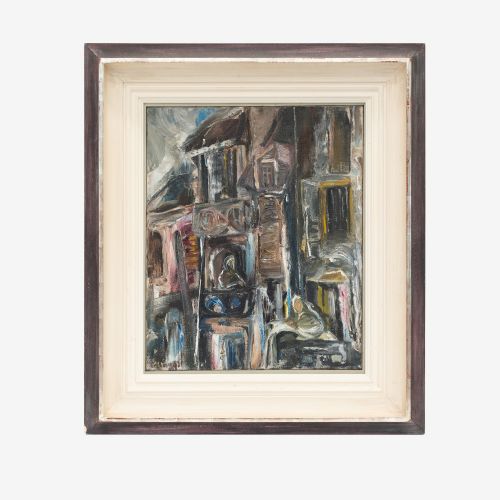
A framed Parisian street scene captures the enduring allure of the French capital through Impressionist, Post-Impressionist, and mid-century brushwork.
Framed Parisian Street Scene
A framed Parisian street scene brings the atmosphere of the French capital into an interior through oil paintings, watercolours, and pastel drawings. These artworks range from early twentieth-century depictions to mid-century interpretations.
Buyers encounter subjects such as the Eiffel Tower, the Pont Neuf, Montmartre in winter, and bustling city streets. The versions most commonly met on this page are mid-century oil paintings on canvas and board.
The aesthetic draws heavily on Impressionist, Post-Impressionist, and Belle Epoque traditions. Works span multiple decades of the twentieth century alongside nineteenth-century examples.
How they were made
Artists painted primarily in oil on canvas and board, capturing urban light with visible brushstrokes. Some works utilise watercolour or pastel on paper to render softer atmospheric effects.
Frames are integral to the presentation, utilising wood, gesso, and gilt wood to complement the painted surface. These wooden frames provide structural support while enhancing the visual depth of the artwork.
Several artists preferred painting Paris exclusively in winter coats.
What varies in quality
Quality rests upon the handling of light and perspective by the artist, distinguishing works with confident composition from simpler decorative pieces. The relationship between the painted scene and its frame also determines the overall standard.
Signatures by notable painters elevate certain works within the tradition of French and European cityscape painting. The tactile quality of the medium, whether thick oil paint or delicate pastel, dictates the depth of the visual experience.
Lilian Colbourn·Albert Ludovici Jnr·Caroline Burnett·Merio Ameglio·Eduard Leon Cortes
The Framed Parisian Street Scene Glossary
- Impressionism
- A nineteenth-century art movement characterised by relatively small, thin, yet visible brush strokes and an emphasis on accurate depiction of light. It forms the stylistic backbone of many urban French scenes.
- Gilt Wood
- Wood that has been treated with gold leaf or a gold-coloured metallic finish. This material is standard for traditional picture frames enclosing Parisian street scenes.
- Post-Impressionism
- A predominantly French art movement that developed from Impressionism, extending its limitations while retaining its use of vivid colours. Artists applied this approach to cityscapes and suburban views.
- Gesso
- A plaster-like mixture applied to wood frames before gilding or painting. It provides a smooth surface for decorative moulding.
- Pastel
- A dry painting medium in the form of a stick, consisting of powdered pigment and a binder. Works on paper using this medium offer a distinct powdery texture.
Framed Parisian Street Scene: Frequently Asked Questions
What periods do these paintings date from?
The selection includes works spanning from the nineteenth century through the mid-twentieth century. Many pieces date specifically from the decades between nineteen-hundred and nineteen-sixty.
This broad chronological range encompasses Belle Epoque charm as well as mid-century expressionism.
How should I hang a framed Parisian street scene?
These works suit domestic or study spaces where lighting can highlight the textured oil or pastel surfaces. Pairing the artwork with a suitable wall space allows the gilt or wooden frame to anchor the composition.
Consider eye-level placement to best appreciate the finer details of the cityscapes.
What subjects are most common?
Common subjects include iconic landmarks such as the Eiffel Tower and the Pont Neuf, alongside snowy depictions of Montmartre. Other pieces capture anonymous figures on bustling city streets or quiet Parisian suburbs.
These varied perspectives reflect different interpretations of urban life across Europe.