


Seed Pearl Cluster Ring
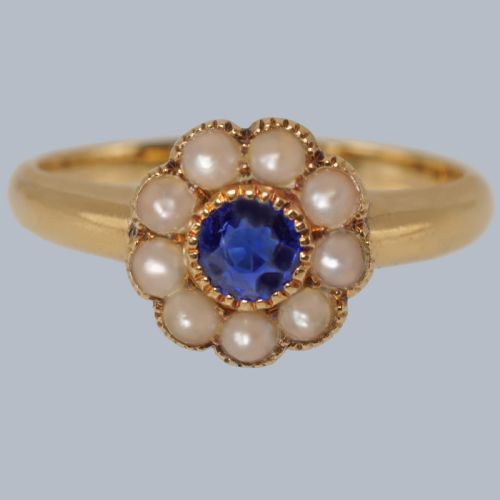
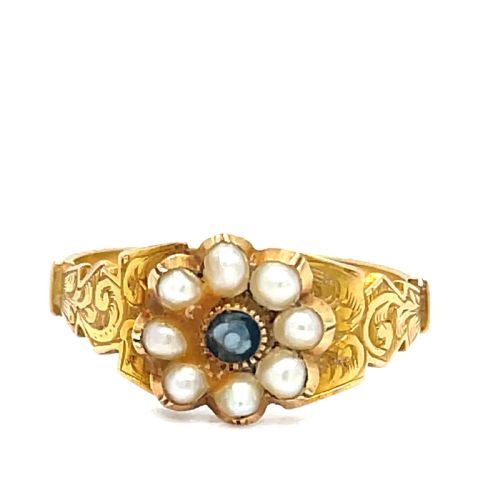
A seed pearl cluster ring brings together delicate glowing spheres of nacre in dense floral or geometric arrangements that catch the eye.
Seed Pearl Cluster Ring
A seed pearl cluster ring centres on tiny, finely matched saltwater or freshwater pearls arranged in tight botanical patterns or surrounding a central coloured gemstone. These pieces surface most frequently from the Georgian, Victorian, and Edwardian eras, displaying the meticulous wirework and bezel settings typical of those periods.
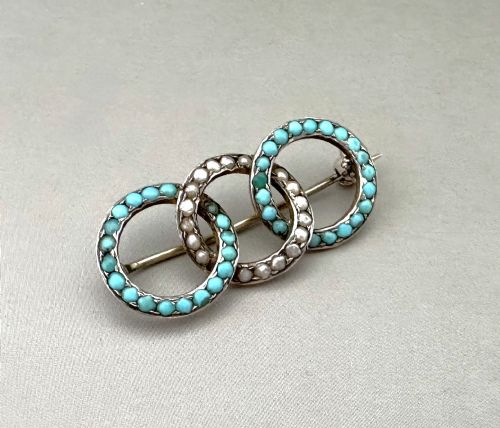
The dominant forms on this page pair the pale iridescence of tiny pearls with contrasting stones like amethyst, turquoise, garnet, and peridot. Gold is the primary mounting metal, spanning nine-carat, fifteen-carat, and eighteen-carat purity, alongside occasional silver gilt.
Buyers seek these rings for their intricate craftsmanship and the soft, organic lustre that larger single stones simply cannot replicate. Each piece reflects the aesthetic priorities of its decade, shifting from deep mourning designs to vibrant late-nineteenth-century floral arrangements and delicate Edwardian halos.
How they were made
Goldsmiths constructed these rings by mounting tiny seed pearls onto delicate gold prongs, thin collets, or by securing them with fine seed-pearl wirework over silk or metal backing. The metalwork often involved high-carat yellow or rose gold, cast and hand-finished to support complex multi-stone clusters without overwhelming the diminutive pearls.
Central gemstones such as amethyst, tourmaline, turquoise, or almandine garnet were typically foil-backed or open-set in closed or claw settings, surrounded by concentric circles of tiny pearls. The integration of blue glass, enamel, or rose-cut diamonds further demonstrates the diverse bench techniques utilised by period jewellers.
Listings on this page span the Georgian, Victorian, and Edwardian periods, frequently combining seed pearls with amethyst, turquoise, and gold.
What varies in quality
The standard of a seed pearl cluster ring depends heavily on the uniformity of the nacre and how securely each tiny sphere is anchored within the design. Pearls that retain their creamy lustre and show minimal surface blemishes elevate the piece significantly above those with dull or worn pearls.
Execution of the surrounding metalwork also dictates overall refinement, distinguishing heavy, well-preserved gold mounts from thin or altered shanks. The integrity of the central gemstone setting and the tightness of the surrounding pearl cluster indicate the original maker's skill level.
The Seed Pearl Cluster Ring Glossary
- Seed pearl
- A tiny, naturally occurring or early cultured pearl, typically measuring under two millimetres. These miniature pearls form the dense, textured clusters characteristic of nineteenth-century jewellery.
- Cluster ring
- A ring design featuring a prominent central stone or motif encircled by a border of smaller gems. In these listings, that border almost exclusively comprises pearls.
- Rose cut
- An antique diamond or gemstone cut featuring a flat base and a domed crown composed of triangular facets. This historic cut creates a soft, twinkling reflection rather than the sharp brilliance of modern brilliant cuts.
- Silver gilt
- Sterling silver that has been coated with a thin layer of gold. This technique provided a rich golden appearance while remaining accessible during the nineteenth century.
Seed Pearl Cluster Ring: Frequently Asked Questions
Are these rings suitable for daily wear?
Because seed pearls have a low rating on the hardness scale and rely on intricate historic settings, they require careful handling and are best reserved for occasional wear. Wearing them while lifting heavy objects or gardening can easily dislodge the tiny pearls or bend the delicate gold claws.
Removing the ring before washing hands or sleeping ensures the longevity of both the pearls and the underlying gold mount.
How can I tell the period of my ring?
Dating relies on stylistic clues, gold hallmarks, and the specific combination of materials present in the cluster. Georgian pieces often feature closed-back settings and rose-cut diamonds, while Victorian examples frequently incorporate amethyst, garnet, or mourning motifs.
Edwardian rings tend to favour lighter yellow or yellow-gold mounts paired with peridot, turquoise, or bright demure halo arrangements around central gems.
What is a split pearl?
A split pearl is a natural pearl that has been intentionally cut or sliced in half, usually to create a flat back that sits flush against a metal surface. This technique allowed jewellers to set pearls securely into closed mounts without needing to drill entirely through the sphere.
Split pearls appear frequently in Victorian mourning jewellery and tightly set floral clusters where a domed profile was undesirable.