

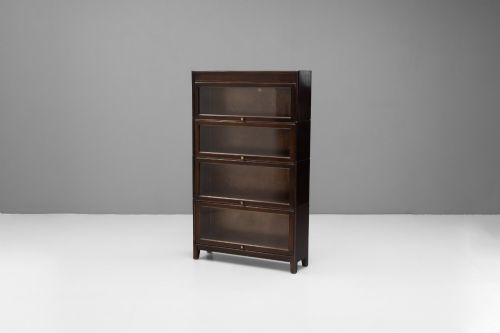
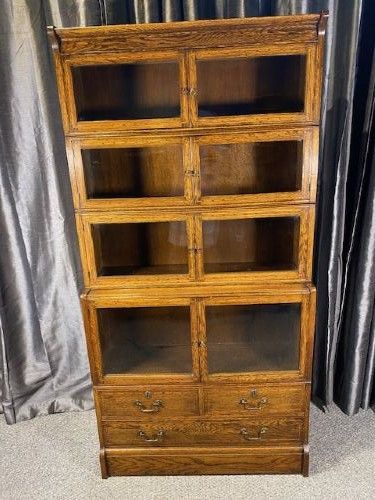
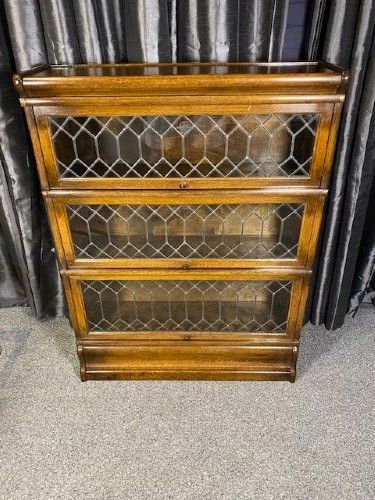
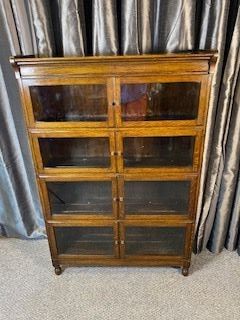

Sectional Oak Glass Bookcase
A sectional oak glass bookcase offers modular versatility, protecting volumes behind individual glazed tiers while stacking neatly in domestic or office interiors.
Sectional Oak Glass Bookcase
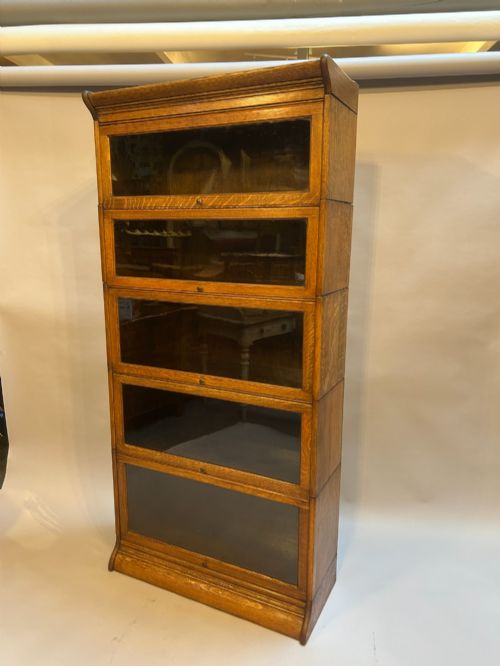
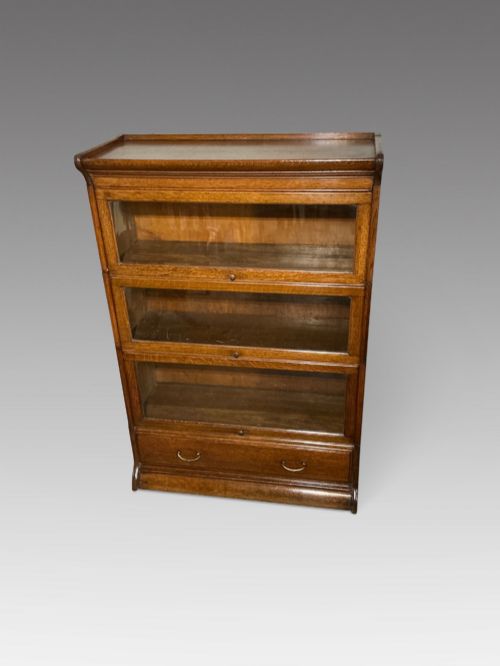
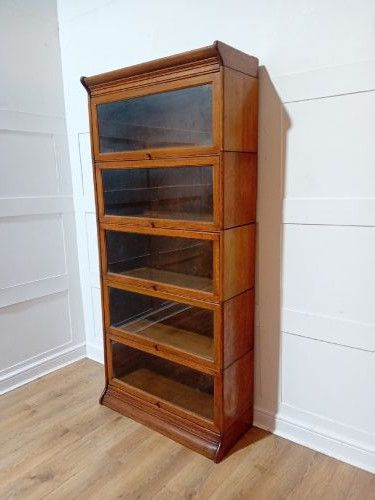
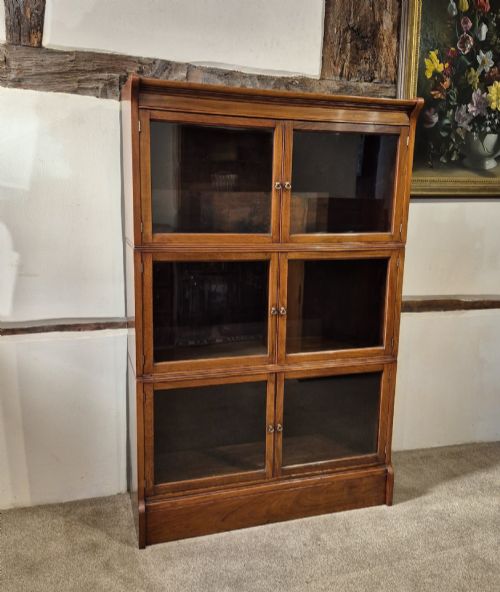
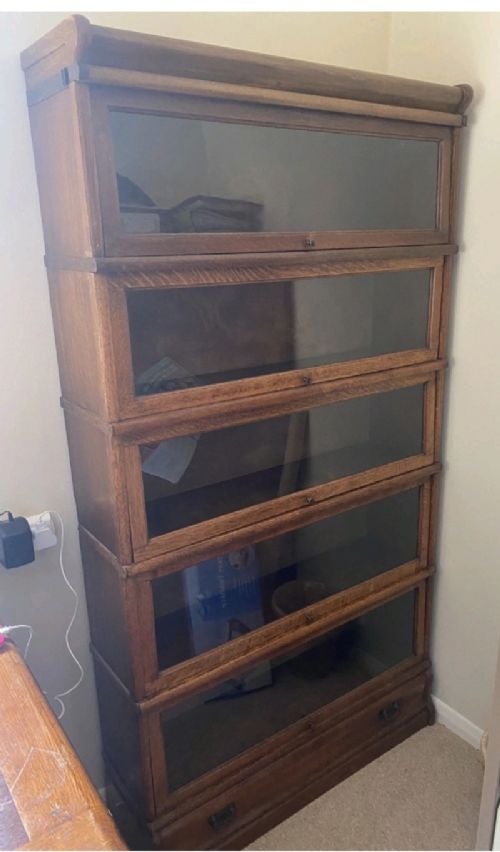
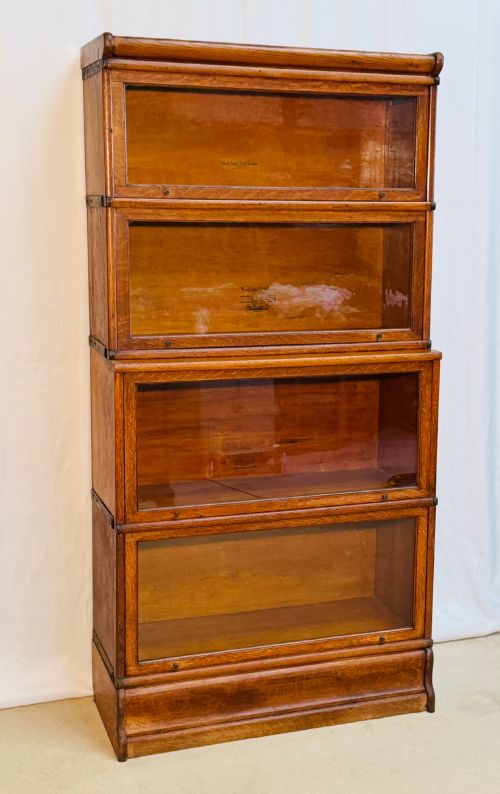
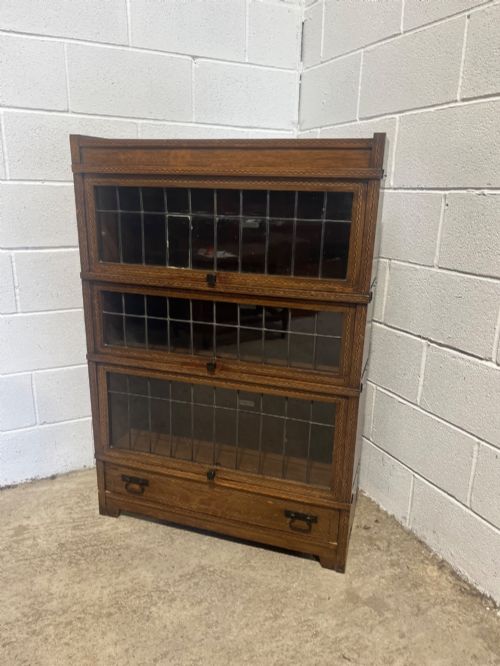
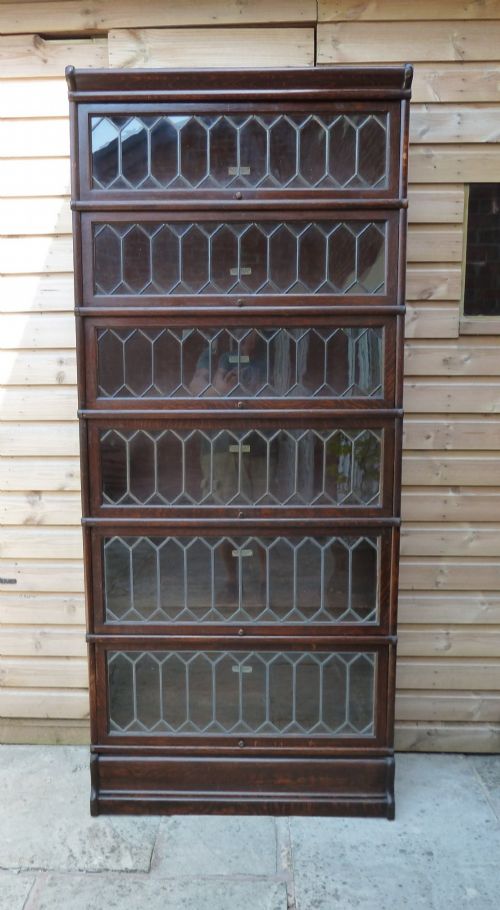
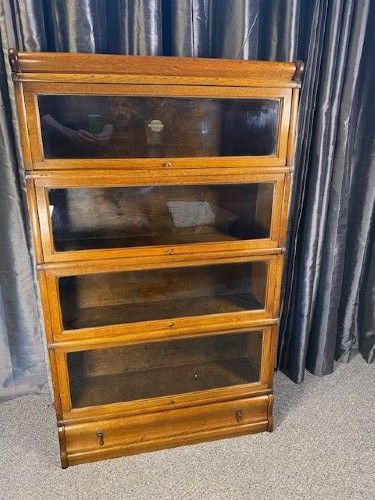
A sectional oak glass bookcase comprises multiple stacked tiers topped with a cornice and grounded on a base, occasionally incorporating a drawer below the shelving units. These modular pieces appear in configurations ranging from compact three-section cabinets to towering six-section units, accommodating growing libraries through their clever stacking design.
The predominant form encountered is the barristers or elastic bookcase, which gained popularity during the Edwardian era and continued through the nineteen-twenties and nineteen-thirties. Makers produced these modular oak units to keep reference books clean and accessible in professional offices and home studies.
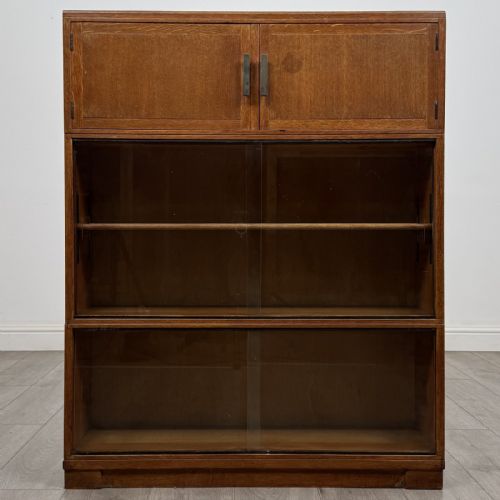
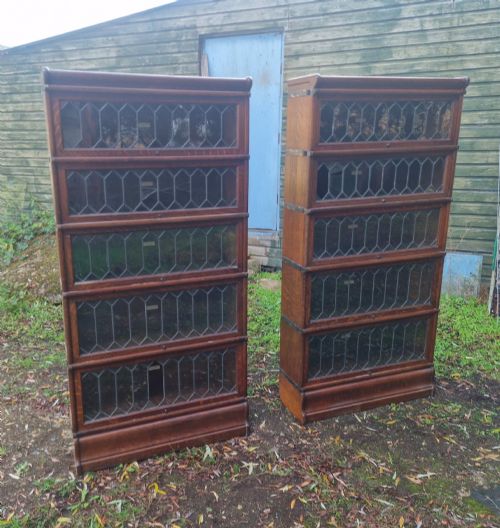
Examples span periods from nineteen hundred through nineteen-fifty, including Edwardian Arts and Crafts interpretations and later mid-century modern iterations like limed oak or Phoenix Gallery pieces. Buyers also find matched pairs and single tall narrow formats bearing maker marks from established workshops.
Materials and construction methods
Constructed predominantly from solid oak and golden oak, these modular cases utilise glass for the individual tier doors, paired with brass and metal hardware for the lifting mechanisms and pulls. Certain variations incorporate leaded glass panes within the glazed doors, creating geometric patterns characteristic of the Arts and Crafts aesthetic.
Makers integrated wood inlay on select Edwardian pieces to decorate the exterior surfaces, while structural elements rely on precise interlocking frames that allow sections to stack securely without permanent fixing. The modular design enables each glazed tier to operate independently via internal arms or tracks.
Sectional Oak Glass Bookcase Retail Price Guide 2026
Typical asking prices for sectional oak glass bookcase among the pieces listed under this phrase on Sellingantiques today, from the lower quarter to the upper quarter. They describe what is for sale here now, not the wider market.
Current listings feature stacking bookcases spanning from nineteen hundred through the nineteen-fifties, utilising oak, glass, brass, lead, and wood inlay.
Distinguishing quality across the range
Quality reveals itself in the fidelity of the timber selection, such as vibrant golden oak grain and subtle wood inlay work, contrasted against plain utilitarian surfaces. The sophistication of the hardware, from heavy brass pulls to smooth-operating mechanical lifting doors, separates standard commercial production from finer workshop output.
The architectural presence of the cornice and base mouldings dictates overall refinement, with well-proportioned standing units outperforming basic utility configurations. Original surfaces and matching tiers across a multi-section stack maintain the integrity expected by discerning collectors.
Gunn·Minty of Oxford·Gunn Furniture·Globe Wernicke·Lebus·Warwick
The Sectional Oak Glass Bookcase Glossary
- Sectional bookcase
- A modular shelving unit built from separate stacking tiers that lock together vertically. This design allows owners to dismantle or expand the cabinet as required.
- Barristers bookcase
- A specific form of stacking bookcase featuring glazed doors that lift and slide inward above each shelf. These protected lawyer and office libraries from dust.
- Cornice
- The decorative moulded projection that sits atop the uppermost tier of the bookcase. It caps the structure and provides a finished architectural silhouette.
- Leaded glass
- Small panes of window glass held together within a framework of lead cames. This technique produces decorative geometric windows on select Edwardian doors.
- Limed oak
- A wood finishing treatment that leaves a pale, whitish pigment in the open grain of oak. This finish appears on mid-century modern variations.
Sectional Oak Glass Bookcase: Frequently Asked Questions
How do sectional bookcases work?
Each tier operates as an independent wooden box with a glass door that lifts and slides back into the cabinet above the books. The separate sections rest on top of one another using interlocking pins or gravity.
This modular engineering lets you separate the units for transport or add extra tiers to the stack as your collection expands.
Were these used only by lawyers?
Legal professionals popularized the design because the glass doors protected valuable law reports from dust while keeping volumes visible and accessible in courtrooms and offices. However, domestic buyers quickly adopted them for household libraries and studies.
Makers soon produced variations ranging from simple office units to decorative inlaid pieces suited for formal residential interiors.
How do I date an oak stacking bookcase?
Dating relies on stylistic clues, hardware construction, and maker stamps found on the interior woodwork or metal tags. Edwardian and nineteen-hundred examples often display Arts and Crafts influences or leaded glass panels.
Later pieces from the nineteen-twenties and nineteen-thirties adopt simpler golden oak surfaces, while mid-century examples feature limed finishes and alternative woods.