
Secretary Desk
When you search for a secretary desk, you are looking for a dual-purpose piece that conceals a fitted writing surface behind a drop-front panel.
Secretary Desk
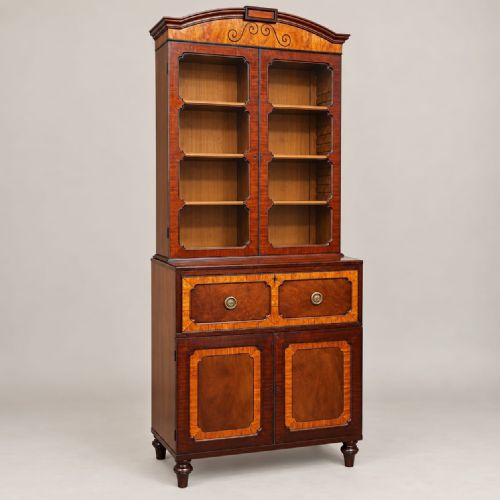
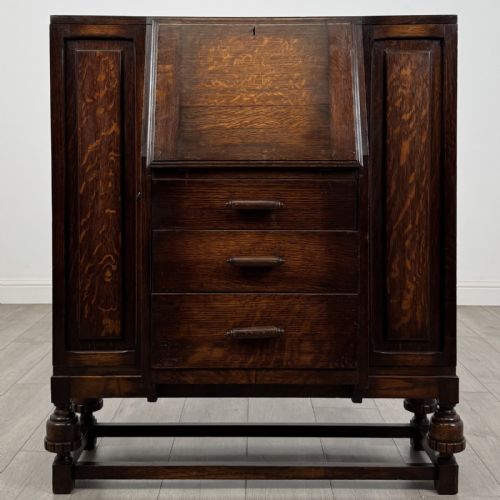
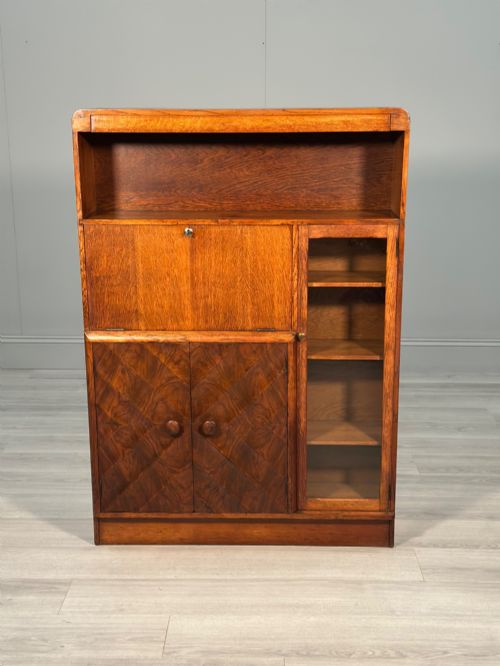
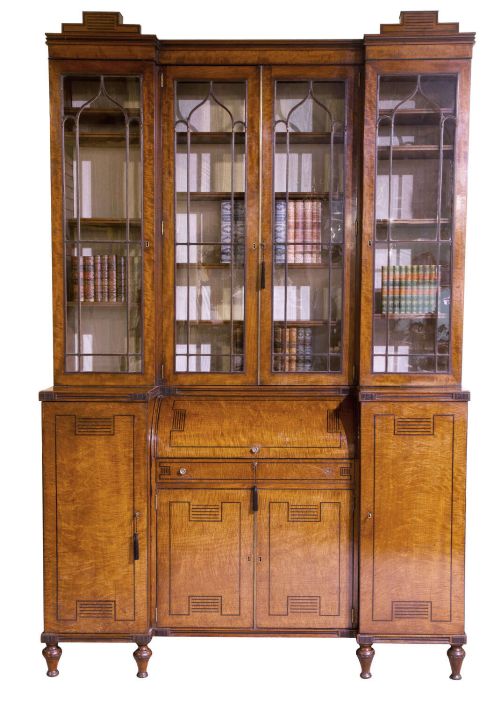
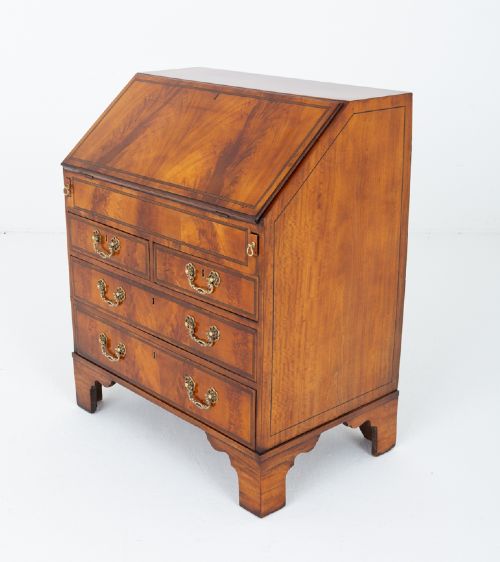
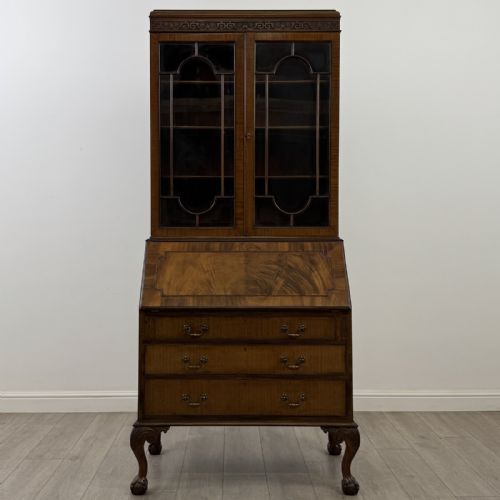
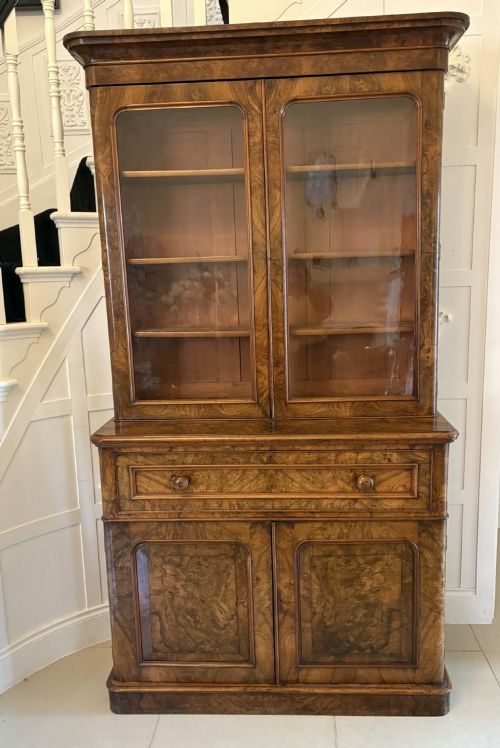
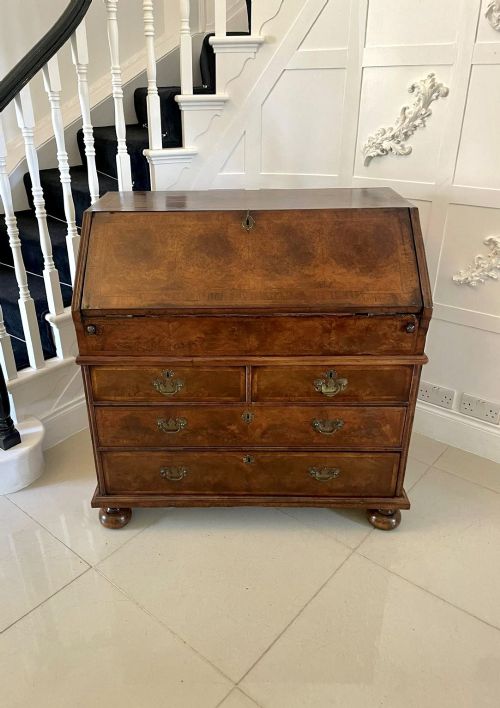
A secretary desk unites a workspace with enclosed storage, combining a slant-front or drop-front writing flap with drawers, pigeonholes, and small cupboards. This category spans simple oak writing bureaux and substantial mahogany or walnut bureau bookcases that incorporate glazed upper shelving.
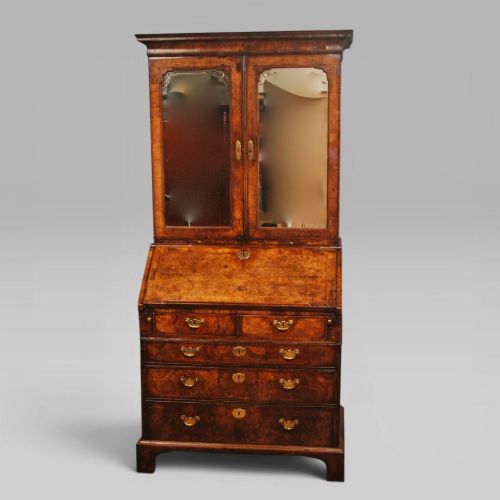
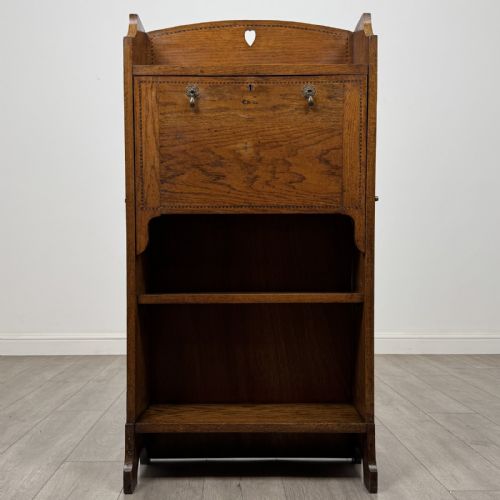
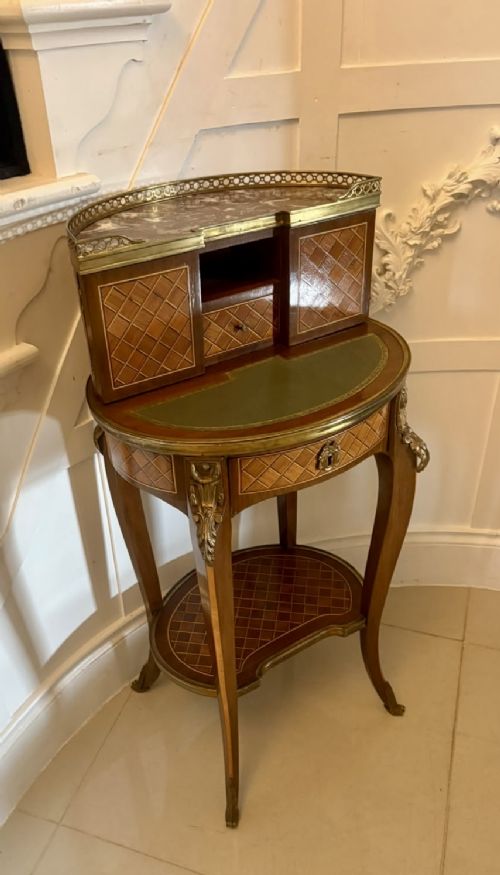
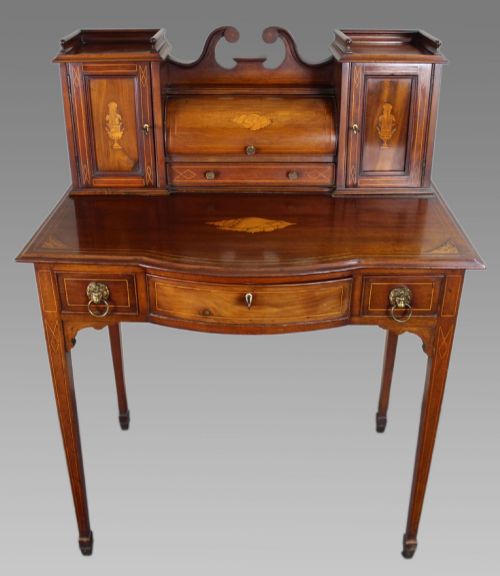
Examples on this page range from compact Edwardian and Arts and Crafts oak desks to grand Georgian, Regency, and William and Mary double-dome cabinets veneered in burr walnut or inlaid satinwood. You will also encounter specialised writing furniture such as Carlton house desks, cylinder desks, and freestanding bonheur du jour pieces.
The prevailing forms originate from the eighteenth and nineteenth centuries, alongside revival pieces from the Edwardian era. These items served as private writing cabinets and stationery storage for homes and libraries across Britain, continental Europe, and beyond.
Materials and Construction
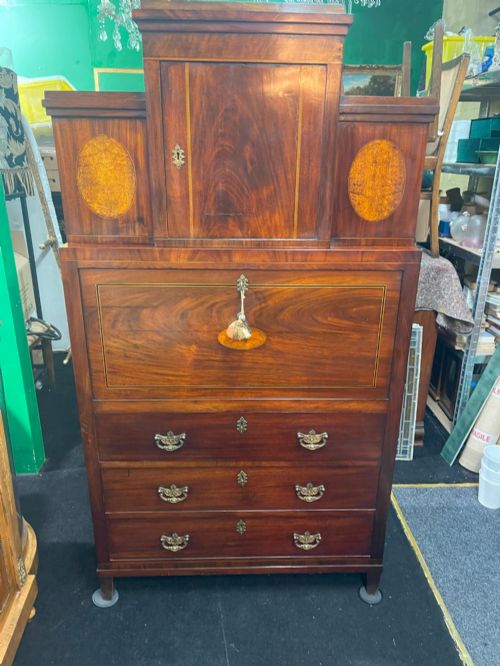
Cabinetmakers built the carcass frames using solid native timbers such as oak and mahogany, often applying decorative veneers of burr walnut, kingwood, or satinwood to the exterior surfaces. Crossbanding, stringing lines in ebony or boxwood, and floral marquetry panels decorated the primary facades of higher-status pieces.
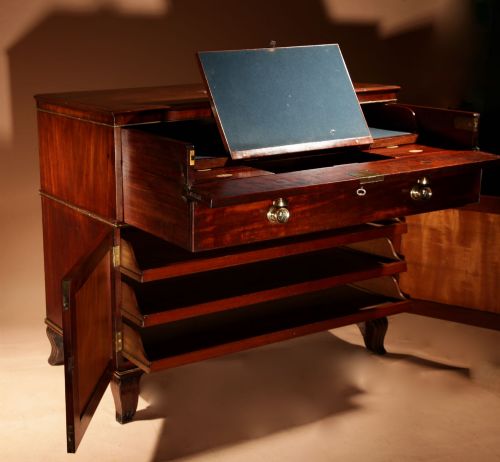
Interior compartments relied on complex joinery to create concealed wells, secret drawers, and small pigeonholes behind the drop front or cylinder lid. Brass hardware, including drop handles, escutcheons, and hinges, secured the doors and drawers while adding metallic contrast to the timber.
Many antique secretary desks contain hidden compartments and secret spring-loaded drawers accessible only by removing the central document slide.
Judging Quality and Execution
Quality rests upon the selection of timber figures, such as highly figured mahogany or matching burr walnut veneers, and the precision of the marquetry or inlay work. Grain continuity across drawer fronts and the crispness of carved details, such as bracket feet or claw-and-ball supports, indicate superior craftsmanship.
The complexity and finish of the internal writing compartment set exceptional items apart from standard utility examples. A well-executed fitted interior with secret compartments, pigeonholes, and a leather-lined writing surface reveals the original maker's investment of time and skill.
E Gomme·Edwards and Roberts·Gillows of Lancaster
The Secretary Desk Glossary
- Bureau
- A desk with a sloping hinged lid that drops down to form a writing surface, hiding interior compartments. It typically sits atop a chest of drawers.
- Secretaire bookcase
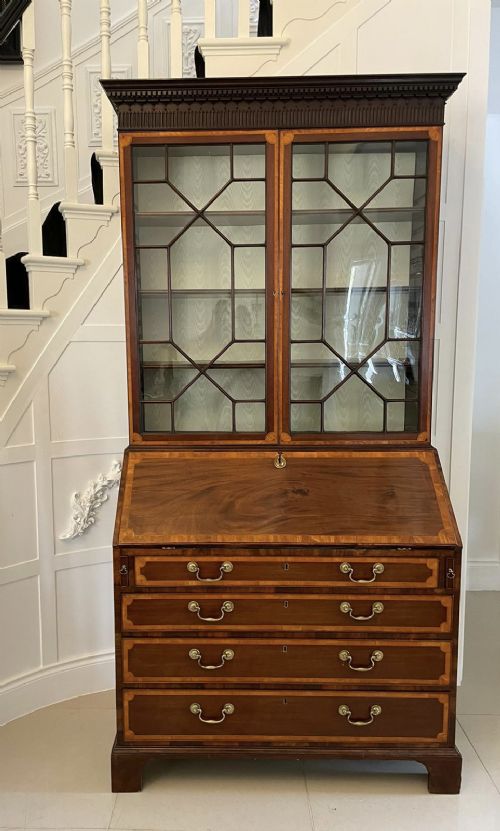
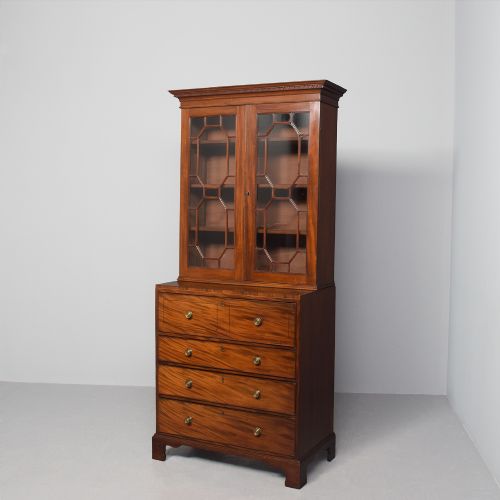
- A tall cabinet featuring a designated writing drawer or drop-front desk compartment combined with upper shelving enclosed by glass doors. The upper section serves as a library bookcase while the lower portion functions as a writing desk.
- Marquetry
- Decorative veneer work formed by fitting pieces of various coloured woods, bone, or ivory into a ground veneer to create pictorial patterns. It covers the exterior surfaces of finer cabinets.
- Astragal glazed
- Fitted with small wooden strips or glazing bars that hold individual panes of glass within a cabinet door. This method structures the upper bookcase doors on Georgian and Regency pieces.
- Cylinder bureau
- A desk featuring a rolling semi-cylindrical wooden shutter that slides back to reveal an internal writing slide and stationary compartments. This mechanism encloses the desk surface when not in use.
Secretary Desk: Frequently Asked Questions
What is a secretary desk?
A secretary desk is a piece of furniture that combines a concealed writing surface with storage drawers and often upper bookshelves. The defining characteristic is a movable front panel that lowers or rolls open to provide a flat writing area.
Inside this fold-down or sliding front, you find an arrangement of small drawers, pigeonholes, and compartments designed for organising correspondence and stationery. Below this writing section, standard drawers or cupboard doors provide bulk storage.
How do I date an antique secretary desk?
Dating relies on examining the secondary timbers used inside the drawers, the style of the brass hardware, and the construction methods of the carcass. Earlier eighteenth-century pieces often feature hand-cut dovetails and oak drawer linings, while later nineteenth-century examples display machine-sawn elements and different veneer choices.
Design styles also point to specific eras, such as the heavy proportions and marquetry of William and Mary pieces, the refined astragal glazing of the Georgian period, or the lighter satinwood and inlay of the Edwardian revival.
Where were secretary desks placed?
These desks traditionally stood in private libraries, studies, withdrawing rooms, or master bedrooms where correspondence and personal accounts were managed. Because many featured finished backs or high-quality decorative veneers all around, some larger examples stood away from walls as prominent room dividers.
In domestic settings, they functioned as personal archive cabinets where family records, letters, and account books remained locked away safely behind the fall front or upper glazed cabinet doors.
How do I care for wood surfaces?
Maintaining antique timber requires keeping pieces away from direct sunlight and sources of extreme heat or humidity to prevent veneer lifting and wood splitting. Regular dusting with a soft, dry cloth preserves the polish without introducing moisture.
Applying traditional beeswax occasionally helps nourish older finishes like French polish or waxed mahogany, enhancing the natural grain without building up heavy synthetic layers that trap dirt.