

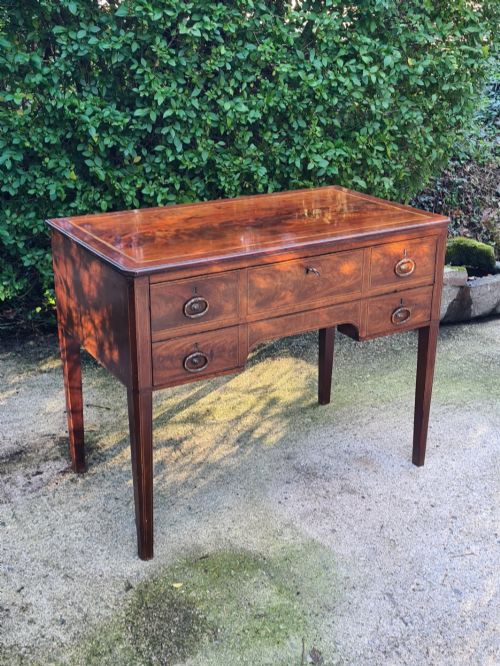
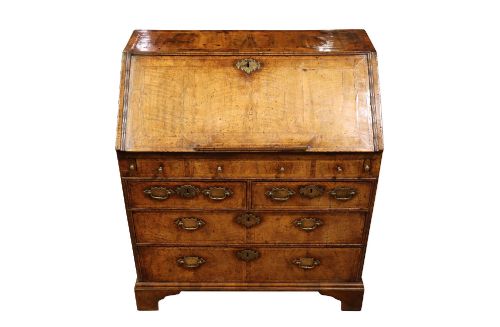
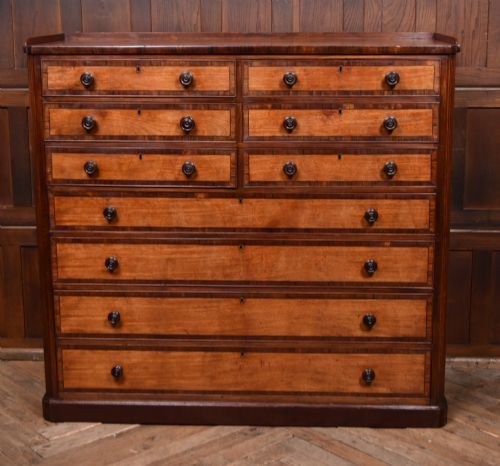

Secretaire Desk Bureau
These secretaire desk bureau pieces combine writing surfaces with storage, offering fitted interiors that appeal to collectors of period furniture.
Secretaire Desk Bureau
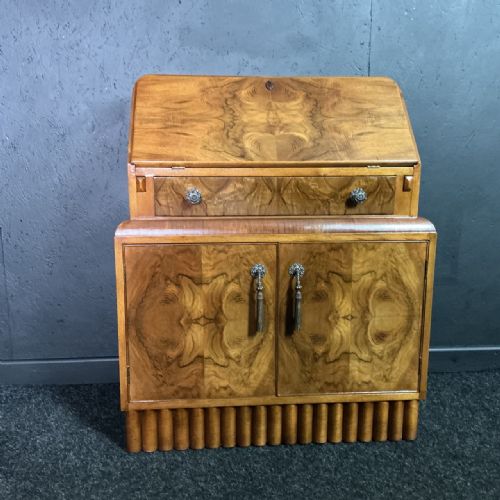
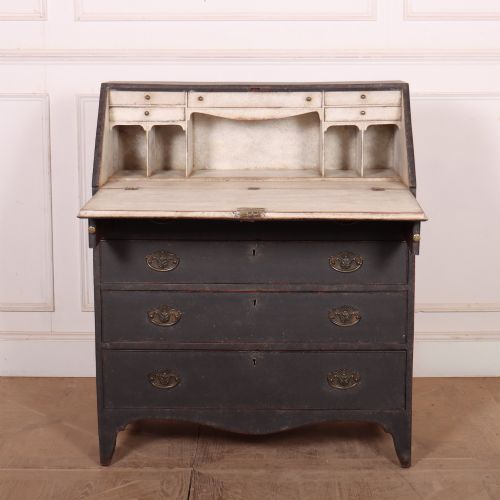
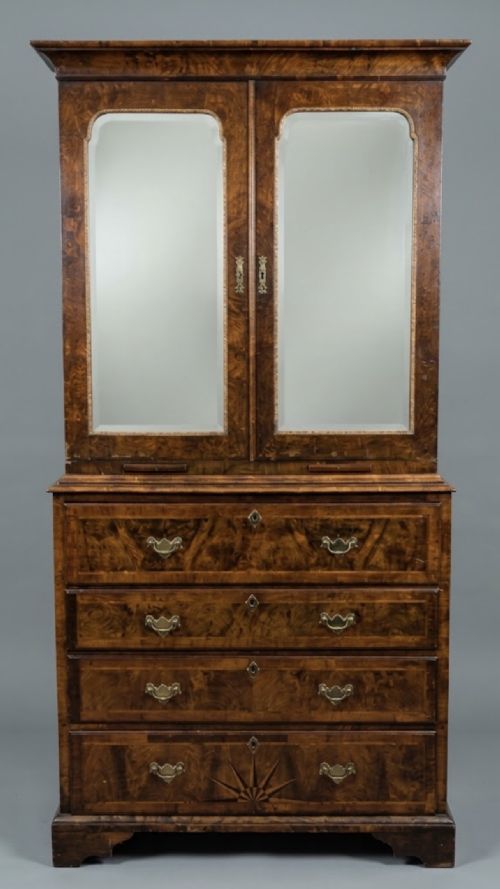
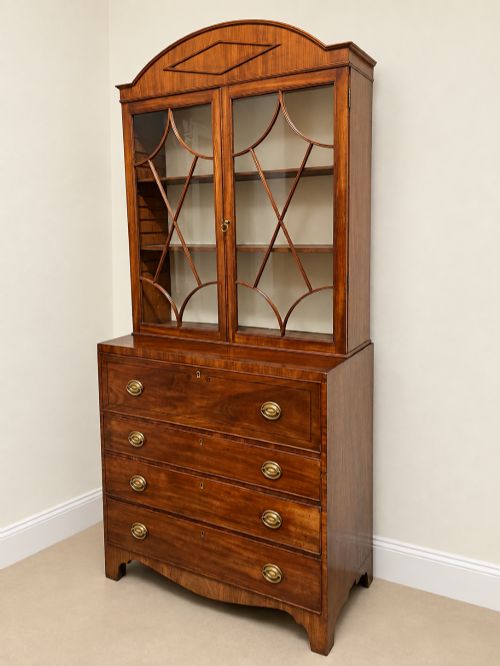
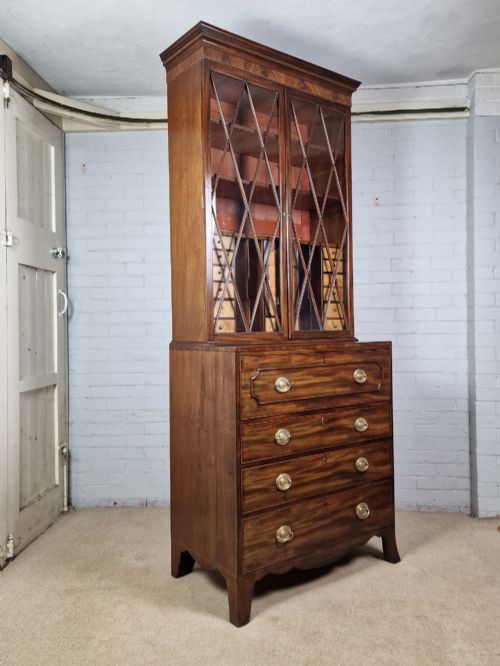
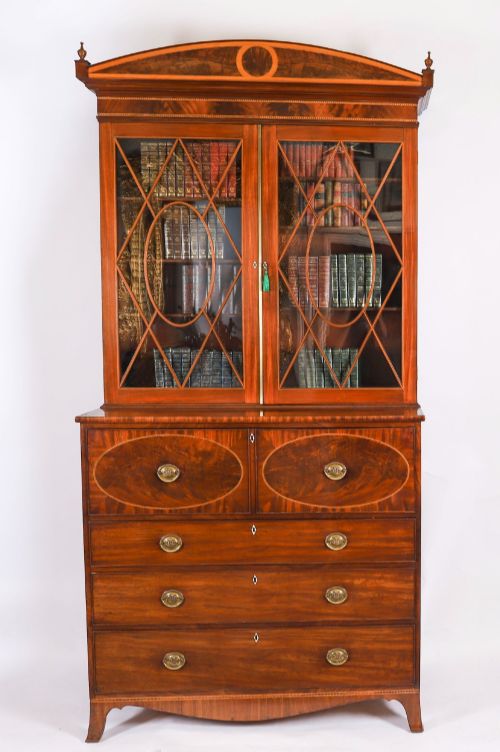
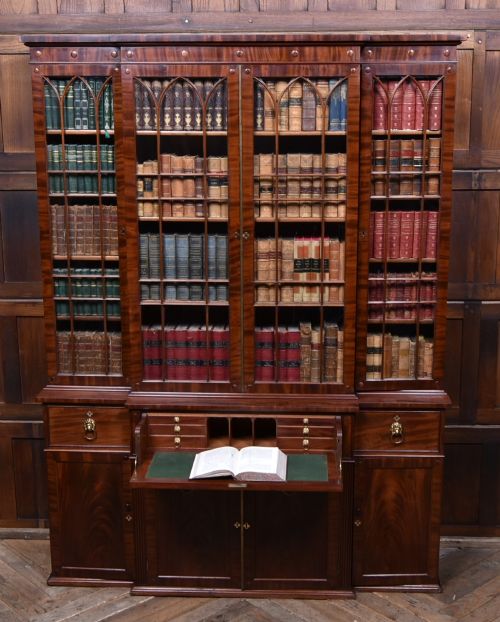
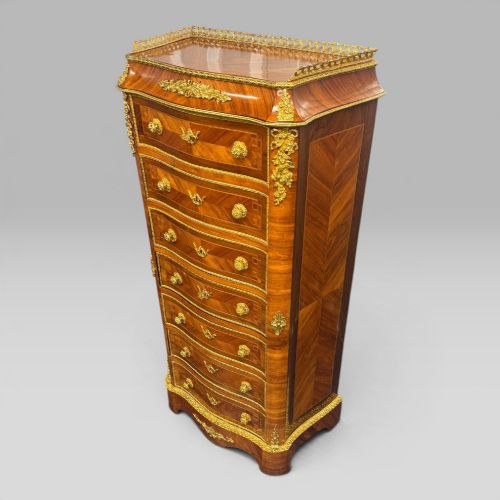
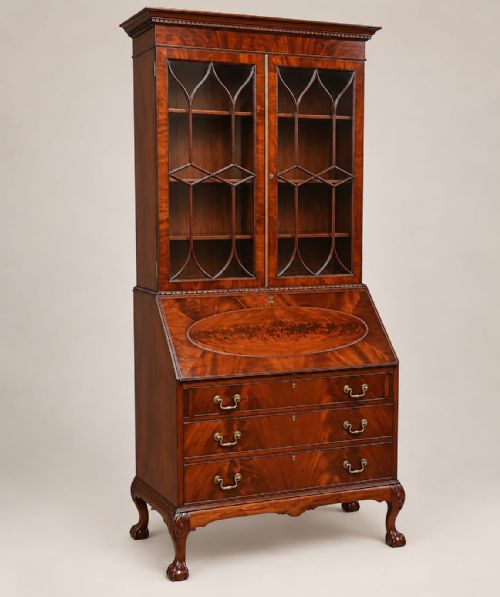
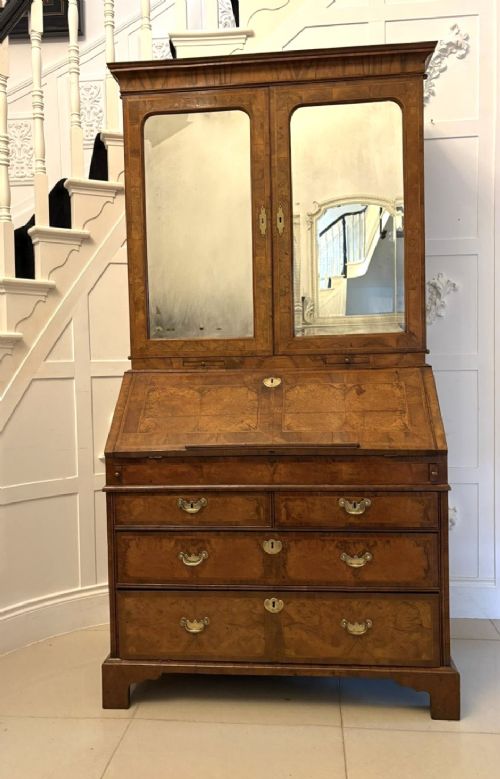
A secretaire desk bureau serves as a dual-purpose item of furniture, combining a concealed writing compartment with drawers or bookcase storage above. Buyers examining this category encounter tall library bookcases, fall-front cabinets known as secretaire à abattant, and compact chests of drawers fitted with writing drawers.
Pieces span several centuries, appearing in Georgian, Regency, Victorian, and Edwardian styles alongside continental forms like Biedermeier and French Empire. Mahogany remains the most frequent primary timber, though walnut, oak, satinwood, and exotic veneered woods also feature prominently across the selection.
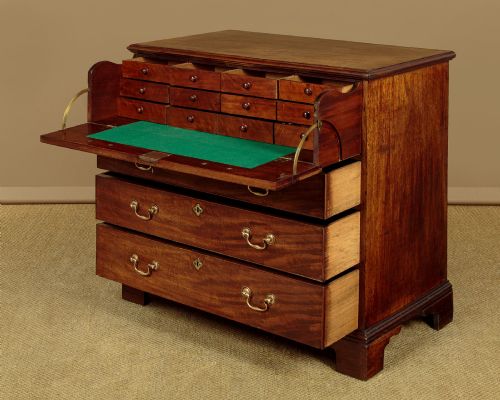
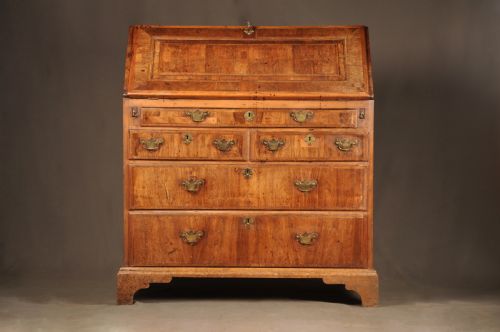
The layout typically centres on a drop-down flap or a fitted drawer that pulls out to reveal pigeonholes, small drawers, and leather writing surfaces. This configuration provides functional workspace while maintaining the formal appearance of a cabinet or chest when closed.
Materials and construction
Cabinetmakers utilised solid timbers and choice veneers, applying figured mahogany, burr walnut, curl mahogany, and kingwood over secondary woods. Crossbanding, stringing, and marquetry inlay decorate the exterior surfaces of many examples, particularly those from the Georgian and Regency periods.
Glazed doors on bookcase sections often feature intricate wooden astragal framing, while drop-down writing sections rely on brass hinges, quadrant stays, and fitted interior compartments built from lighter secondary woods. Ormolu mounts, marble tops, and leather inserts complete the construction of high-status continental and domestic pieces.
Secretaire Desk Bureau Retail Price Guide 2026
Typical asking prices for secretaire desk bureau among the pieces listed under this phrase on Sellingantiques today, from the lower quarter to the upper quarter. They describe what is for sale here now, not the wider market.
Listings feature mahogany, walnut, oak, satinwood, and rosewood across Georgian, Regency, and Victorian periods.
Factors of quality
Quality rests upon the selection of timber veneers, the precision of internal drawer dovetails, and the integrity of the fitted writing interior. Finer examples display continuous grain matching across drawer fronts and sophisticated internal layouts with secret compartments and inlaid detailing.
The execution of decorative elements such as ormolu mounts, marquetry, and astragal glazing bars distinguishes master workshops from standard production items. Proportions also matter, with neat, balanced secretaire cabinets commanding greater appreciation than heavier, unrefined pieces.
Gillows of Lancaster·Paul Sormani
The Secretaire Desk Bureau Glossary
- Secretaire à abattant
- A tall, vertical cabinet featuring a drop-down front panel that conceals a fitted writing desk interior. This form gained popularity in continental European cabinetmaking.
- Astragal
- Moulding strips used to divide glass panes within bookcase doors. These wooden profiles define the window pattern of upper cabinet sections.
- Crossbanding
- A border of veneer laid around the perimeter of a panel with the grain running perpendicular to the centre. It creates a framed decorative effect on drawer fronts and tabletops.
- Marquetry
- Inlaid patterns composed of different coloured woods, veneers, or other materials applied to furniture surfaces. It forms geometric or pictorial designs.
- Ormolu
- Gilt-bronze mounts applied as decorative ornaments to furniture corners, feet, and key escutcheons. This technique was widely utilised on French and high-end British pieces.
Secretaire Desk Bureau: Frequently Asked Questions
What is a secretaire desk bureau?
A secretaire desk bureau is a piece of furniture that integrates a pull-out or drop-front writing surface with general storage such as drawers or bookcases. It allows a user to write letters and store documents within a concealed compartment.
These pieces range from tall library bookcases to compact chests and wall cabinets. The interior typically houses pigeonholes and small drawers for stationery.
How do I identify the period?
Period identification relies on timber selection, construction methods, and stylistic details. Georgian and Regency pieces often feature figured mahogany with subtle inlay, while Victorian examples tend to be heavier with carved walnut or camphor wood.
Later Edwardian items often revive earlier Chippendalestyle motifs. Examining the secondary woods inside drawers also helps determine the age and origin of the piece.
Were these used in libraries?
Many large secretaire bookcases were built specifically for libraries and studies to house book collections alongside writing materials. The upper glass-doored sections protected bound volumes from dust while the desk compartment provided a workspace.
Smaller chest-style variations were used in bedrooms and private parlours for personal correspondence.
How do I care for the leather?
Leather writing surfaces benefit from gentle cleaning and occasional conditioning with appropriate balms to prevent drying and cracking. Keeping the leather away from direct sunlight preserves its colour and suppleness.
Writing surfaces should be used with care to avoid deep impressions or ink stains on historic hide.