
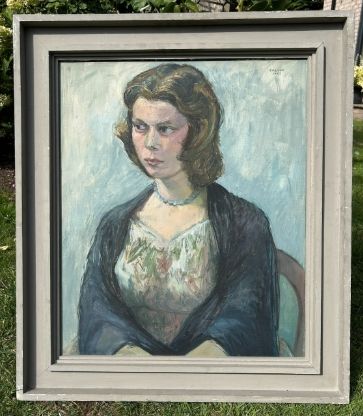
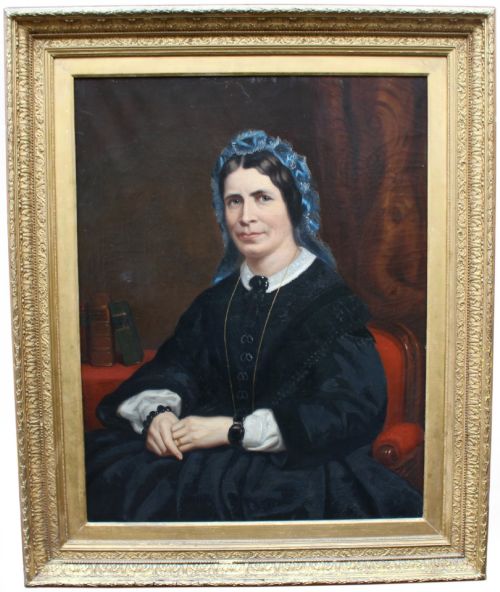
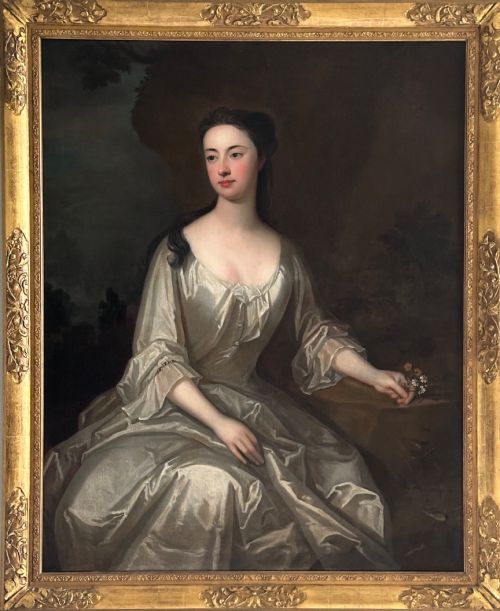


Seated Lady Portrait
A seated lady portrait captures the quiet presence of a woman fixed in oil, pastel or watercolour across centuries of domestic and grand art.
Seated Lady Portrait
A seated lady portrait presents a female figure posed within an interior or landscape setting, recorded through oil on canvas, panel or pastel. Buyers searching for a seated lady portrait encounter formats ranging from intimate cabinet miniatures to large canvases framed in gilt wood. The pieces span periods from the late seventeenth century through the Georgian, Victorian and Edwardian eras into mid-century modernism.
The versions most commonly met on this page include nineteenth-century oils and early twentieth-century interpretations, often housed in original gesso and giltwood frames. Works depicting subjects seated by landscapes, gardens or furnishings reflect the shifting fashion of portraiture from formal aristocratic commissions to more intimate character studies.
Materials and methods
Painters relied principally on oil on canvas, building pigment over primed grounds to achieve depth in fabric and flesh tones, while others employed pastel or watercolour on paper. Canvases were stretched on wooden frames and frequently housed within elaborate gilt wood or gesso surrounds that contribute significantly to the visual weight of the piece.
Techniques varied from the fine stipple work and precise brushmanship of earlier academic schools to the looser, expressive handling seen in later French post-impressionist and mid-century modern examples. Signed inscriptions, dates and attribution notes applied by the artist provide key technical markers on the reverse or front of the work.
Listings feature works executed in oil on canvas, pastel, watercolour and stipple work, framed in period gesso and gilt wood.
The measure of quality
Quality rests upon the sensitivity of the rendering, particularly in the handling of facial expression, hands and the fall of light across drapery. The distinction between a standard studio production and a finer piece lies in the anatomical confidence and psychological depth achieved by the artist.
The integrity of the original surface, the preservation of the canvas tension and the matching period frame influence the standing of a work. Pieces retaining their untouched nineteenth-century or earlier gilt frames carry greater historical coherence than those altered later.
Kenneth Cozens·Adriana Verelst·W R Waters·S Dennant Moss·Smith of London·J Cecil Bradshaw·John Raphael Smith·Dod Proctor·William Owen·Muriel Metcalfe·Fred Lawson·Carl Ljungberg·Sir James Jebusa Shannon·Michael Dahl·Caesar Van Everdingen
The Seated Lady Portrait Glossary
- Oil on Canvas
- Pigment mixed with drying oil applied to a woven fabric support. This combination allowed artists to blend tones smoothly and build rich surface textures over time.
- Giltwood Frame
- Wood carved and coated with gold leaf or metallic powder. These surrounds protect the edges of the canvas and define the visual boundary of the painting.
- Stipple Work
- A technique of building tone and form through small dots or short touches of paint rather than continuous strokes. This method softens transitions in portrait miniatures and works on paper.
- Portrait Miniature
- A small-scale painting designed for intimate viewing. These works capture likeness with microscopic precision using fine brushes.
- Pastel
- A medium made from powdered pigment and a binder pressed into stick form. It produces dry, velvety colour applications that require glass protection.
Seated Lady Portrait: Frequently Asked Questions
What periods do these portraits cover?
The selections span from the late seventeenth century through the Georgian, Victorian, Edwardian and Regency eras into the mid-twentieth century.
Paintings range from early formal compositions attributed to seventeenth-century studios to twentieth-century realists and post-impressionist interpretations.
How do I identify the era of a frame?
Frames from the eighteenth and nineteenth centuries are typically constructed from carved wood with gesso mouldings finished in gold leaf. Closer inspection often reveals construction pins, corner joins and surface wear consistent with age.
Victorian and Edwardian examples often feature heavier ornamentation and distinct gilding patterns that match the mounting fashions of their decade.
Were these painted from life?
Many portraits represent formal commissions painted from live sittings, particularly those produced during the Georgian and Victorian periods. Others reflect studio copies, post-humous records or artistic studies painted from models.
Inscriptions on the canvas reverse or accompanying documentation frequently record whether a sitter sat directly for the artist.
How should I care for an oil on canvas?
Keep paintings away from direct sunlight, extreme temperature shifts and high humidity to prevent canvas slackening and pigment cracking. Dust the surface gently with a soft, dry brush without applying pressure.
Avoid using water or chemical cleaners on the paint layer or the gilt frame.