
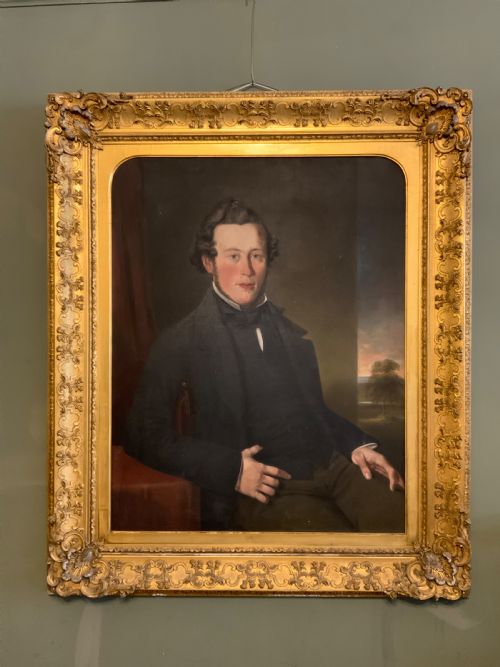
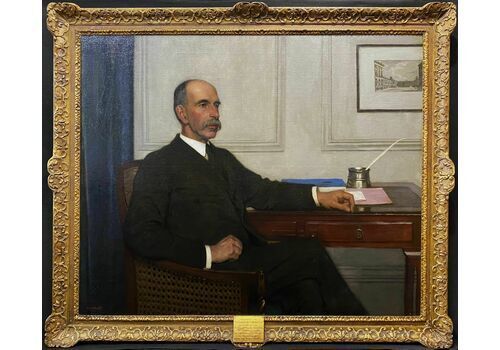


Seated Gentleman Oil Painting
These seated gentleman oil painting works bring centuries of character into a room through oil on canvas portraiture.
Seated Gentleman Oil Painting
A seated gentleman oil painting depicts a male subject posed in an interior or landscape setting, captured in oil paint on canvas, board or panel. The works span from the 18th century through the Regency, Victorian, Edwardian and mid-century periods, showing figures ranging from engineers and writers to clergymen and nobility.
Most pieces meeting this search phrase on this page belong to the 19th century, alongside works from the 18th century, the Regency era and the 20th century. These portrayals capture subjects seated at desks, on chairs or beside architectural elements, executed by named artists and regional schools.
How They Were Made
Artists applied oil paint using brushes upon stretched canvas, wooden panels or boards, often building up layers of pigment to achieve depth in clothing, skin tones and background shadows. Canvas served as the primary support, mounted within wooden stretchers.
Finished works found houses within wooden frames, frequently incorporating gilt wood, plaster ornamentation or solid wood mouldings that complemented the period aesthetic of the portrait.
One gentleman is immortalized alongside a distant church landscape, while another shares his canvas with a spinet.
What Varies in Quality
The sophistication of brushwork and anatomical handling separates accomplished academic portraiture from provincial or standard works. Master painters captured facial expression, fabric texture and the play of light with precision.
The condition of the paint surface and the originality of the frame influence the integrity of the piece. Works retaining their original giltwood or wooden frames without extensive canvas relining or overpainting hold greater historical coherence.
Harold Knight RA·William Robert Dickinson·Arthur Spooner·Henry William Pickersgill·Ramsay Richard Reinagle RA·James Archer·John A.A. Berrie·Francis Alleyne·Cowan Dobson·Stephen Taylor·Joseph Clover·William Dring RA·John Dalziel Kenworthy·Neville Stephen Lytton·Frank Samuel Eastman·Benno Fischer·James Bell Anderson RSA
The Seated Gentleman Oil Painting Glossary
- Oil on Canvas
- Pigment mixed with drying oil applied to a woven fabric support stretched across a wooden frame. This combination provided a flexible and durable surface favored by portrait painters.
- Giltwood
- Wood carved and coated with gold leaf or a gold-colored metallic finish. Frames of this material frequently accompany formal portraits from the 18th and 19th centuries.
- Academic Realism
- A style of painting produced under the influence of European academies of art, emphasising precise draftsmanship, accurate anatomy and finished surface detail. Works in this manner display a high degree of technical instruction.
- Panel
- A flat piece of wood used as a rigid support for painting instead of canvas. Artists during earlier periods frequently utilised wooden boards for smaller portraits.
Seated Gentleman Oil Painting: Frequently Asked Questions
What periods do these portraits come from?
The works span from the 18th century through the Regency, Victorian, Edwardian and mid-century eras. Artists worked across these periods recording the likenesses of notable and everyday figures.
Datings range from the 1700s up to the mid-20th century, reflecting shifting portraiture conventions over three hundred years.
How should I hang an oil painting?
Secure the painting using appropriate wall fixings that match the weight of the canvas and its wooden or gilt frame. Ensure the hanging height places the centre of the canvas at eye level.
Keep paintings away from direct sunlight, heating vents and damp environments to protect the canvas and oil pigments over time.
Are the frames original to the paintings?
Many listings include period wooden or giltwood frames that match the era of the canvas. Some frames date to the original creation of the portrait, while others represent later period replacements.
Examining the corner joints, moulding style and backboards helps determine the relationship between the frame and the artwork.
Who are the subjects in these paintings?
The subjects include identified figures such as geologists, engineers, writers, physicians, military officers and clergymen. Other portraits depict unindentified gentlemen from various regional schools.
Inscriptions on the canvas, stretcher or frame often record the name, title or dates of the sitter.