







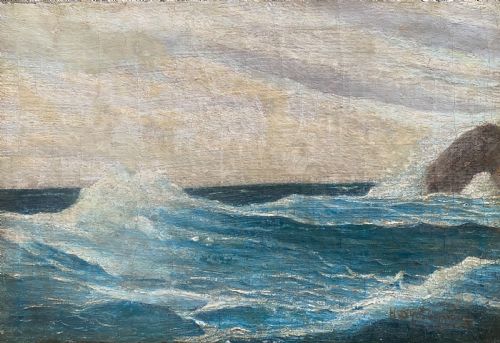
Sea Landscape Painting
Sea landscape painting brings the motion and mood of the coast indoors, capturing fishing vessels, rocky shores, and tidal rhythms through historic brushwork.
Sea Landscape Painting
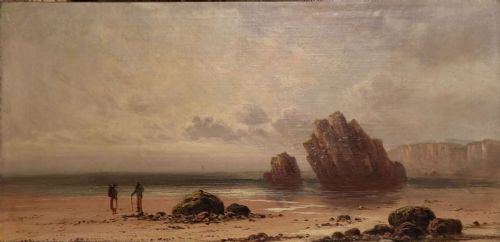
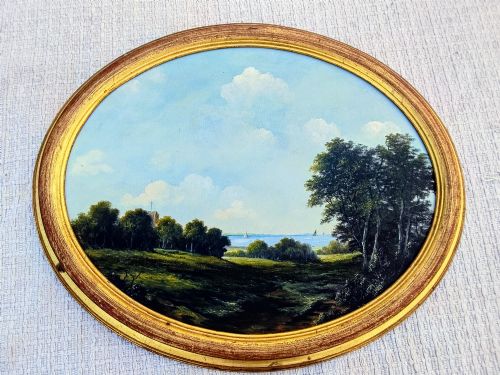
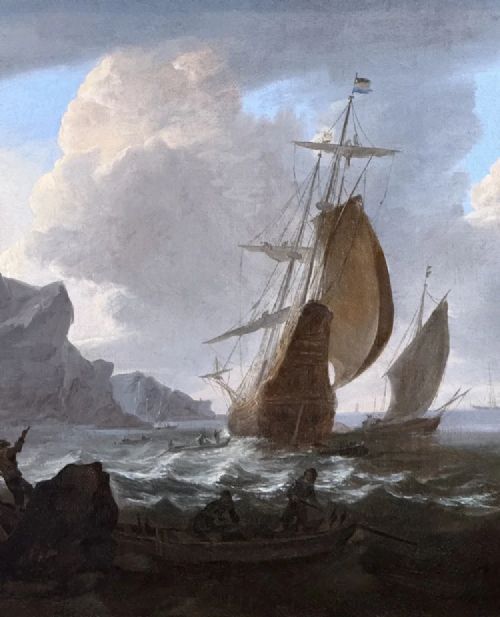
A sea landscape painting captures coastal views, harbours, and open water, frequently focusing on the interaction between land and sea. These works range widely in scale and atmosphere, recording everything from calm bays to dramatic maritime gales.
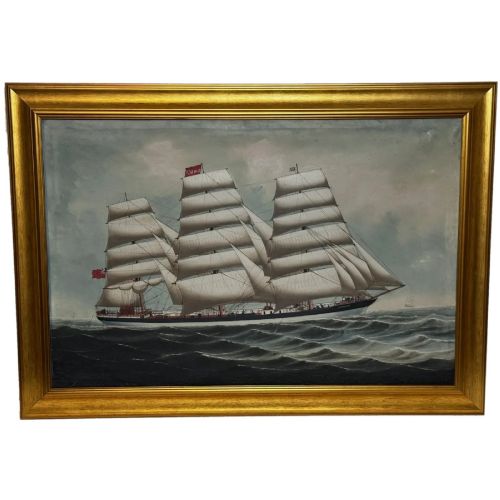
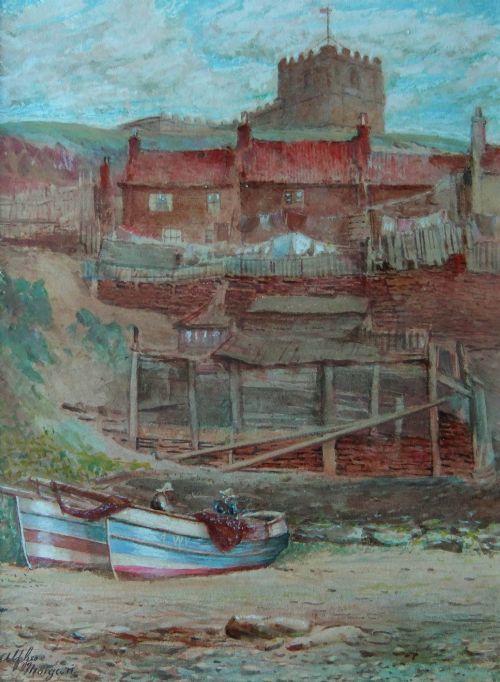
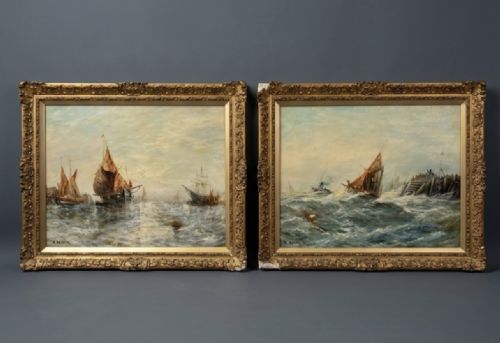
The selection leans heavily toward nineteenth-century and early twentieth-century examples on canvas and paper. British and European coastal scenes predominate, featuring fishing fleets, local harbours, and rocky cliffs rendered in oil or watercolour.
How They Were Made
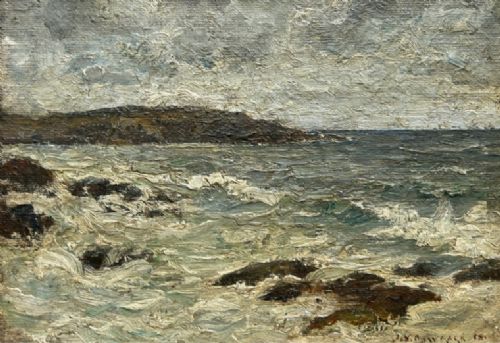
Artists traditionally built these compositions using oil on canvas or wood panel, applying pigment with brushes or palette knives to create texture in the water and sky. Watercolour on paper was equally common for rapid studies and lighter coastal atmospheres.
Many works were painted en plein air directly on the shore to capture changing light conditions, while others were developed in studios from earlier sketches and pencil studies.
Subjects cover British and European coastal locations, including Cornwall, Yorkshire, the Isle of Wight, and French harbours.
What Varies in Quality
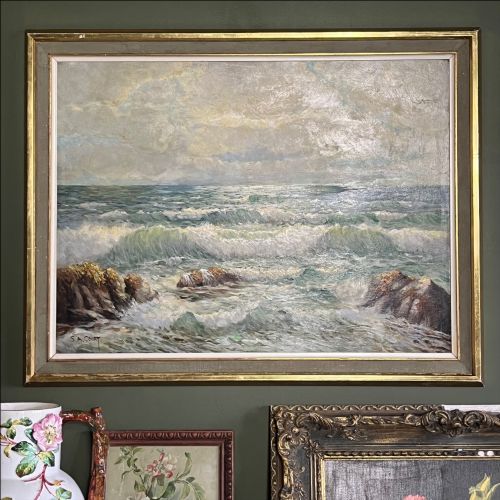
Quality rests on the artist's command of light, atmosphere, and spatial depth, distinguishing a lively, observant coastal study from a rigid or formulaic reproduction. Stronger examples demonstrate confident brushwork that conveys the weight of water and the movement of air.
The handling of maritime architecture, shipping rigging, and coastal geology reveals the painter's direct familiarity with the subject. Surface preservation and the presence of period framing also contribute to the standing of an individual piece.
James Orrock·Reginald Arthur Borstel·John E. Aitken·William Banks Fortescue·Bonaventura Peeters·Bernard Benedict Hemy·Alfred G. Morgan·Erich Mercker·Carlo Ferranti·John Moore of Ipswich·William Henry Williamson·George Stanfield Walters·Henry Barlow Carter·F A Roylance·George F Pennington·Raymond Moritz·Jean-Baptiste Olive·William Lee Hankey·William Tuck·John McDougal·Charles Malfroy·Roger de la Corbiere·Frederick Stuart Richardson·Thomas Rose Miles·Claude Thomas Stanfield Moore
The Sea Landscape Painting Glossary
- Seascape
- A work of art depicting the sea, coastal views, ships, or marine subject matter. These compositions often focus on the open water or shorelines.
- Impasto
- Paint applied thickly to a canvas or board, leaving visible brush or knife marks that add physical texture and catch the light.
- En plein air
- The practice of painting outdoors to capture direct observations of natural light and weather conditions in real time.
- Gouache
- An opaque water-based medium that dries to a matte finish, frequently used alongside watercolour for added density in highlights.
Sea Landscape Painting: Frequently Asked Questions
How do I date a sea landscape painting?
Dating relies on costume, vessel types, framing styles, and artist signatures where available. Clues such as paddle steamers or specific sailing rigs help narrow the period.
Examine the back of the canvas or panel for old labels, inscriptions, and artist stamps that frequently record dates and locations.
Were these paintings made outdoors?
Many nineteenth and twentieth-century coastal works were painted directly on location to capture immediate weather and lighting effects.
Studio paintings were also common, created from field sketches, watercolours, and pencil studies gathered along the shoreline.
How should I frame an antique marine painting?
Period gilt wood frames suit these works best, complementing the traditional tones of nineteenth and early twentieth-century palettes.
Ensure the rebate of the frame accommodates the canvas or panel without placing pressure on the edges or obscuring signature areas.
What is the difference between a seascape and a landscape?
A seascape centres primarily on the sea, ocean views, ships, and coastal waters, whereas a landscape focuses on inland terrain, fields, and hills.
Many works combine both genres, showing landforms, cliffs, and beaches alongside open expanses of water.