
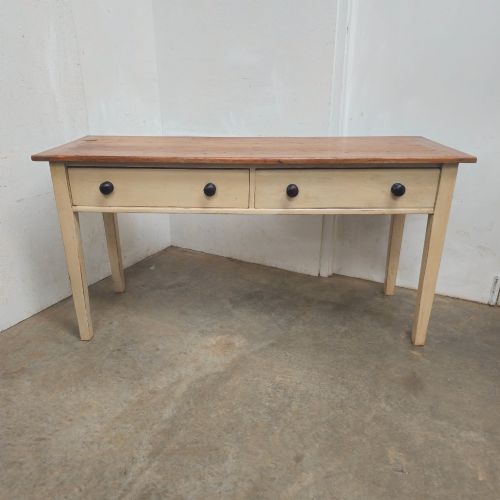
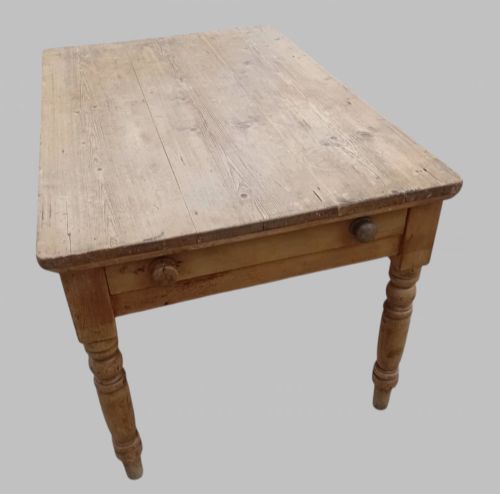
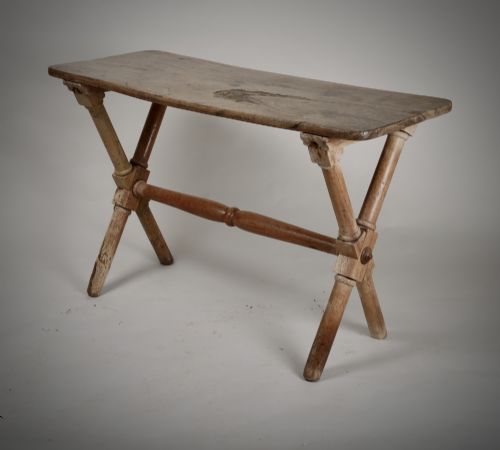
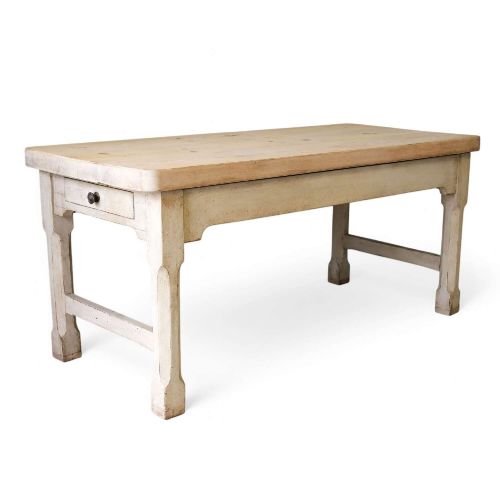
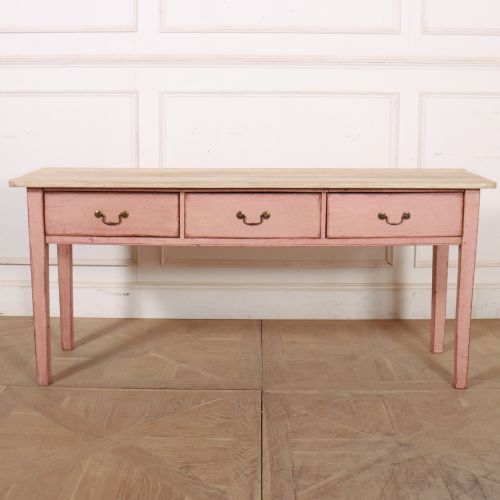
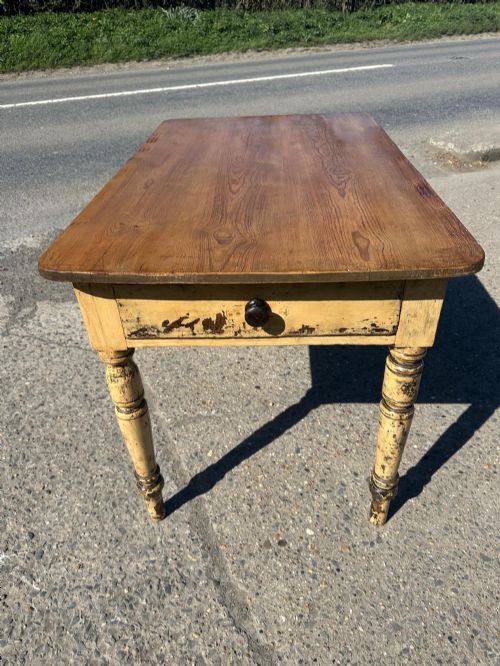
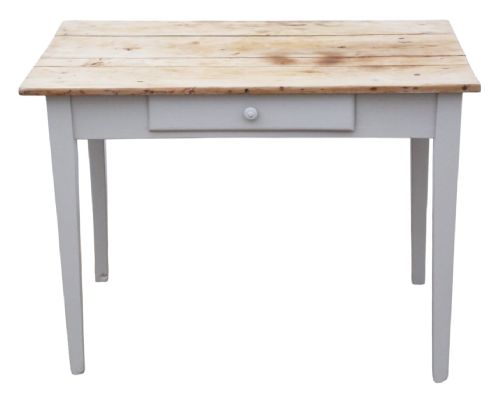


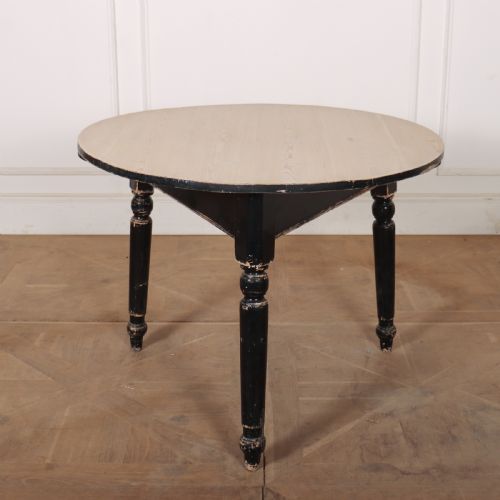
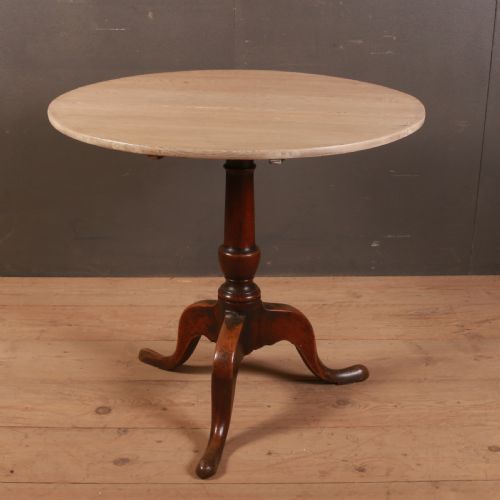
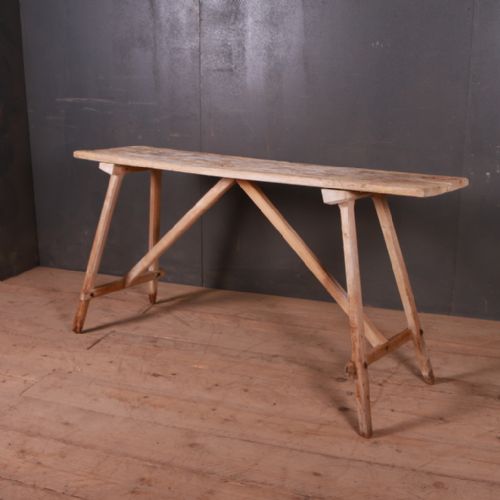

Scrubbed Top Side Table
These scrubbed top side table pieces bring honest, practical utility and unpretentious charm into a modern interior.
Scrubbed Top Side Table
A scrubbed top side table brings together functional utility and enduring domestic history across various regional traditions. Buyers searching for a scrubbed top side table will encounter pieces originating from English, French, Welsh, and Swedish workshops.
The selections available here span the eighteenth and nineteenth centuries, including Victorian examples alongside earlier vernacular forms. These practical items include prep tables, dairy tables, and occasional tables designed for hard work.
Pine and oak form the backbone of these listings, often paired with painted timber bases. The typical piece combines a clean, scrubbed wooden surface with a painted or natural wood structure underneath.
How they were made
Makers relied primarily on pine, oak, and ash for the main bodies and tops, utilising solid timber construction suited to heavy daily tasks. Tops were routinely scrubbed with water and sand or stone to keep them clean and hygienic.
Structural elements frequently feature original paintwork on the legs and bases, ranging from vibrant reds to muted tones. Secondary materials like brass and metal appear in functional hardware such as drawers and drop-leaf mechanisms.
The listings here feature nineteenth-century and eighteenth-century pieces, utilising pine, oak, ash, and painted timber.
What varies in quality
Quality depends heavily on the preservation of original surfaces, such as the retention of early paint on bases alongside clean, honest scrubbed tops. The integrity of the underlying timber and the character gained from genuine daily use distinguish finer examples.
Proportion and regional carpentry traits also dictate distinction, with specific structural forms like X frames or tripod legs showing particular craftsmanship. Alterations to paint or surface treatments influence how a piece reflects its period origins.
The Scrubbed Top Side Table Glossary
- Scrubbed top
- A wooden tabletop cleaned repeatedly with water and abrasive materials, leaving a pale, smooth grain. This treatment was common in dairies and kitchens where hygiene mattered.
- Cricket table
- A small three-legged wooden table originating in Wales and England, traditionally designed for uneven cottage floors. The three legs ensure it remains stable without rocking.
- Prep table
- A sturdy utility table used for food preparation or domestic tasks in country houses and farmhouses. These surfaces show the marks of daily labour and honest wear.
- Tavern table
- A heavy, solid wooden table built for commercial drinking and dining establishments. They typically feature robust stretcher bases for added stability.
- Vernacular furniture
- Objects built by local joiners using regional traditions and readily available materials rather than high-style academic designs. These pieces prioritize function and local character above all else.
Scrubbed Top Side Table: Frequently Asked Questions
What is a scrubbed top side table?
A scrubbed top side table is a utilitarian wooden surface from the eighteenth or nineteenth century, often originating from farmhouse or dairy contexts. These tables feature bare wooden tops that were scrubbed clean over generations of use.
The bases commonly retain original paint finishes, pairing a clean upper surface with colourful legs and frames. They serve well as practical side tables or compact prep surfaces in contemporary homes.
How were these tables used originally?
These tables served hardworking roles in domestic spaces, dairies, and rural kitchens. People used them for food preparation, milking operations, and general household tasks.
Because they were built for utility rather than display, their construction reflects practical domestic needs. Their honest history remains visible in the marks left by daily work.
How do I care for a scrubbed top?
A scrubbed wooden top benefits from gentle cleaning with mild soap and water when necessary. Avoid harsh chemical cleaners that can strip the dry, pale character of the aged pine or oak.
Keeping the surface dry and treating it occasionally with natural oils helps preserve the wood. Embrace the minor stains and marks as part of the piece's history.
How do I identify a nineteenth-century piece?
Nineteenth-century tables often show specific regional construction methods, such as pegged joints and vernacular framing. Materials like nineteenth-century pine and Victorian painted pine dominate these examples.
Examining the wear patterns and the presence of period paint helps confirm the era. Look for signs of genuine hand tool use rather than modern machine production.