




Scrolled Leg Pedestal Table
These scrolled leg pedestal table designs bring sturdy Victorian and Georgian engineering together with rich timbers.
Scrolled Leg Pedestal Table
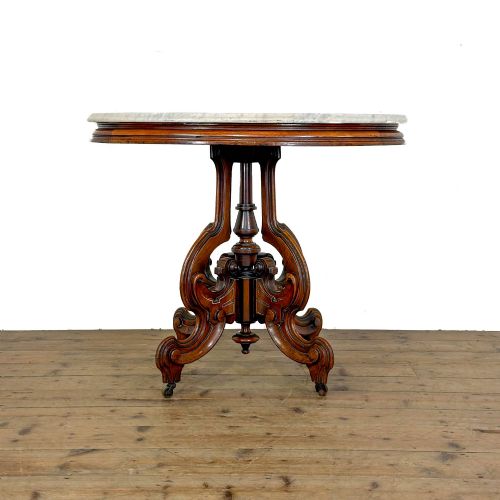
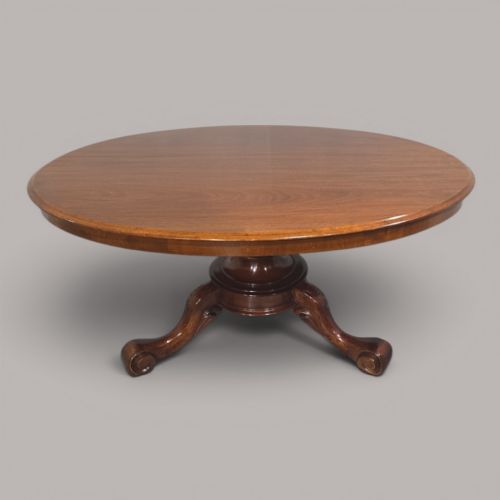
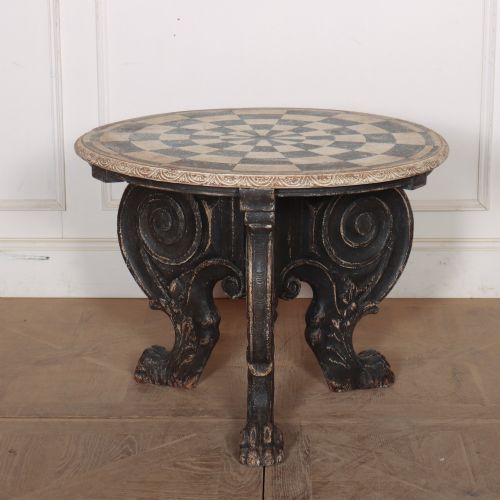
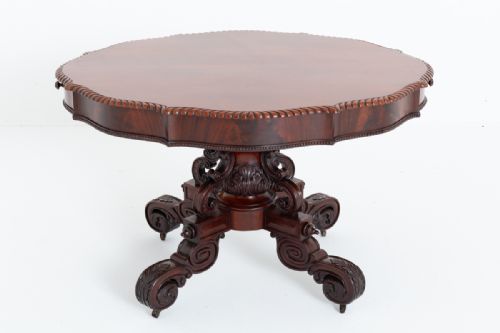
A scrolled leg pedestal table supports its top on a central column above shaped feet, appearing across Georgian, Regency, and Victorian periods. The version most commonly met on this page is the circular or oval centre table in mahogany or burr walnut.
The evidence shows forms ranging from small wine tables to monumental dining tables and occasional pieces. Woods include flame mahogany, rosewood, walnut, ash, pine, and specimen woods alongside marble.
How they were made
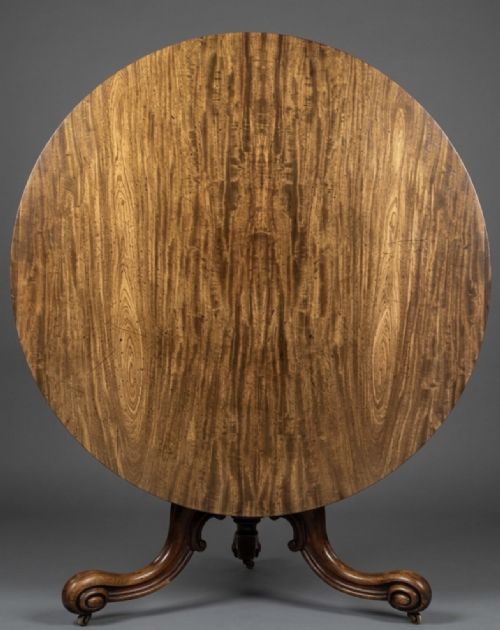
Cabinet makers constructed these tables using solid and veneered timbers such as mahogany, rosewood, and burr walnut over stable secondary woods. Flame mahogany and satinwood veneers were carefully selected to create decorative patterned surfaces on the top.
Pedestal supports required substantial turning and carving to mount securely onto carved scrolled feet or tripod bases. Brass casters were frequently fitted beneath the feet to allow movement of heavier breakfast and centre tables.
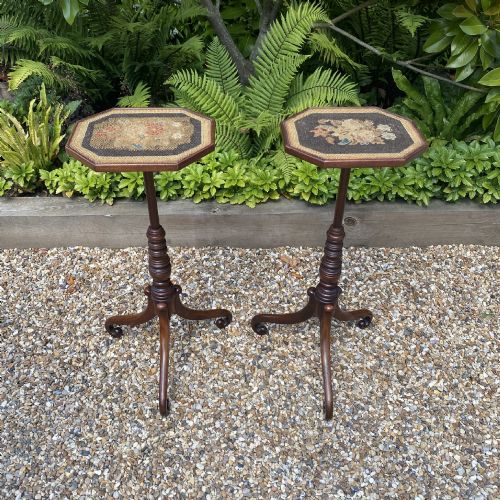
Bobbin turned occasional tables bring a wonderfully tactile, spool-like silhouette to late 19th-century interiors.
What varies in quality
Quality rests in the choice of timber figure, such as rich flame mahogany or figured burr walnut, and the crispness of the carved scrolls on the pedestal base. Superior examples exhibit precise joinery in segmented tops and balanced proportions between column and top.
The sophistication of secondary elements like inlaid satinwood, needlepoint textile inserts, or marble tops separates standard production from finer decorative pieces. Structural integration of the central column to the base determines long-term stability.
The Scrolled Leg Pedestal Table Glossary
- Pedestal table
- A table supported by a central pillar or column rather than four corner legs. This format allows greater seating clearance around the perimeter.
- Gueridon
- A small French occasional table, often with a round top supported by a central pillar. These appear in walnut and mahogany variants.
- Breakfast table
- A large round or oval dining table from the Georgian or Victorian era designed for morning meals. They frequently feature tilting tops for storage.
- Flame mahogany
- Timber cut to reveal a fiery, undulating grain pattern. Cabinet makers prized this wood for high-end table tops.
- Specimen woods
- Various decorative timbers utilised together in geometric or patterned table surfaces. Hexagonal occasional tables often display this technique.
Scrolled Leg Pedestal Table: Frequently Asked Questions
How do I use a pedestal table?
These tables function well as central room display surfaces or intimate dining spots depending on their diameter. Their central column design permits chairs to tuck in neatly without hitting corner legs.
Larger breakfast versions can serve as a primary table in smaller dining spaces. Smaller wine and occasional variants fit neatly beside seating areas for lamps or books.
What is a tilt top table?
A tilt top mechanism allows the circular or oval surface to rotate vertically when not in use. This clever engineering enabled tables to be stored flat against a wall to save floor space in period homes.
Many Victorian breakfast and centre tables retain functional hinges beneath the top. Collectors value mechanisms that lock securely into the horizontal position.
How do I distinguish Victorian from Georgian examples?
Georgian and Regency pieces tend to display restrained classical lines with rich dark mahogany and subtle carving. Victorian examples often embrace heavier proportions, bolder figuring in burr walnut, and elaborate scrolled bases.
Later Victorian iterations frequently incorporate decorative inlays, satinwood highlights, or French polish finishes. Examining the secondary woods and construction joints helps confirm the period.
Where were these tables made?
The pieces originate primarily from British workshops, though continental European examples from France, Germany, and Sweden also appear. Regional cabinet makers adapted prevailing Regency and Victorian aesthetics to local timbers.
Imported materials like rosewood and marble indicate international trade networks utilised by 19th-century makers. Swedish and French variants often show distinct stylistic flair in their pedestal turns.
Are these tables suitable for daily use?
Solid mahogany and walnut construction provides robust durability for everyday household activities. Regular polishing with appropriate wax maintains the rich lustre of the timber surfaces.
Care should be taken with moisture and direct heat on polished antique finishes. Using coasters and mats protects the historic veneers from accidental damage.