
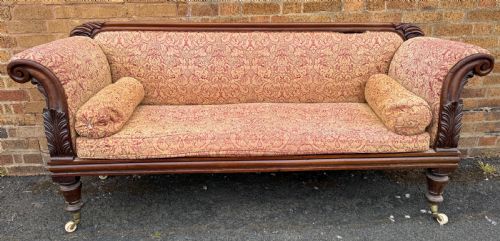
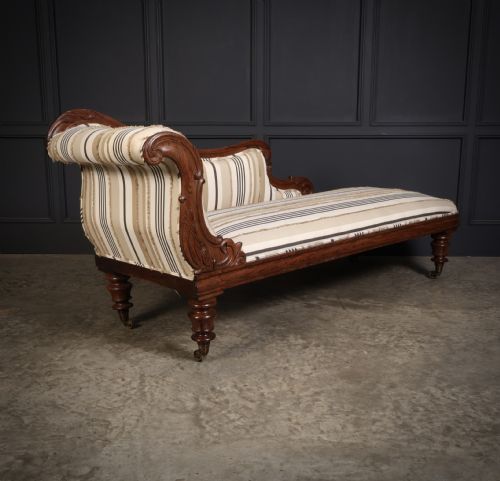


Scrolled End Daybed
These scrolled end daybed examples combine sweeping architectural timber frames with deep lounging comfort for sophisticated nineteenth-century interiors.
Scrolled End Daybed
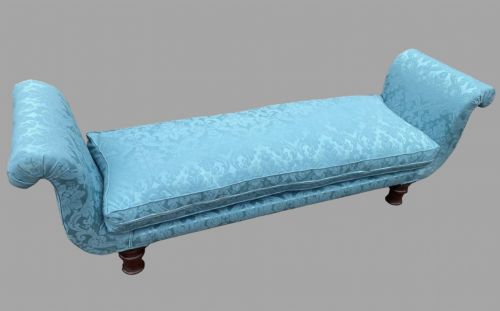
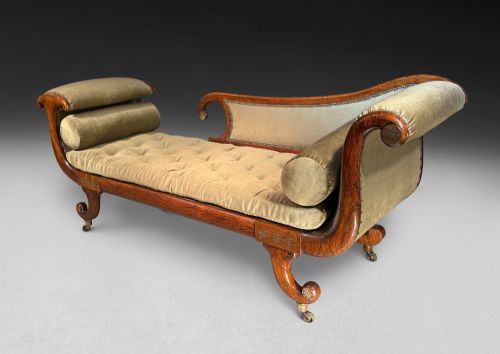
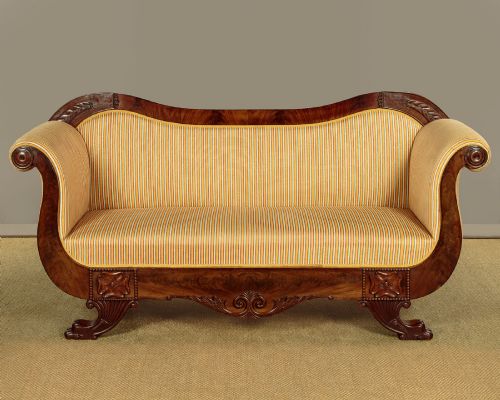
A scrolled end daybed embodies the grand seating forms of the nineteenth century, drawing heavily on Regency, William IV, and French Empire aesthetics. These versatile pieces function as sofas, settees, and chaise longues, distinguished by their characteristic curved or scrolled wooden ends.
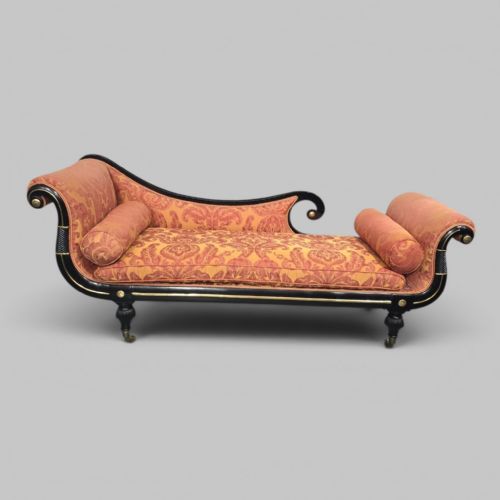
The versions most frequently encountered here date from the nineteenth century, particularly the Regency and William IV periods, alongside later Victorian and twentieth-century revival interpretations. Structural layouts range from single scroll ends to double-ended frames and daybeds upholstered in damask or silk fabrics.
Materials and construction
Frames are constructed from dense timbers such as mahogany, rosewood, and ebonised wood, sometimes enhanced by simulated rosewood finishes or painted surfaces. Decorative detailing often incorporates brass inlay and carved woodwork.
Upholstery relies on traditional textiles including damask and specialised upholstery fabric, applied to support the reclining surfaces of daybeds and chaises.
Some nineteenth-century daybeds doubled as secret nap stations where exhausted aristocrats could dramatically swoon without missing the gossip.
Gradations of quality
Quality rests upon the crispness of the carved timber and the sophistication of decorative additions like brass inlay. Finer examples display harmonious proportions across the scrolled ends and seamless integration of timber framing.
The handling of secondary materials, such as simulated rosewood or ebonised finishes, dictates the visual depth of the piece. Superior construction maintains structural integrity through heavy use while preserving delicate carved details.
Willian Trotter
The Scrolled End Daybed Glossary
- Regency
- A British design style spanning the early nineteenth century, known for drawing inspiration from classical antiquity. It favours clean architectural lines alongside exotic veneers and brass mounts.
- William IV
- A transitional nineteenth-century British style marked by robust proportions and heavier carved details. Furniture from this period frequently utilises dark mahogany and rosewood timbers.
- Chaise Longue
- A long reclining chair or daybed designed for recumbent rest. The form combines the seating capacity of a sofa with the extended footrest of a lounger.
- Ebonised
- Wood treated with a chemical stain or finish to imitate ebony. This dark, light-absorbing surface was popular during the nineteenth century for formal entertaining spaces.
Scrolled End Daybed: Frequently Asked Questions
Where were scrolled end daybeds placed in nineteenth-century homes?
These pieces were typically positioned in formal drawing rooms, libraries, or private boudoirs. They provided a comfortable place for daytime reclining without requiring guests to retire to a bedroom.
Their decorative backs and finished scrolled ends meant they could often sit away from walls, serving as central room dividers.
How do I distinguish between a Regency and a William IV daybed?
Regency frames generally display lighter, more restrained classical proportions with delicate brass inlay and slender supports. William IV examples tend to be heavier and bolder, featuring deep carved mahogany frames.
Examining the turning of the legs and the heft of the timber helps determine which nineteenth-century aesthetic is at play.
Can I use a historic daybed for daily seating?
Most antique daybeds support normal sitting and reclining, provided the internal frame and webbing remain secure. Professional upholstery conservation ensures the piece safely accommodates contemporary use.
Weight distribution should be treated with care on fragile nineteenth-century joinery to preserve the original timber frame.