





Scroll Arm Dining Chairs
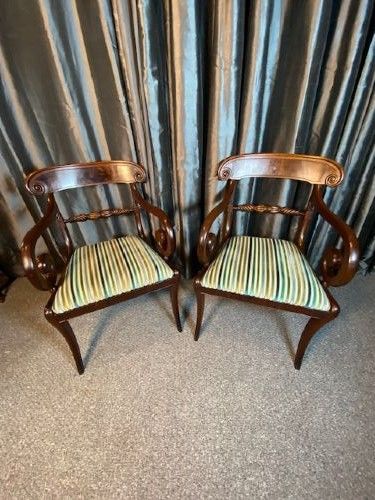
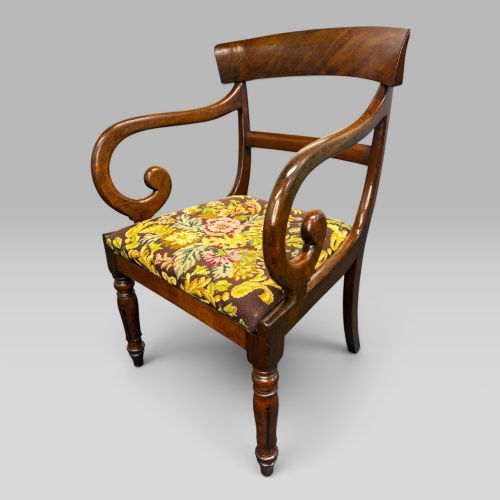
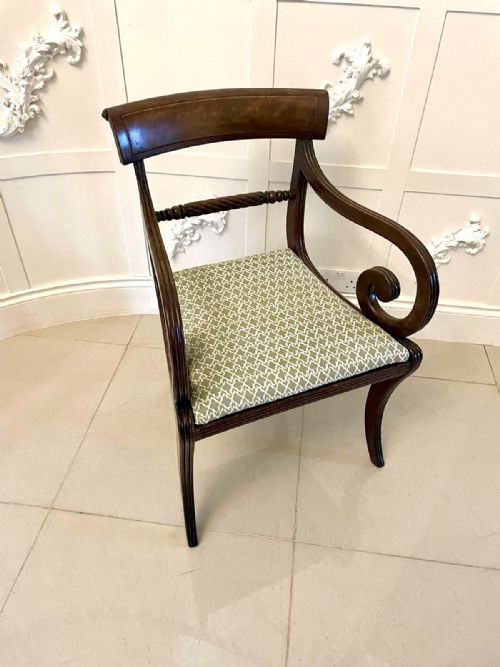
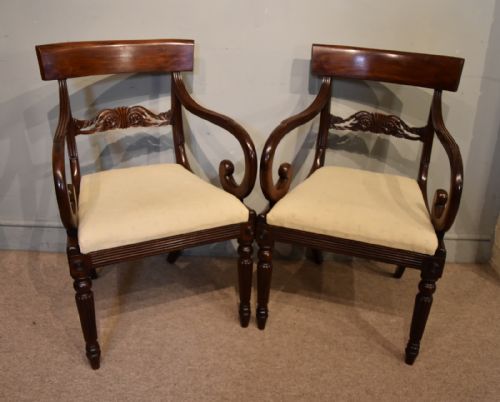
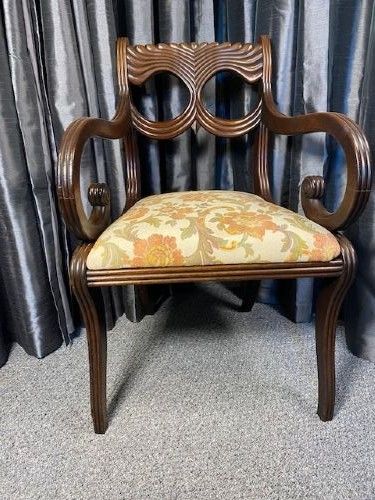
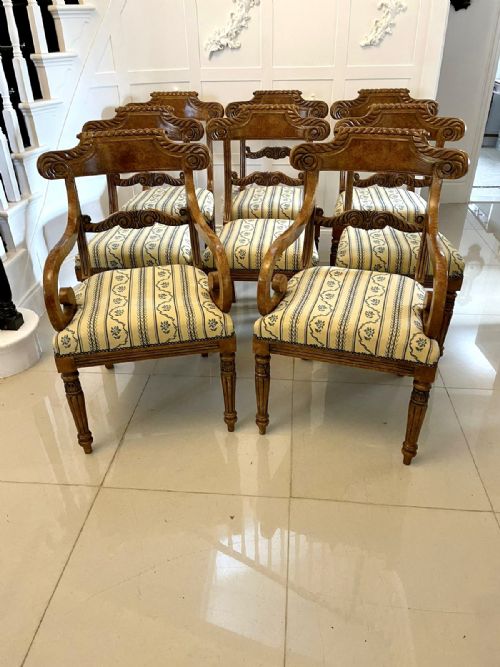
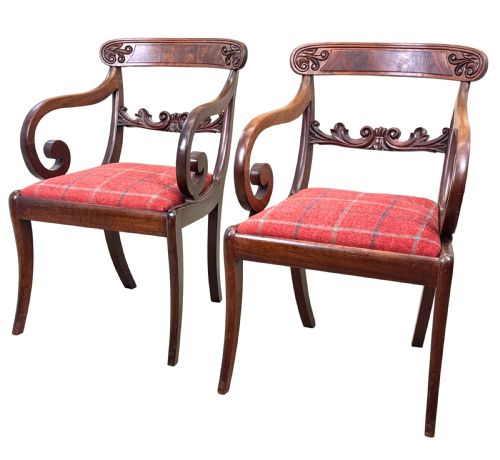
Scroll arm dining chairs bring substantial timber presence and characteristic curved supports to the dining table, offering immediate comfort and architectural weight.
Scroll Arm Dining Chairs
When buyers search for scroll arm dining chairs, they look for seating that combines formal dining utility with distinctive curved arm supports. The pieces found here span major 19th century periods, including Regency, William IV, Georgian, and Victorian eras, alongside later interpretations from the early 20th century.
The selection ranges from single carver chairs and pairs of library desk chairs to large matched sets of eight dining chairs that incorporate scroll arm carvers. Most examples are designed as elbow chairs or carvers intended to sit at the head of a table or function independently as desk and library seating.
Mahogany remains the dominant wood across the inventory, complemented by occasional variations in rosewood, ebonised timber, and faux birds eye maple. Upholstery takes many forms, featuring traditional drop-in seats, needlepoint, floral textiles, leather, and velvet.
Materials and Construction
Makers built these scroll arm dining chairs primarily using solid mahogany, prized for its strength, deep grain, and ability to hold crisp carved details along the arms and legs. Selected pieces incorporate brass inlay, ebonised highlights, or alternative timbers like rosewood and maple.
Structural support relied on traditional joinery methods, often pairing curved wooden arm elements with sabre legs, turned supports, or upholstered seats finished in fabric, leather, needlepoint, or velvet.
The listings demonstrate a strong preference for mahogany across 19th century periods, alongside occasional rosewood, brass inlay, and needlepoint upholstery.
Distinctions in Quality
Quality in these scroll arm dining chairs rests on the crispness of the timber carving, particularly along the scrolls and arm supports, and the cohesion of matched sets. Pieces demonstrating finer joinery and superior timber selection command greater attention.
The integrity of the frame, the subtlety of brass inlay or ebonised detailing, and the choice of upholstery materials all separate standard utility pieces from finer library and dining carvers.
The Scroll Arm Dining Chairs Glossary
- Carver Chair
- An armchair, typically designed with arms to match a set of dining chairs and placed at the head of the table. These provide more substantial seating than side chairs without arms.
- Elbow Chair
- An alternative term for an armchair, describing a seat with low supports designed to rest the elbows. These frequently appear in Regency and Victorian dining sets.
- Sabre Leg
- A curved, outwardly tapering chair leg that mimics the sweep of a cavalry sabre. This form appears frequently on Regency dining and desk chairs.
- Needlepoint
- A type of canvas embroidery used for chair upholstery, often worked in wool with floral or geometric patterns. It provides a durable and decorative seat cover on period chairs.
- Drop-In Seat
- A removable wooden frame upholstered separately and dropped into the seat rails of a chair. This design allows for straightforward reupholstery without dismantling the main frame.
Scroll Arm Dining Chairs: Frequently Asked Questions
How do I spot a true Regency scroll arm chair?
Look for defining structural elements such as sabre legs, dense mahogany construction, and characteristic scrolled arm terminals that flow directly into the seat rail or uprights.
Examine the timber finish and joinery methods, as Regency examples often display crisp carving and restrained classical proportions distinct from heavier Victorian interpretations.
Can I mix carvers with standard dining chairs?
Carvers traditionally sit at the head and foot of a dining table, while armless chairs fill the sides. Mixing them creates a balanced arrangement, provided the wood tones and seat heights align.
Many period sets were originally sold with a combination of side chairs and a pair of scroll arm carvers specifically for this purpose.
How should I care for antique mahogany frames?
Maintain the timber by keeping chairs away from direct heat sources and dramatic humidity shifts that can stress the wood and joinery. Apply occasional appropriate wax polish to nourish the mahogany surface.
Avoid commercial liquid cleaners, which can degrade the polished finish and harm traditional upholstery textiles.
What is the difference between a desk chair and a dining carver?
Desk chairs often incorporate specialised undercarriages, swivel mechanisms, or proportions suited for library and writing tasks. Dining carvers generally maintain standard dining table height and fixed legs.
Both utilise scroll arms, but their intended environments dictate minor variations in frame construction and mobility.