






Scottish Silver Trinket Box
A Scottish silver trinket box holds small treasures while showing the weight of Edinburgh hallmarks and regional silversmithing.
Scottish Silver Trinket Box
When you search for a scottish silver trinket box, you encounter pieces designed to hold snuff, vinaigrettes, or small keepsakes across several historic periods. The versions most commonly found here span the Georgian, Victorian, and Edwardian eras, taking the form of snuff boxes, vinaigrettes, and small silver boxes.
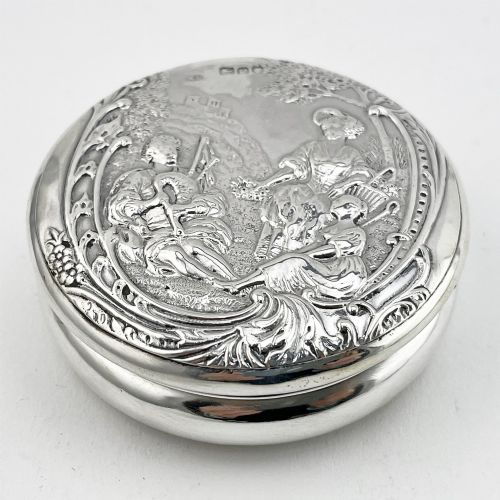
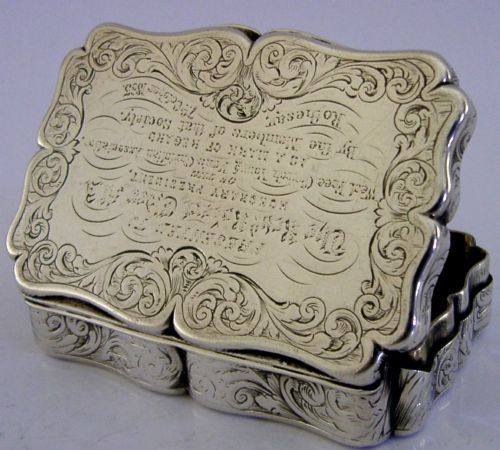
Many examples originate from Edinburgh and incorporate regional motifs such as bagpipe players or specific church inscriptions. Others bridge categories by combining the form of a small box with stones like agate and citrine.
How they were made
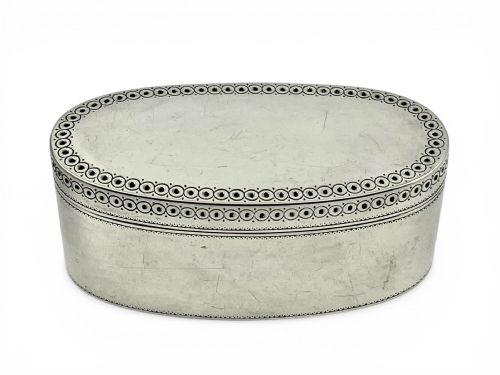
Maker workshops utilised sterling silver as the primary body material, frequently applying silver gilt or working with gilt metal for interior finishes and smaller vinaigrettes. The metalwork relies on traditional smithing techniques to shape oval and rectangular box bodies.
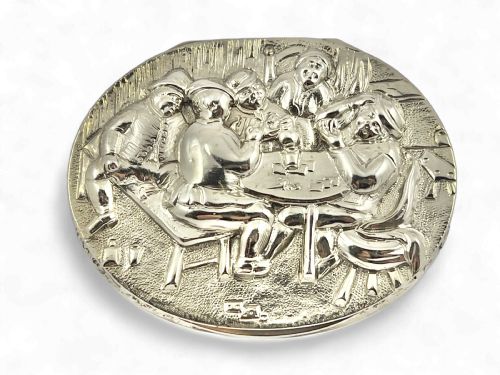
Artisans integrated hardstones into the lids, mounting natural agate and citrine panels directly into the silver mounts. Engraving and chased detailing define the decorative elements seen on the surfaces of these items.
Scottish Silver Trinket Box Retail Price Guide 2026
Typical asking prices for scottish silver trinket box among the pieces listed under this phrase on Sellingantiques today, from the lower quarter to the upper quarter. They describe what is for sale here now, not the wider market.
Listings for this phrase include pieces from the Georgian, Regency, William IV, Victorian, and Edwardian periods.
What varies in quality
The distinction between tiers of quality rests upon the crispness of the chased decoration and the integration of inset stones. Pieces featuring detailed figural work, such as a bagpipe player, demonstrate higher artistic ambition than plain metal surfaces.
Quality also appears in the precision of the hinge work and the clarity of the Edinburgh or regional hallmarking stamps. Well-preserved gilding inside silver gilt boxes maintains a richer tone than worn surfaces.
Hilliard & Thomason·John Caw
The Scottish Silver Trinket Box Glossary
- Sterling silver
- A standard alloy of silver containing 92.5 percent pure silver by mass. This metal forms the durable structural body for the majority of these antique boxes.
- Silver gilt
- Sterling silver that has been coated with a thin layer of gold on its surface. This technique provides a warm golden interior finish to snuff boxes and vinaigrettes.
- Vinaigrette
- A small ornamental box containing a perforated inner grill soaked in aromatic vinegar. These pieces were carried during the Georgian and Victorian periods to mask unpleasant odours.
- Agate
- A rock consisting primarily of chalcedony and quartz, displaying characteristic banded patterns. These polished stones serve as decorative lid panels on silver boxes.
- Citrine
- A transparent, yellow variety of quartz stone. Craftsmen set these gemstones into the lids of Edwardian trinket boxes for added colour.
Scottish Silver Trinket Box: Frequently Asked Questions
What is a scottish silver trinket box used for?
These pieces originally served practical functions such as holding pinches of snuff or carrying aromatic vinegar inside small perforated vinaigrettes. Today, collectors utilise them on dressing tables or desks to hold small modern items like rings and keepsakes.
The compact nature of these boxes made them easily portable pocket items for gentlemen and ladies in the eighteenth and nineteenth centuries.
How do I identify the period of a box?
Dating relies primarily on official hallmarks stamped into the silver, which indicate assay offices such as Edinburgh and specific active years. Stylistic clues also help, as Georgian pieces often feature simpler neoclassical lines while Victorian examples incorporate heavier ornamentation.
The presence of specific stones like citrine points toward later Edwardian tastes, whereas early nineteenth-century items frequently rely entirely on chased silver.
How should I clean antique silver and stone boxes?
Silver components require gentle dusting and occasional cleaning with a specialist silver cloth to maintain the metal without harming engraved details. Inset stones like agate and citrine should be kept away from liquid dips and chemical immersion to protect their settings.
Storing boxes in stable humidity environments prevents tarnish accumulation and protects the natural stone panels from adhesive degradation.