



Scottish Regency Clock
These pieces are scottish regency clock examples, combining architectural mahogany cases with precise movements that anchor a room.
Scottish Regency Clock
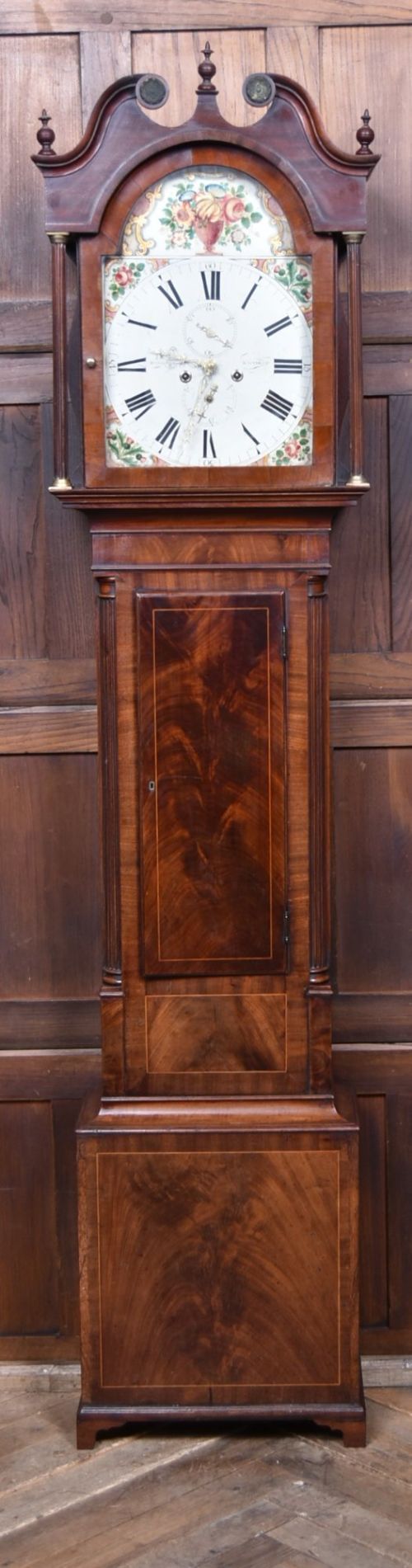
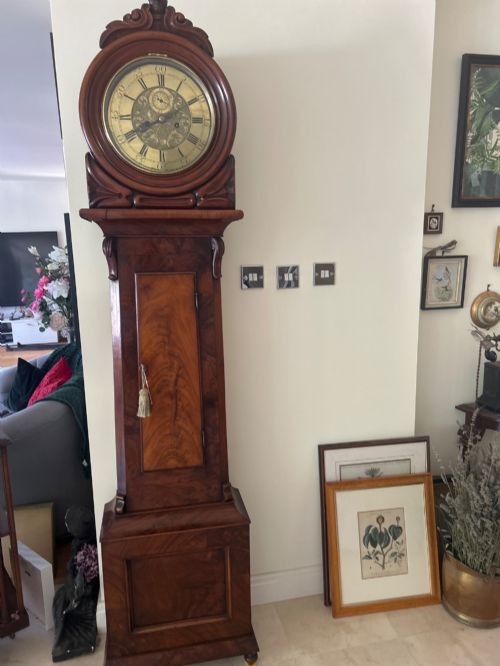
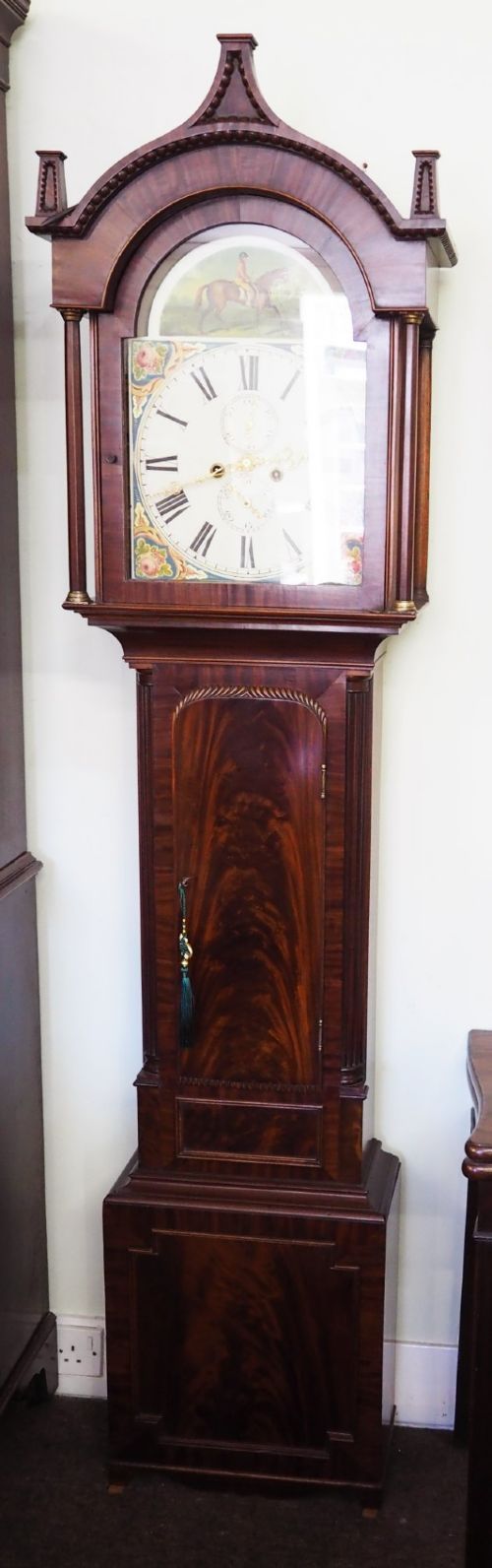
When you search for a scottish regency clock, you are looking at tall case timepieces and smaller table or bracket formats dating from the 19th Century and the Regency period. The selection on this page leans heavily toward longcase clocks housed in mahogany, alongside mantel and bracket variations originating from Scottish makers.
Most examples take the form of longcase clocks, often described as grandfather clocks, featuring regional traits distinct from English counterparts. Alongside these grander floor-standing pieces, the listings include drumhead longcase clocks and bracket clocks designed for table placement.
How They Were Made
Cabinetmakers built the housings using solid mahogany and flame mahogany veneer over secondary timbers, often applying polished finishes to highlight the figured grain. Dials were constructed from painted iron, brass, or silvered metal, providing clear backdrops for the hands.
The mechanical movements relied on brass wheel trains and weights or twin fusee setups, assembled by regional horologists to maintain accurate time over eight-day durations.
Listings feature 19th Century and Regency periods, utilising mahogany, brass, glass, and painted iron across longcase and mantel formats.
What Varies in Quality
The sophistication of the timber selection marks the divergence between standard and superior pieces, with rich flame mahogany veneer elevating the visual impact of the case. Dial execution also dictates standing, where finely painted iron or engraved silvered metal displays superior hand craftsmanship.
The reputation of the maker inscribed on the dial carries weight, distinguishing regional workshops of note from lesser-known provincial makers through the precision of the internal movement.
Hendrie Ogg·David Morice·William Chisholm·Mitchell And Russell·James Howden And Co
The Scottish Regency Clock Glossary
- Longcase clock
- A tall pendulum clock enclosed in a wooden case that stands directly on the floor. These are frequently termed grandfather clocks in domestic settings.
- Flame mahogany veneer
- A thin slice of mahogany with a fiery, feather-like grain pattern applied to the exterior surfaces of the clock case. This veneer was chosen for its decorative visual movement.
- Silvered metal
- A metallic dial surface treated with a silver solution to create a matte, reflective finish. It provides a crisp contrast against dark hands and engraved numerals.
- Twin fusee bracket table clock
- A smaller clock driven by two fusee movements and designed to sit on a bracket or table. The fusee mechanism equalises the declining power of the mainspring.
Scottish Regency Clock: Frequently Asked Questions
Where were Scottish longcase clocks placed?
These tall timepieces stood in the principal rooms or hallways of houses where their height and striking mechanism could be easily heard and seen.
Their commanding presence made them both functional household anchors and decorative centrepieces for family life.
How do I wind an eight day clock?
An eight day clock requires winding via the key holes on the dial face every week to maintain tension on the internal weights or springs.
Careful handling during this process ensures the movement and pendulum remain undisturbed and keep accurate time.
How do bracket clocks differ from longcase clocks?
Bracket clocks are compact table or shelf timepieces built with portable movements, whereas longcase clocks rely on a tall floor-standing trunk for their pendulum.
Despite the difference in scale, both types utilise brass gear trains and precision escapements.