


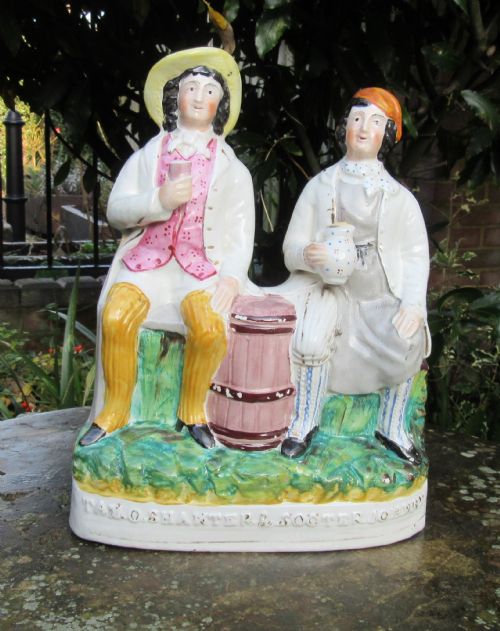


Scottish Pottery Figure
A Scottish pottery figure brings the character of nineteenth-century hearths and parlours straight into a modern room.
Scottish Pottery Figure
A Scottish pottery figure encompasses nineteenth-century earthenware depictions of highlanders, lairds, harvesters, and literary characters like Tam O'Shanter. These ceramic works frequently take the form of flatback figures designed to sit flush against a mantelpiece, alongside watch holders and spill vases.
The pieces on this page span the Victorian era, moving from primitive folk art traditions into more detailed Victorian Staffordshire pottery. Subjects range from solo riders on horseback to paired musicians and spaniel dogs with glass eyes.
Originating predominantly from the nineteenth century, these earthenware objects reflect the popular visual culture and romanticism of Scotland during the period. Makers utilised local clays and traditional moulding techniques to supply domestic hearths with affordable mantel ornaments.
Materials and methods
Makers fashioned each Scottish pottery figure from earthenware clay, shaping the form using press moulds before firing the body. This ceramic base provided a sturdy foundation for subsequent decoration.
Scottish Pottery Figure Retail Price Guide 2026
Typical asking prices for scottish pottery figure among the pieces listed under this phrase on Sellingantiques today, from the lower quarter to the upper quarter. They describe what is for sale here now, not the wider market.
Several spaniel dogs stare out from the listings equipped with uncanny glass eyes.
Judging quality
Scale and ambition also differentiate the pieces, with large flatbacks, pairs of musicians, and complex equestrian subjects demanding greater skill from the potter than smaller, simpler figurines.
The Scottish Pottery Figure Glossary
- Flatback
- A figure moulded with a finished front and a largely unglazed, flat reverse designed to stand against a wall or mantelpiece. This construction method saved clay and production time in the pottery.
- Earthenware
- A porous type of ceramic fired at lower temperatures than stoneware or porcelain. It requires a glaze to become impermeable to liquids.
- Spill vase
- A hollow figurine incorporating an attached holder meant to contain wooden spills for lighting pipes or candles. These dual-purpose objects were standard domestic accessories.
- Lead glaze
- A glossy coating containing lead oxide applied to ceramic ware before a final firing. It produces a smooth, reflective surface that protects the painted decoration underneath.
- Enamel paint
- Vitreous pigments applied over a fired glaze and fixed with a secondary, low-temperature heating. This technique allowed makers to achieve bright, varied surface colours.
Scottish Pottery Figure: Frequently Asked Questions
What is a flatback figure?
A flatback figure is a ceramic ornament moulded primarily for display on a mantelpiece or shelf where only the front and sides are visible. Potters left the backs flat and unglazed to save materials during production.
These pieces were staple nineteenth-century chimney ornaments, designed to catch the eye from across a parlour while sitting securely against a wall.
How old are these figures?
The pieces seen here belong to the nineteenth century, with the majority originating from the Victorian era between eighteen-sixty and nineteen-hundred. Dates are determined by stylistic markers, clothing details, and manufacturing methods.
Earlier examples often exhibit primitive folk art characteristics, while later Victorian pieces show more refined moulding and brighter enamel palettes.
Were these figures made in pairs?
Many nineteenth-century figures and spaniel dogs were produced as matching pairs intended to sit at either end of a mantelpiece. Harvesters, musicians, and literary characters often appear in balanced sets.
Single figures were equally common, particularly larger portrait subjects or specific historical and literary heroes like Tam O'Shanter.
How do I care for antique pottery?
Antique earthenware requires gentle dusting with a soft, dry brush to protect the aged lead glaze and hand-painted enamel surfaces. Avoid using water or chemical cleaners, which can harm the porous ceramic body or flake the paint.
Keep the pieces out of direct sunlight and away from damp areas to preserve the integrity of the nineteenth-century materials.