


Scottish Pebble Silver
Scottish pebble silver items are striking Victorian pieces set with hardstones like agate, jasper and citrine that bring a bold Highland character to any collection.
Scottish Pebble Silver
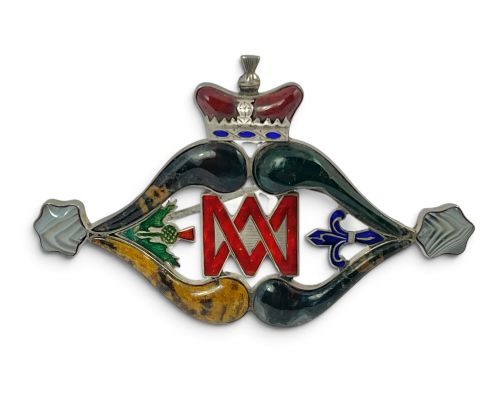
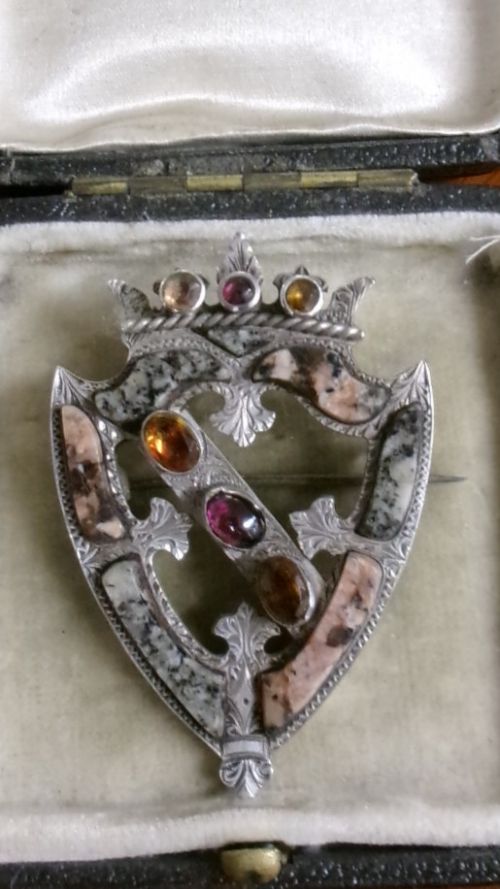
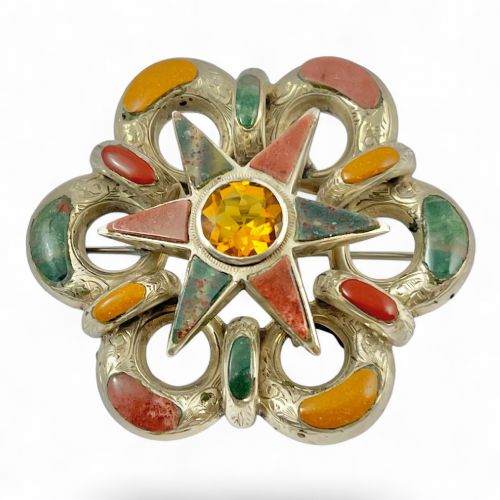
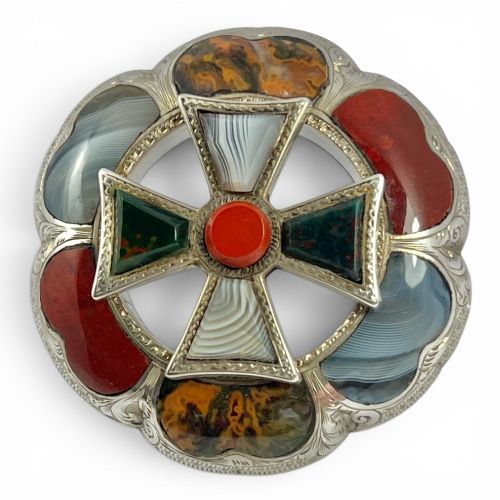
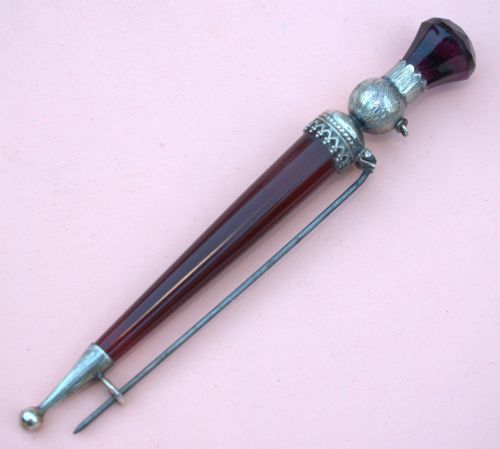
When you search for scottish pebble silver, you encounter a range of nineteenth century items shaped by the Victorian Scottish Revival. The pieces include brooches, kilt pins, dirk brooches, vinaigrettes, padlock locket pendants, earrings and jewellery suites.
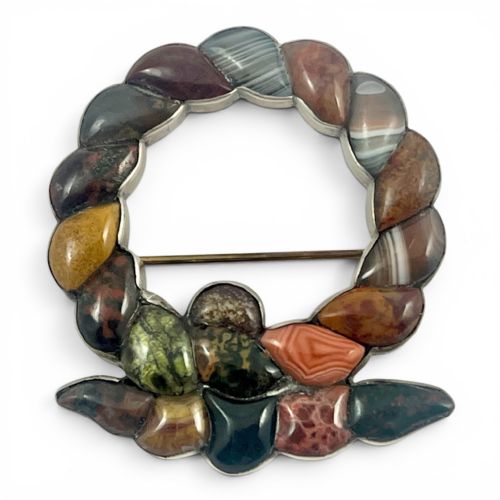
You are most likely to meet silver brooches set with multi coloured hardstones. These items frequently date from the mid to late nineteenth century, spanning decades such as the eighteen fifties, sixties, seventies, eighties and nineties.
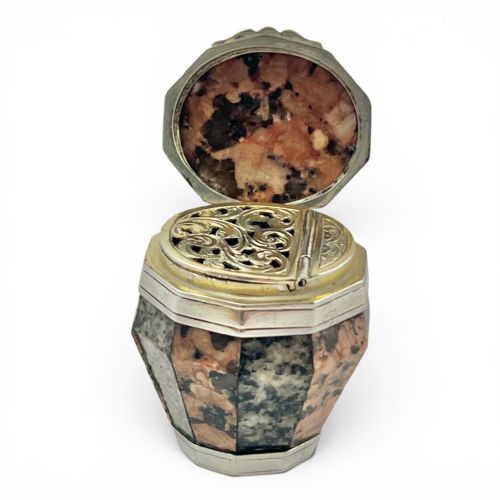
Forms often draw inspiration from traditional Highland weaponry and motifs. Examples include basket hilted broadswords, dirks, shields, bows, knots and barrel vinaigrettes.
How scottish pebble silver pieces were made
Maker's workshops combined sterling silver mounts with native Scottish stones. Stones such as agate, Montrose agate, jasper, bloodstone, granite, citrine, blue lace agate and malachite were cut, polished and fitted tightly into metal settings.
Silversmiths constructed intricate frames to hold the hardstones, sometimes employing provincial marks as seen in pieces originating from Inverness. Techniques included secure bezel settings and braided metalwork designed to anchor heavy stone displays.
Materials documented across the pieces include sterling silver, Montrose agate, blue lace agate, jasper, bloodstone, granite, malachite and citrine.
What varies in quality
Quality rests upon the selection and cutting of the hardstones. Stones with distinct natural banding, vivid colours and high polish separate standard items from superior pieces.
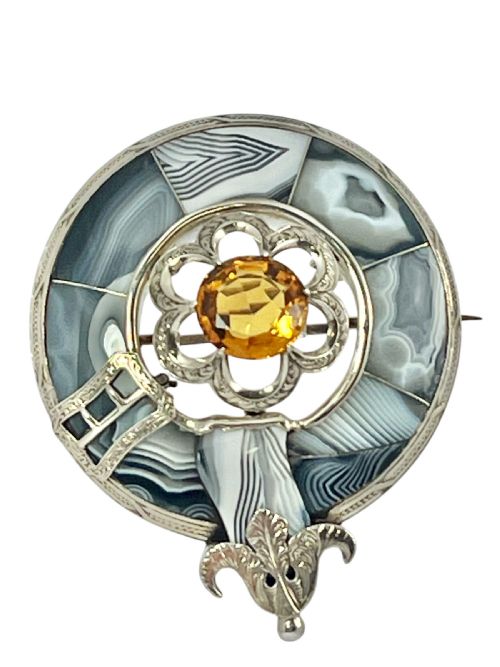
The complexity of the silver work also determines standard. Elaborate forms such as basket hilted broadswords, dirk brooches with cairngorm or citrine accents, and matched jewellery suites demand higher levels of silversmithing skill than simpler geometric mounts.
The Scottish Pebble Silver Glossary
- Agate
- A form of chalcedony showing distinct colour banding or mottling. It served as the primary hardstone for Scottish Victorian jewellery.
- Citrine
- A yellow variety of quartz often set as a central focal point in larger Highland brooches. It mimics the appearance of cairngorm stones.
- Dirk brooch
- A large pin modelled after the traditional Highland dagger. These pieces often feature detailed silver hilts mounted with hardstones.
- Montrose agate
- A specific regional variety of agate prized by Victorian lapidaries. It appears frequently in pieces from the latter half of the nineteenth century.
- Vinaigrette
- A small decorative container holding a sponge soaked in aromatic vinegar. Victorian examples were occasionally fashioned from silver and banded stone barrels.
Scottish Pebble Silver: Frequently Asked Questions
How were these pieces worn?
Victorian wearers utilised large pebble brooches and kilt pins to fasten plaids, shawls and heavy wool garments. Smaller pieces adorned lapels, collars and hats.
Matching suites provided coordinated sets of earrings and brooches for formal attire. The substantial weight of the silver and stone required sturdy fastening mechanisms.
How do I date these items?
Dating relies on stylistic markers and historical context associated with the Victorian Scottish Revival. Most surviving pieces date from the eighteen forties through to nineteen hundred.
Provincial marks, specific brooch forms like broadswords or shields, and pin mechanisms help narrow the period of creation. Mid Victorian items often display heavier silver casting alongside multi coloured agate.
What stones are used?
A wide variety of Scottish hardstones feature in these pieces. Agate is the most common, alongside Montrose agate, green and red jasper, bloodstone and granite.
Faceted citrines often serve as central yellow stones in dirk brooches and large circular pins. Malachite and blue lace agate also appear in select nineteenth century examples.