





Scottish Marine Oil Painting
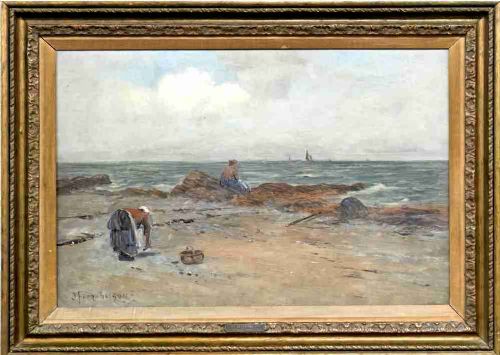
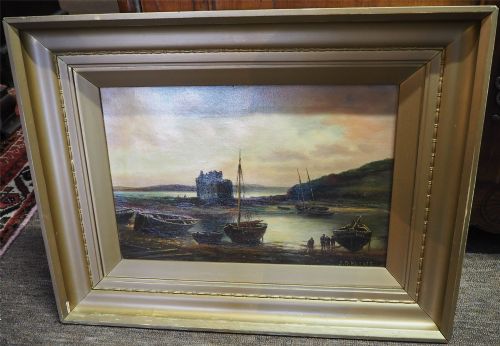
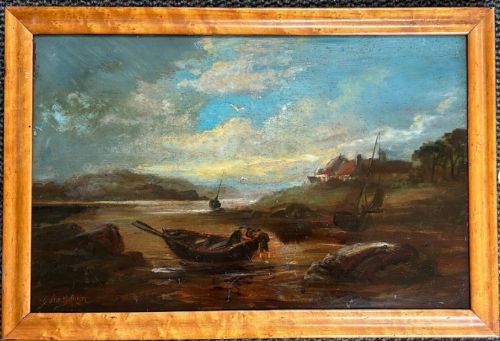
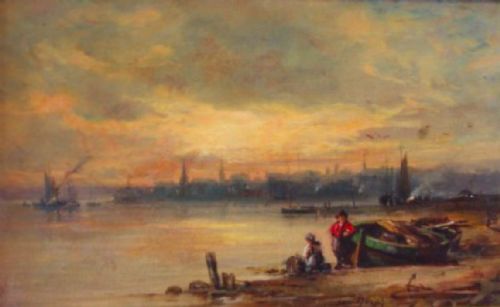
A Scottish marine oil painting captures coastal life, turbulent seas and bustling harbours through the rich medium of brush and pigment.
Scottish Marine Oil Painting
A scottish marine oil painting records the maritime heritage of Scotland through historical scenes of fishing boats, coastal harbours and turbulent seas. Collectors searching for a scottish marine oil painting encounter works ranging from Victorian coastal compositions to mid twentieth century harbour views.
The subjects span from detailed depictions of nineteenth century sailing ships off the coast to impressionistic impressions of fishing communities. Works vary from mid nineteenth century wood panel paintings to later twentieth century canvases depicting specific locations such as Crail Harbour and the Mull of Kintyre.
How they were made
Artists painted primarily with oil paint on stretched canvas or wooden panels, applying pigment to build texture and depth in the water and sky. Many works are housed in period gilt wood frames that complement the maritime subject matter.
The technique relies on layered brushwork, allowing painters to capture the movement of waves, the play of light on estuaries and the atmospheric conditions of the Scottish coastline.
Listings span from the nineteenth century through the Victorian era into twentieth century British impressionism, utilising canvas, hardboard and wood panels.
What varies in quality
Quality depends upon the artist's ability to render light, atmospheric perspective and maritime architecture with convincing proportion. Skilled handwork shows in the confident handling of water, rigging and coastal topography.
The presence of a recognised signature, original framing and documented provenance elevates the standing of a piece within the tradition of British and Scottish impressionism.
Joseph Farquharson·Donald McIntyre·Alfred Henry Vickers·Sam Bough·James Torrington Bell·Owen Bowen·Robert Macaulay Stevenson·Denys Garle·Richard Ball Spencer·James G Faulds
The Scottish Marine Oil Painting Glossary
- Canvas
- A heavy woven fabric stretched across a wooden frame to serve as a foundation for oil painting. It provides a flexible and durable surface favoured by artists.
- Oil paint
- A slow drying medium consisting of pigments suspended in a drying oil, typically linseed. This medium allows for rich colour blending and impasto texture.
- Gilt wood
- Wood carved and coated with gold leaf or a metallic substitute used for framing artworks. This finish enhances the visual presentation of the painting.
- Wood panel
- A rigid flat wooden support used as an alternative to canvas for painting. Panels offer a stable surface that withstands the application of heavy oil pigments.
- Marine art
- Artistic representation of the sea, ships, harbours and coastal views. This genre encompasses historical shipping scenes as well as coastal landscapes.
Scottish Marine Oil Painting: Frequently Asked Questions
How do I identify a Victorian marine painting?
Victorian marine paintings often feature meticulous attention to ship rigging and atmospheric lighting. They frequently employ traditional canvas supports paired with ornate gilt wood frames.
Subject matter commonly includes sailing vessels, fishing boats in estuaries and dramatic coastal skies typical of nineteenth century maritime art.
What subjects appear in these coastal works?
Common subjects include bustling harbours, fishing communities at work and specific coastal landmarks around Scotland. Artists recorded local vessels, salmon netting and ships navigating rough waters near the Mull of Kintyre.
These scenes provide a historical record of maritime labour and coastal geography from the nineteenth and twentieth centuries.
How should I care for an oil painting on wood panel?
Oil paintings on wood panels require stable indoor humidity to prevent the wood from warping or cracking over time. Keep the artwork away from direct sunlight and sudden temperature fluctuations.
Dust the surface gently with a soft, dry brush and avoid using liquid cleaners on the paint or the gilt frame.
What is the difference between canvas and panel works?
Canvas works utilise a stretched textile support that responds to atmospheric changes by flexing slightly. Wood panels provide a rigid, solid base that often dates earlier nineteenth century pieces.
Both supports hold oil paint effectively, but panel paintings tend to have a smoother, flatter ground compared to the visible weave of a canvas.