

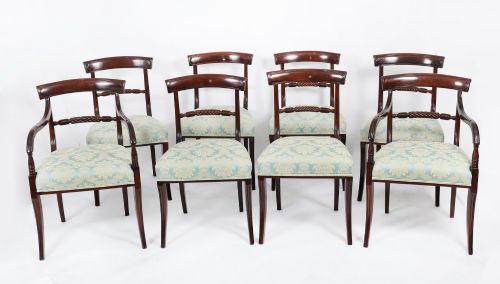


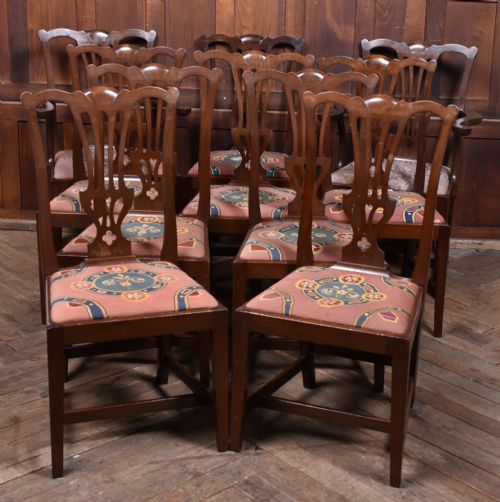
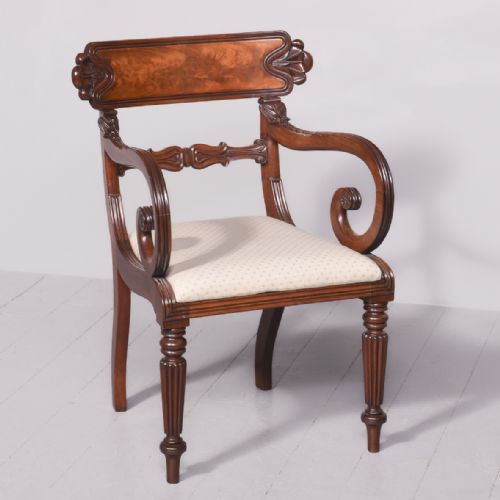


Scottish Mahogany Dining Chairs
These scottish mahogany dining chairs combine robust regional timber with classic proportions, offering sturdy elegance for a traditional dining room.
Scottish Mahogany Dining Chairs
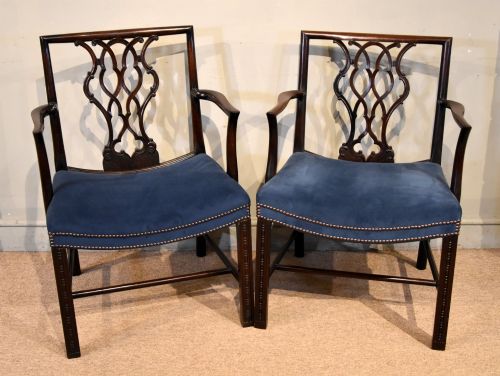
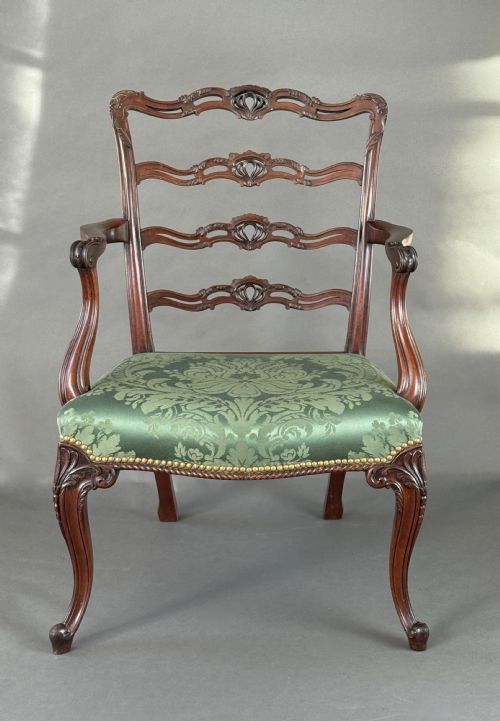
When you search for scottish mahogany dining chairs, you encounter seating constructed in Scotland from dense tropical hardwood during the eighteenth, nineteenth, and early twentieth centuries. The selection ranges from single side chairs to large dining sets, often appearing in George III, Regency, and Victorian iterations.
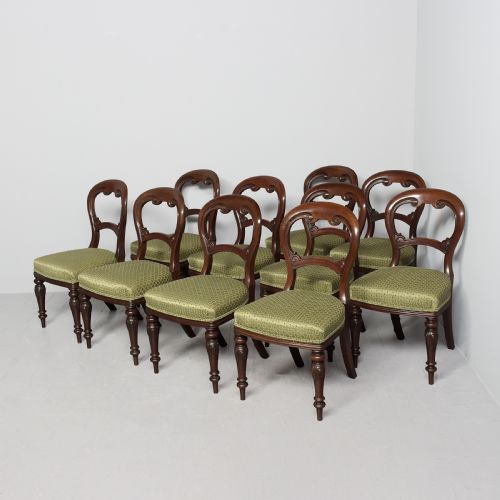
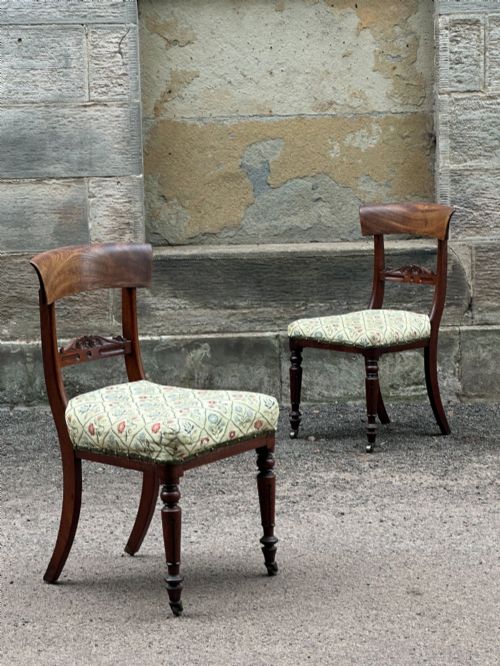
Armchairs and side chairs form the primary objects in this category, showing regional design traits that diverge slightly from London equivalents. The forms include balloon back configurations, Grecian styles, and solid frame dining chairs suitable for daily use.
Most examples hail from the Georgian and Victorian periods, though Edwardian workshop productions and later sets also emerge. Buyers commonly find groupings of four, six, eight, or ten chairs designed to furnish formal dining spaces.
Materials and construction
Makers utilised solid mahogany and hardwood for the primary frames, frequently pairing the timber with fabric, upholstery fabric, or textile for drop-in or padded seats. Brass details appear occasionally on feet or castors, supplementing the dark wood grain.
Joinery methods relied on traditional mortise and tenon construction to ensure structural rigidity under regular use. Workshops shaped the mahogany using hand tools, carving crest rails and legs while incorporating ebonised accents in specific Georgian pieces.
Scottish Mahogany Dining Chairs Retail Price Guide 2026
Typical asking prices for scottish mahogany dining chairs among the pieces listed under this phrase on Sellingantiques today, from the lower quarter to the upper quarter. They describe what is for sale here now, not the wider market.
Several dining sets retain their original brass castors, designed to let Victorian diners glide smoothly across the floor during long evening meals.
Assessing quality in regional seating
Quality rests upon the density of the mahogany and the crispness of any carved details on the crest rails and legs. Superior examples maintain structural integrity across entire sets, showing careful timber selection and matching grain patterns.
The sophistication of the silhouette defines the upper tier of the range, distinguishing standard workshop production from finely proportioned dining chairs. Upholstery standard and the preservation of original show wood further separate exceptional sets from ordinary ones.
Whytock and Reid of Edinburgh·Wheelers of Arncroach
The Scottish Mahogany Dining Chairs Glossary
- Regency
- A style spanning the early nineteenth century characterised by classical revival motifs and architectural restraint. It draws inspiration from ancient Greek and Roman furniture forms.
- Balloon back
- A rounded, oval-shaped backrest popular during the Victorian era. This contour resembles the silhouette of a hot air balloon.
- Grecian
- A design style utilising direct classical motifs such as curule bases and scrolled top rails. These chairs reflect nineteenth-century archaeological discoveries.
- George III
- A British design period spanning the mid to late eighteenth century known for refined cabinetmaking. It encompasses Chippendale influence and balanced proportions.
- Side chair
- An upholstered or wooden chair without armrests designed for dining tables. These pieces sit alongside larger armchairs in matched suites.
Scottish Mahogany Dining Chairs: Frequently Asked Questions
How do I care for mahogany dining chairs?
Keep the timber away from direct heat sources and strong sunlight to prevent the wood from drying out or fading. Apply a traditional wax polish periodically to maintain the lustre of the mahogany surface.
Check the joints regularly to ensure the frame remains stable during daily use. Clean upholstered pads according to the specific fabric requirements without soaking the underlying woodwork.
Are these chairs suitable for daily dining?
Solid mahogany construction makes these chairs robust enough for regular seating around a dining table. The traditional joinery is built to withstand repeated movement and daily household activity.
Ensure that any antique castors or legs are protected if used on hard flooring surfaces. Regular use helps keep the timber conditioned, provided the environment maintains stable humidity levels.
How do I distinguish Regency from Victorian examples?
Regency chairs typically display restrained classical lines, reeded members, and influences drawn from ancient Greece. The proportions tend to be crisp and architectural with minimal surface carving.
Victorian chairs often feature bolder proportions, balloon backrests, and more exuberant decorative carving on the frames. The later nineteenth-century pieces also utilise heavier upholstery structures.
Can I mix side chairs and armchairs?
Dining suites from these periods traditionally paired a set of side chairs with two matching armchairs for the heads of the table. Mixing styles from the same era works well if the timber tone and leg design share common characteristics.
Ensure the seat height matches across different chairs to maintain comfort around the dining table. Matching the timber species, such as mahogany, provides visual continuity even among slightly varied forms.