

Scottish Highland Landscape Art
Scottish highland landscape art captures the rugged terrain and atmospheric light of the north, offering buyers a window into nineteenth and early twentieth century topography.
Scottish Highland Landscape Art
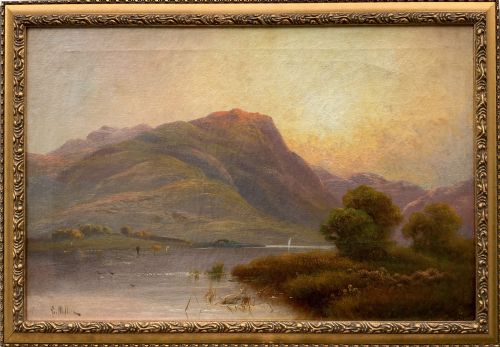
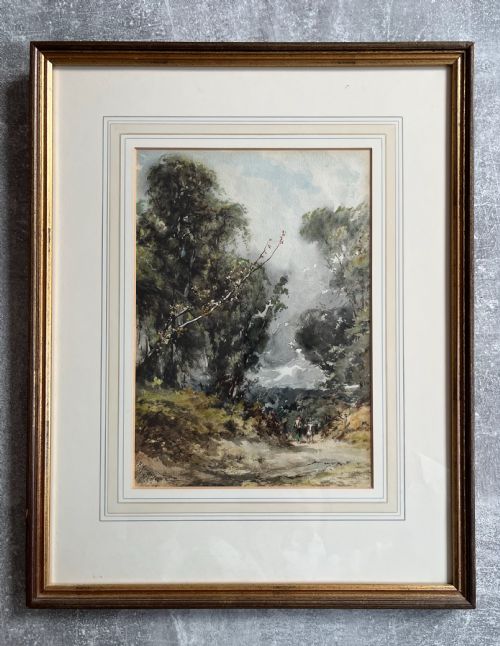
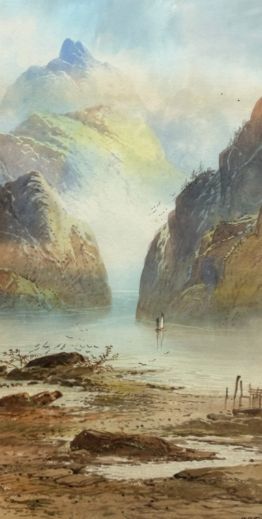
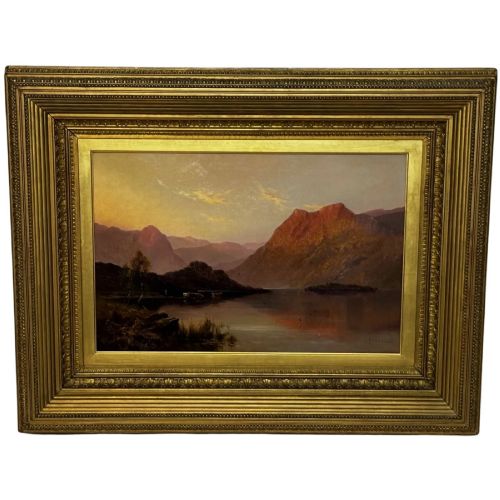
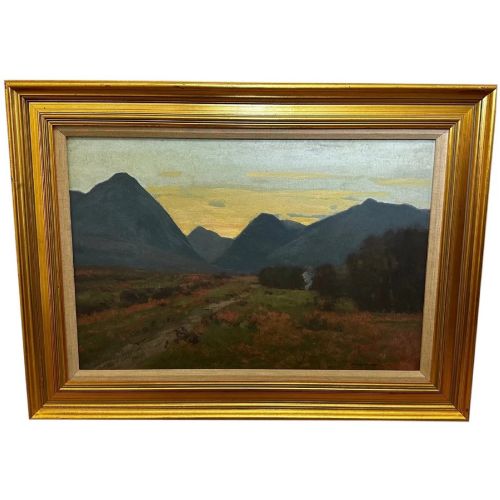
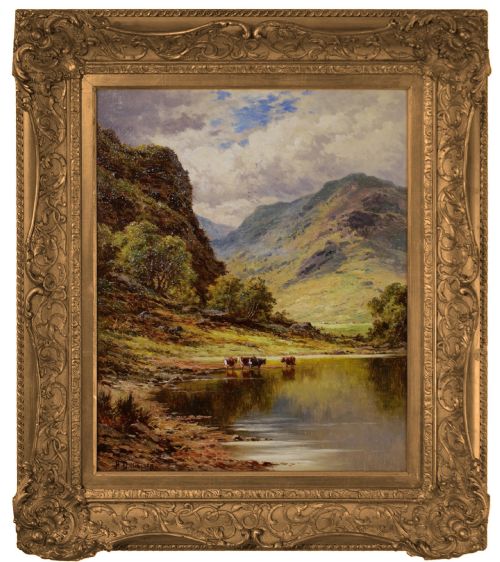
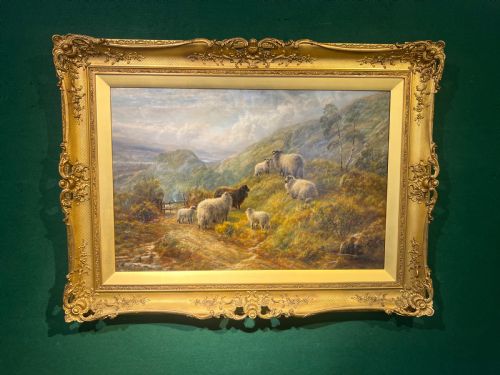
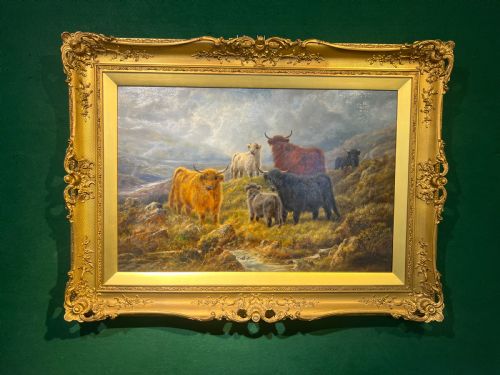
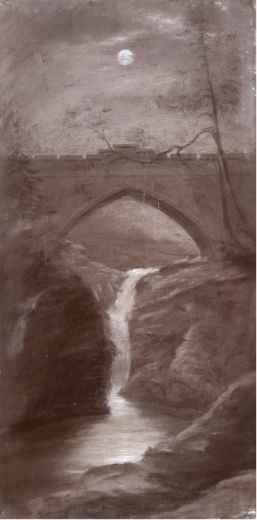
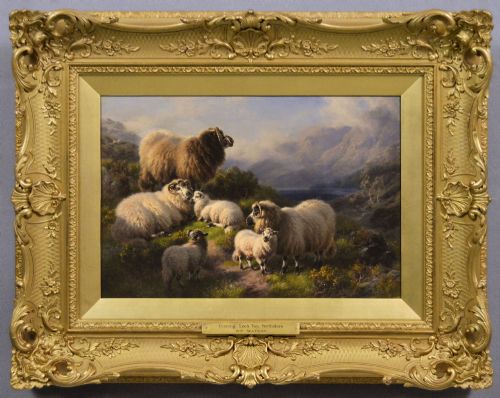
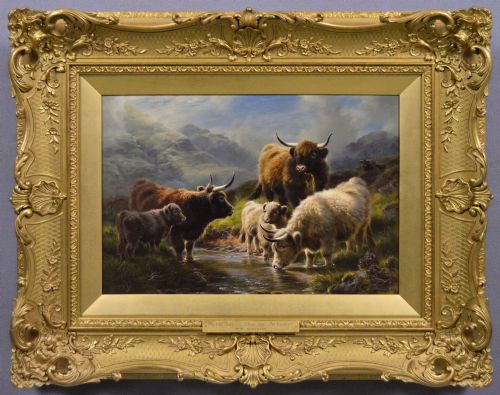
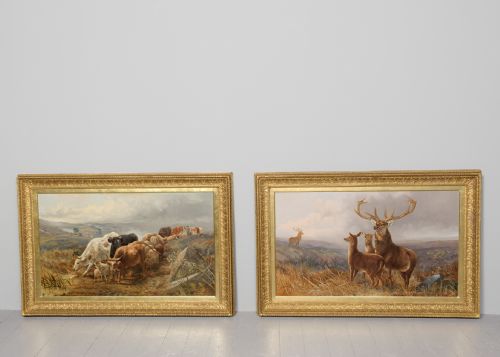
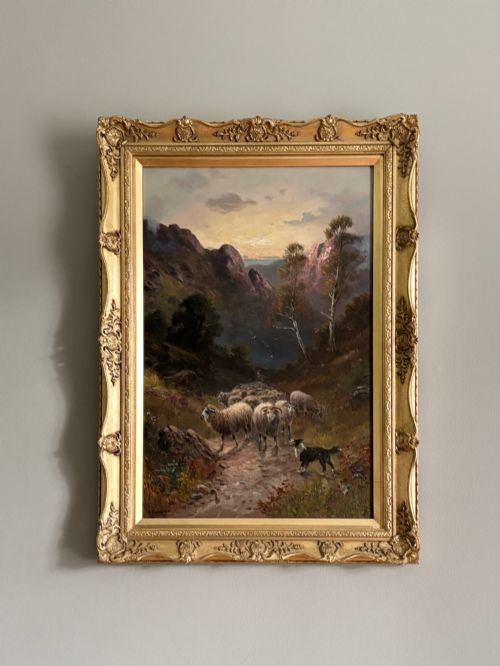
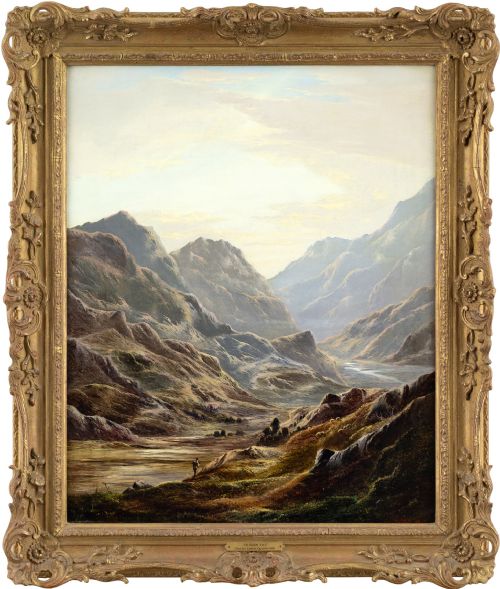
Scottish highland landscape art comprises framed paintings depicting mountains, lochs, and glens, frequently featuring cattle or sheep. These works span the Victorian period through the early twentieth century, reflecting academic and regional artistic developments.
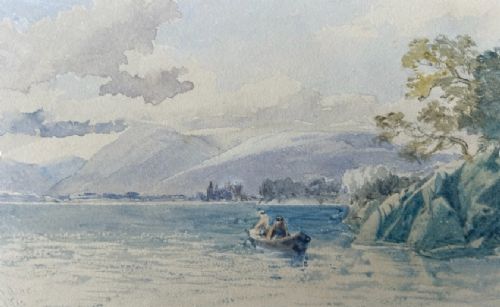
Buyers encounter oil paintings on canvas and wood panel alongside watercolours on paper. Many pieces carry signatures from established painters working within the Scottish School and Victorian landscape traditions.
Subjects range from specific locations such as Loch Tay, Ben Lawers, and Glen Tilt to broader pastoral scenes. The framing often includes period giltwood and gesso surrounds that complement the canvas.
How they were made
Artists applied oil paint to stretched canvas or prepared wood panels, building texture with brushwork and palette knives. Watercolour works utilised paper supports, often enhanced with gum arabic to deepen tones.
Frames relied on carved wood, moulded gesso, and gold leaf applications to provide structural support and aesthetic weight. These materials reflect nineteenth-century workshop practices common in British framing.
Highland sheep and cattle crowd these glens so thoroughly that viewers often spot more livestock than human figures.
What varies in quality
Technical proficiency in handling light and atmospheric perspective determines the distinction between standard topographical records and superior compositions. Skilled handling of water, mist, and animal anatomy elevates a work significantly.
The integrity of the original canvas, panel, and gesso frame contributes heavily to the overall merit of a piece. Well-preserved surfaces retain the artist's intended colour relationships without excessive intervention.
William Beattie-Brown RSA·George Fotherly Hargitt·Thomas Miles Richardson Jnr RWS·William Henry Earp·Tom Campbell·Alfred Fontville de Breanski Jr·George Houston RSA RSW·Henry H. Parker·Robert Watson·William Watson Jnr·Robert Cleminson·Douglas Cameron·Charles Leslie·Alexander Wellwood Rattray·Everett Watson Mellor·William George Tennick·Archibald Kay RSA RSW·Henry Robinson Hall·W.E. Evans·Henry Hillier Parker·William Grant Murray·TOM SEYMOUR·Stanley Orchart·John Charles Tunnard·J Gibb
The Scottish Highland Landscape Art Glossary
- Gesso
- A plaster-like mixture applied to wood frames before gilding. It provides a smooth base for intricate moulded decoration.
- Giltwood
- Wood carved and coated with gold leaf or metallic powder. It frames many nineteenth-century paintings.
- Scottish School
- A collective term for artists working in Scotland who shared stylistic influences during the nineteenth and early twentieth centuries. Their output focused heavily on regional topography and atmospheric conditions.
- Watercolour
- A painting method where coloured pigments are suspended in a water-soluble vehicle. It produces translucent washes on paper supports.
Scottish Highland Landscape Art: Frequently Asked Questions
What periods do these paintings date from?
The available works primarily date from the nineteenth century through the Edwardian era and the 1920s. Victorian examples frequently feature romanticised pastoral elements.
Later pieces incorporate tendencies from Scottish Impressionism and post-impressionist movements while retaining traditional regional subject matter.
Where should I hang these artworks?
These works suit traditional reception rooms, studies, or hallways where their scale and heavy giltwood frames can anchor the wall space. Natural indirect light helps illuminate the dark earth tones typical of nineteenth-century palettes.
Avoid placing canvas works in areas subject to direct sunlight or high humidity to protect the oil paint and wood panels.
What is the difference between oil and watercolour?
Oil paintings utilise slow-drying paint on canvas or wood panels, allowing for heavy impasto and rich atmospheric depth. Watercolours employ water-based pigments on paper, resulting in lighter, translucent compositions.
Watercolour works require protective glass framing, whereas oil paintings on canvas remain open to the room environment.