


Antique Lake Scene Painting
An antique lake scene painting captures water and distant mountains, offering the tranquility of nineteenth-century landscapes for domestic display.
Antique Lake Scene Painting
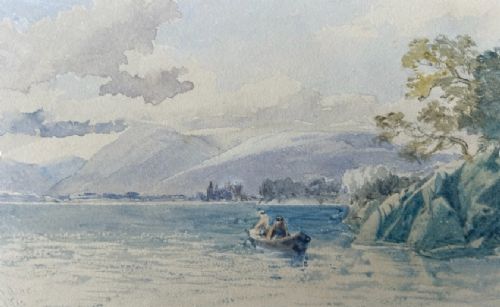
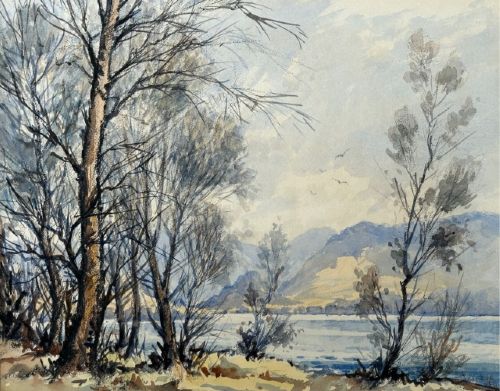
When you search for an antique lake scene painting, you find works depicting mountainous backdrops, Scottish highlands, and calm waters rendered in oil or watercolour. The pieces span periods from the eighteenth century through the Victorian era into the twentieth century, capturing diverse European and British topography.
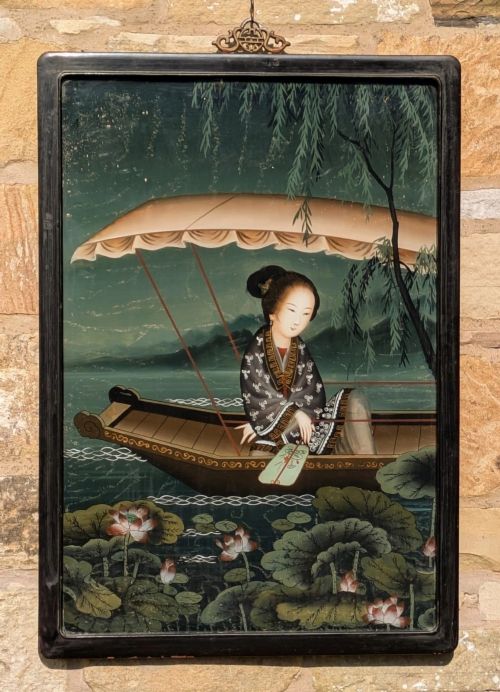
You meet oil on canvas works alongside watercolours on paper, gouache, and reverse paintings on glass. Many examples retain their original gesso and giltwood frames, presenting views of Scottish lochs, Italian lakes, and Dutch waterways with figures, boats, or cattle.
The selection ranges from intimate panels to large framed artworks by named artists and regional schools. Subjects vary from quiet pastoral riverbanks to dramatic alpine landscapes beneath snow-capped peaks.
Materials and methods
Artists painted primarily with oil paint on canvas or wooden panel, building texture and depth to describe water surfaces and mountain mist. Watercolours and gouache appeared frequently on paper, fixed behind glass within decorative frames.
Framing utilised wood ornamented with moulded gesso and gilt finishes to complement the tonal balance of the canvas. Leaded glass techniques also emerge in architectural window panels incorporating hand-painted countryside and lake motifs.
Judging the work
Quality rests upon the handling of light across the water and the precision of atmospheric perspective in the distant hills. Stronger compositions demonstrate confident brushwork and balanced tonal gradations that create genuine spatial depth.
The integrity of the original support, canvas tension, and the retention of period giltwood framing influence the overall presentation. Signed works by documented painters or distinct regional schools carry greater attribution clarity.
Thomas Miles Richardson Jnr·Frank Hider·James Gunson Atkinson·Benjamin Williams Leader·Sidney Richard Percy·Antoine Bouvard
The Antique Lake Scene Painting Glossary
- Oil on Canvas
- Pigment mixed with drying oil applied to a woven fabric stretched across a wooden frame. This medium allowed artists to build rich textures and deep tones.
- Giltwood
- Wood carved and coated with gold leaf or metallic powder. It provides a reflective border that isolates the painted view from the surrounding room.
- Gesso
- A paint mixture consisting of a neutral binder mixed with chalk, gypsum, or pigment. It formed the smooth base for gilding on traditional picture frames.
- Gouache
- A water-based paint characterised by the presence of a white pigment, making the medium opaque. It produces matte surfaces with solid colour blocks.
- Reverse Painting on Glass
- An artistic technique where the image is painted directly onto the back of a glass sheet. Viewing the work from the front reveals a glossy finished surface.
Antique Lake Scene Painting: Frequently Asked Questions
How do I hang a heavy framed oil painting?
Secure the hanging wire or brackets directly into wall studs using appropriate masonry or plaster fixings.
Ensure the weight is distributed evenly across two points for larger square or rectangular gilt frames.
Where should I place these paintings at home?
Keep them away from direct sunlight and damp walls to protect the canvas, paper, and giltwood frames.
客厅 or hallways with stable ambient temperatures provide ideal environments for nineteenth-century oils and watercolours.
How do I distinguish watercolours from oil paintings?
Watercolours feature paper supports protected beneath glass, showing translucent washes and delicate brush marks.
Oil paintings utilise textured canvas or wood panels without glass coverings, displaying heavier pigment impasto.
What subjects typically appear in these landscapes?
Common motifs include Scottish highland waters, alpine peaks, boats, fishermen, and cattle grazing near riverbanks.
Scenes often draw from British, Italian, and Dutch topography observed during the Victorian and Edwardian periods.