






School of London Artwork
School of London artwork encompasses historic paintings and drawings capturing the capital, prized for recording the river, streets and landmarks of centuries past.
School of London Artwork
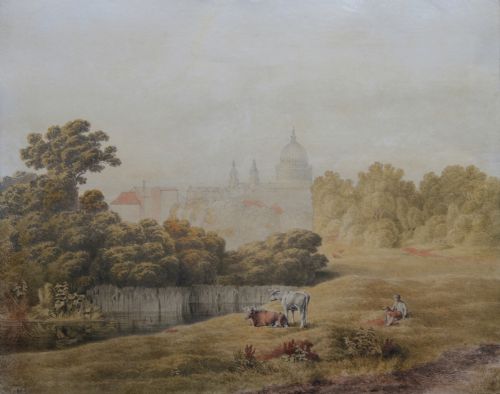
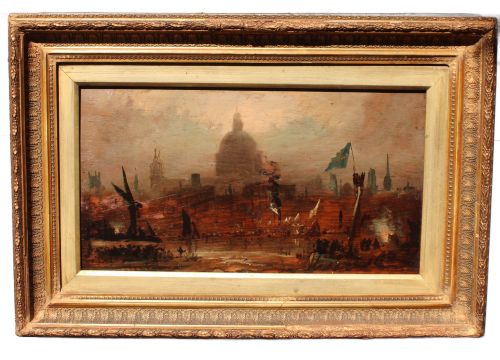
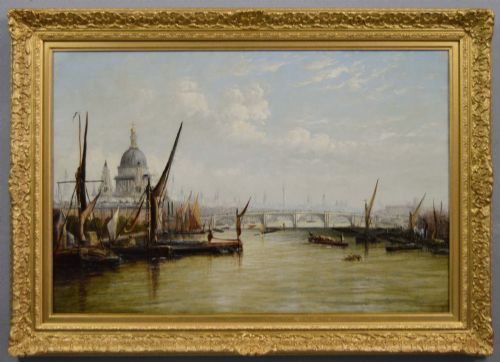
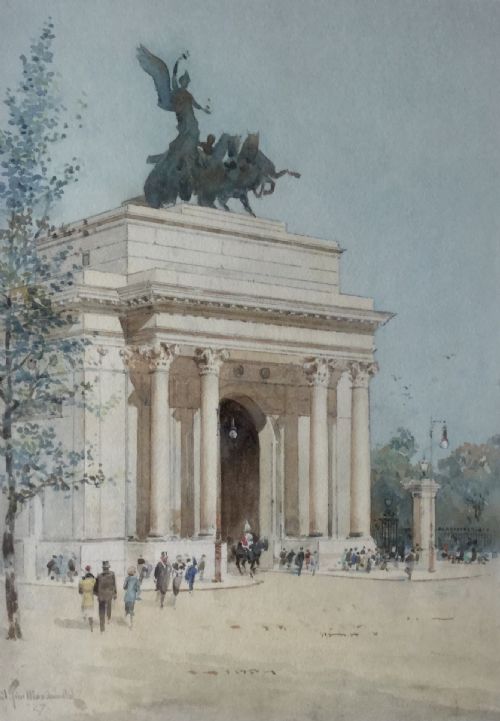
School of London artwork brings together historic paintings, watercolours and drawings that record the capital from the eighteenth century to the mid-twentieth century. These pieces capture recognisable scenes including the River Thames, St Paul's Cathedral, the Houses of Parliament, Kew Gardens and Hampstead.
Buyers encounter a diverse range of forms, from early oil studies in the manner of J. M. W. Turner to detailed townscapes, portraits and topographical watercolours. The selection spans distinct periods including the Georgian era, Victorian fine art, Romanticism, British Realism and Expressionism.
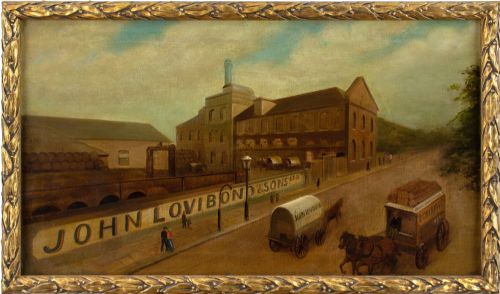
Works on this page range from intimate watercolours of specific London views to larger relief paintings and portraits by named artists and regional makers. Each piece offers a tangible fragment of the city's visual history, recorded through the varied lenses of successive artistic movements.
Materials and technique
Painters and draughtsmen working within this tradition relied primarily on oil on canvas, delicate watercolours on paper and traditional drawing media. Canvases were often supported by wooden stretcher frames, while finished works frequently utilised gesso and giltwood framing.
Techniques varied widely according to the period, encompassing the fluid brushwork of nineteenth-century marine painting, the precise observation of topographical watercolours and the heavy impasto of mid-century relief paintings.
School of London Artwork Retail Price Guide 2026
Typical asking prices for school of london artwork among the pieces listed under this phrase on Sellingantiques today, from the lower quarter to the upper quarter. They describe what is for sale here now, not the wider market.
Materials recorded across the inventory include wood, gesso, gold leaf and giltwood alongside traditional canvas and paper.
Quality and execution
Quality in these works rests upon the surety of the draughtsmanship and the artist's ability to capture light and atmosphere within a specific London setting. Superior examples demonstrate confident handling of perspective and architectural detail, particularly in complex townscapes and river views.
The distinction between standard works and the finest pieces often lies in the depth of composition and the historical resonance of the subject matter, such as documented landmarks or identifiable historical processions.
Francis Moltino·A. G. Hayward·John Hoppner·WD Scull
The School of London Artwork Glossary
- Oil on canvas
- Pigment suspended in drying oil applied to a woven fabric support. This traditional medium allows for rich colour blending and textured brushwork.
- Watercolour painting
- A picture executed with water-soluble pigments on paper. It creates luminous, translucent effects well suited to atmospheric river and sky scenes.
- Townscape
- A painting or drawing depicting a city's urban landscape and architecture. These views often feature bridges, rivers and prominent public buildings.
- Giltwood
- Wood carved and coated with thin gold leaf or gold paint. It is commonly found on traditional antique picture frames.
- Topographical art
- Accurate visual representation of actual places and landscapes. Such works serve as important historical records of changing urban environments.
School of London Artwork: Frequently Asked Questions
What periods do these London artworks cover?
The pieces span from the eighteenth century through the nineteenth and into the mid-twentieth century. This timeline captures significant shifts in British painting styles from Georgian and Romantic traditions to later Expressionism and realism.
Each period brings distinct stylistic approaches to depicting the capital's changing architecture and daily life, offering buyers a broad chronological spectrum to explore.
How were these watercolours and paintings framed?
Many historic paintings and watercolours are housed in period frames constructed from wood, gesso and gold leaf. These traditional surrounds often complement the age and style of the artwork within.
Buyers should examine whether a frame appears original to the piece, as period framing adds considerable context and visual harmony to antique wall art.
Where are the specific locations depicted?
The artworks frequently feature prominent London landmarks, particularly the River Thames, St Paul's Cathedral, Blackfriars Bridge, the Houses of Parliament, Kew Gardens and Hampstead Heath.
Topographical views often document historic events such as the Lord Mayor's Procession, providing specific geographic and cultural reference points for collectors.
How do I distinguish oil paintings from watercolours?
Oil paintings utilise thick pigments on canvas or wooden panels, offering textured brushstrokes and deep colour saturation. Watercolours employ translucent pigments on paper, creating lighter, more luminous effects.
Examining the surface under magnification reveals the woven canvas texture of oils versus the paper fibres typical of watercolour paintings and drawings.