
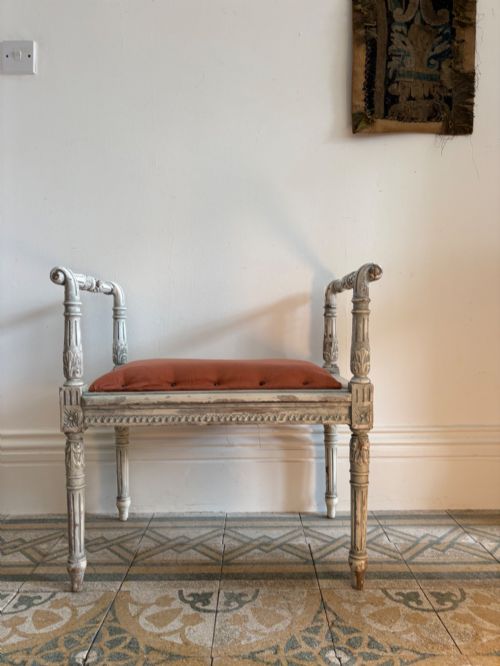


Scandinavian Upholstered Bench
A scandinavian upholstered bench brings functional Nordic seating into a room, offering historic woodwork paired with classic textiles.
Scandinavian Upholstered Bench
When buyers search for a scandinavian upholstered bench, they are typically examining historical seating forms ranging from the eighteenth century to the early twentieth century. These pieces encompass various seating types including sofas, settees, settle benches, and bedroom stools.
The versions most commonly met on this page originate from Sweden, spanning distinct historic movements such as Gustavian, Swedish Empire, Biedermeier, and Swedish Grace. They combine robust timber frames with period textiles like silk, satin birch, and hessian.
Forms vary from small low stools to grander eighteenth-century sofas and settle benches. Each piece reflects the characteristic design restraint and pale wood finishes typical of northern European furniture traditions.
How they were made
Makers constructed these frames predominantly using native timbers such as birch, satin birch, pine, and painted wood. Surfaces were often finished with white paint or left to highlight the natural grain of the wood.
Upholstery methods utilised traditional stuffing materials and covered the seating surfaces in fabrics ranging from plain hessian to decorative silk and satin. Frame construction relied on traditional joinery techniques suited to the particular aesthetic of each period.
One listed suite bears the signature of John Tesch from eighteen ninety-seven, proving that nineteenth-century Scandinavian furniture makers liked to sign their work too.
What varies in quality
Quality differences reside in the refinement of the carved wood details and the authenticity of the period paint finish. Finer examples display crisper proportions and more sophisticated joinery across the frame.
The integrity of the original timber and the sympathetic nature of any reupholstery also determine the standard of a piece. Finer seating retains its structural stability alongside well-preserved surfaces.
John Tesch
The Scandinavian Upholstered Bench Glossary
- Gustavian
- A Swedish neoclassical design style characterised by restrained classical ornamentation and light paint finishes. It developed during the reign of Gustav III in the late eighteenth century.
- Biedermeier
- A central and northern European style spanning the nineteenth century that favoured clean lines and utility over excessive decoration. It often showcased the rich grain of woods like birch.
- Settle bench
- A traditional wooden wooden bench featuring a high back and solid sides designed to block drafts. Upholstered versions incorporate padded seating areas.
- Satin birch
- A timber known for its distinctive rippled grain pattern that catches the light. It was frequently utilised during the nineteenth century for high-status furniture.
Scandinavian Upholstered Bench: Frequently Asked Questions
What periods do these benches cover?
The available selection spans from the eighteenth century through the nineteenth century up to nineteen hundred. These eras encompass distinct decorative movements in Scandinavian design.
Each period brings its own characteristic approach to woodwork and upholstery, ranging from neoclassical restraint to Biedermeier simplicity.
How do I identify a Gustavian piece?
Gustavian pieces typically feature pale painted finishes and subtle neoclassical carved details such as fluting or rosettes. The overall silhouette remains balanced and geometric.
These designs draw inspiration from French Louis XVI aesthetics but interpreted through a distinctively Nordic lens.
What woods are commonly found?
Makers most frequently utilised birch, satin birch, pine, and painted wood for the frames. Birch and satin birch were often polished to highlight their natural figuring.
Painted finishes, particularly white, were also widely applied to complement the interior palettes of period Scandinavian homes.
How can I live with antique seating?
These pieces function well in various interior settings, from traditional period rooms to contemporary minimalist spaces. Their restrained forms allow them to serve as practical seating or decorative accents.
Care should be taken to protect antique textiles and wooden surfaces from direct sunlight and extreme humidity fluctuations.