

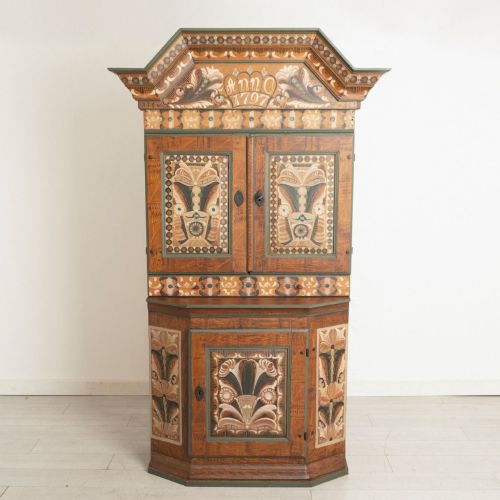
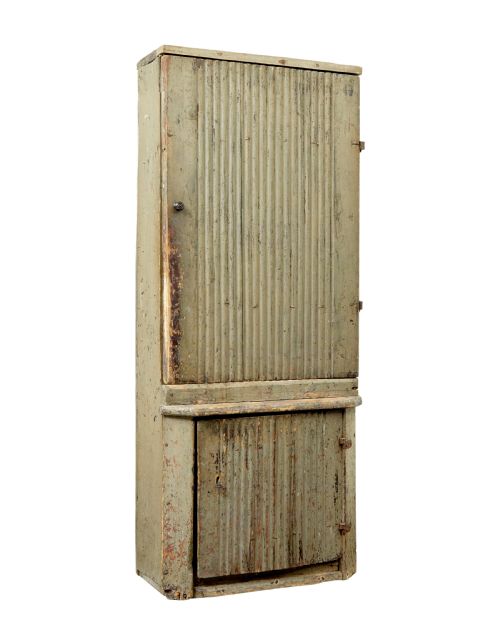
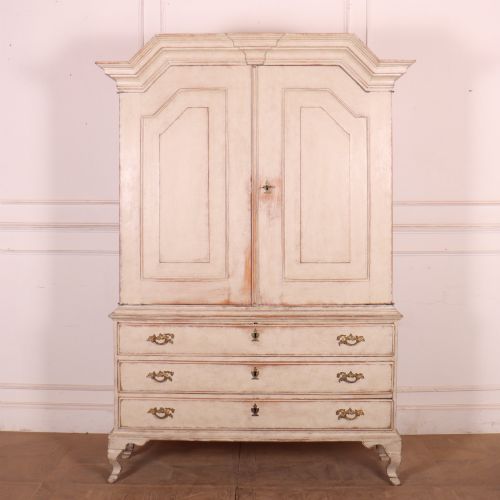


Scandinavian Pine Wardrobe
A scandinavian pine wardrobe brings honest utility and painted charm into a bedroom, offering generous storage built from solid timber.
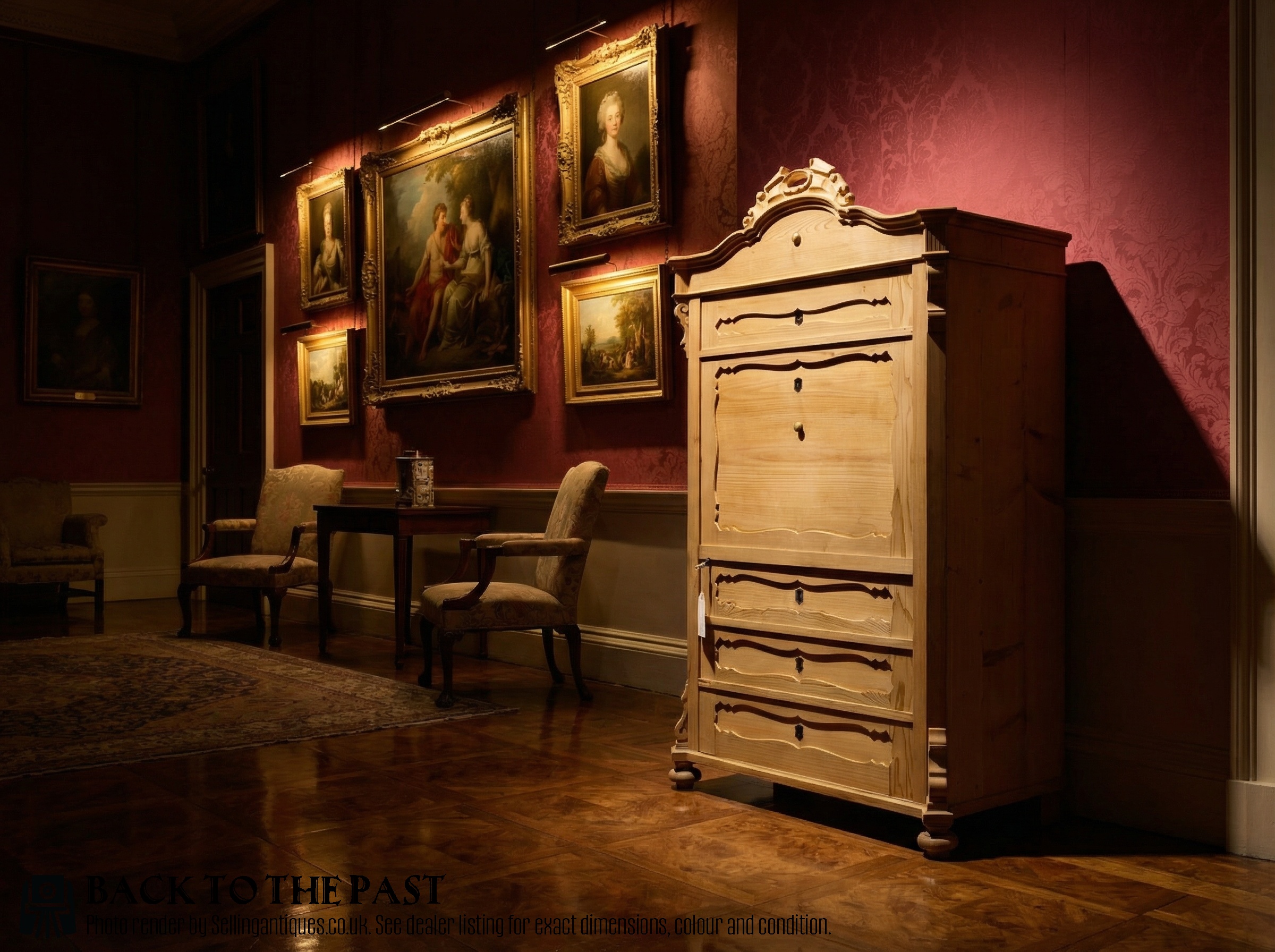
Scandinavian Pine Wardrobe
When you search for a scandinavian pine wardrobe, you encounter robust storage pieces originating from northern Europe, primarily catalogued across the eighteenth and nineteenth centuries. These items appear under various regional descriptions including cupboards, armoires, and linen presses.
The versions most commonly met on this page span the Georgian era through to the early twentieth century, reflecting both rustic country aesthetics and sophisticated Gustavian styling. Makers constructed these tall storage units to accommodate voluminous textiles and garments in domestic interiors.
Forms range from single-door variations to large two-door cupboards, occasionally raised on stands or detailed with carved panels and traditional folk art motifs. Each piece demonstrates the practical domestic architecture typical of Scandinavian cabinet making.
Materials and construction methods
Carpenters built these wardrobes using solid pine timbers, selected for availability and workability, frequently assembling the carcass with traditional joinery rather than metal fasteners. Iron and brass hardware such as hinges and locks secure the heavy doors.
Many surfaces feature layers of historic paint finishes, including traditional ragwork techniques and muted green tones applied over the bare softwood. Carved elements and applied mouldings define the structural facade of baroque and folk art variations.
Scandinavian Pine Wardrobe Retail Price Guide 2026
Typical asking prices for scandinavian pine wardrobe among the pieces listed under this phrase on Sellingantiques today, from the lower quarter to the upper quarter. They describe what is for sale here now, not the wider market.
Some nineteenth-century wardrobes hide cheerful ragwork paint beneath sober exteriors, rewarding anyone who opens the doors.
Distinctions in construction and finish
Quality in these pieces rests upon the integrity of the original timber frame and the survival of authentic historic paint surfaces rather than modern refinishing. Superior examples retain their original structural joinery and functional hardware without extensive timber replacement.
The sophistication of the carved ornamentation and the subtlety of the painted finish distinguish standard utility pieces from high-status decorative commissions. Proportion and balance within the architectural mouldings further separate accomplished vernacular cabinet making from simpler workshop output.
The Scandinavian Pine Wardrobe Glossary
- Gustavian
- A Swedish neoclassical style originating during the reign of Gustav III, known for restrained symmetry and pale painted finishes. It adapts continental European court aesthetics for northern European domestic furniture.
- Ragwork
- A decorative painting technique where artisans apply pigment using rags or cloths to create mottled, textured surface patterns. This method appears on traditional rural painted furniture.
- Armoire
- A large freestanding wardrobe or cupboard used primarily for hanging or folding garments. European examples often feature substantial double doors enclosing deep internal shelving or hanging space.
- Baroque
- An ornate design period characterised by dramatic carving, exuberant curves, and heavy architectural proportions. Scandinavian interpretations translate these continental motifs into native pine.
- Linen cupboard
- A specialised tall storage cabinet designed specifically for holding household textiles and bed linens. These interiors typically feature multiple internal shelves rather than hanging rails.
Scandinavian Pine Wardrobe: Frequently Asked Questions
What is a scandinavian pine wardrobe?
A scandinavian pine wardrobe is a tall storage furniture piece constructed from softwood timber, originating from northern European countries during the eighteenth and nineteenth centuries.
These pieces frequently feature painted finishes and served domestic households for storing garments and textiles.
How do I date a painted pine cupboard?
Dating relies on examining the construction joints, hardware types, and the composition of the layered paint finishes visible on the timber surfaces.
Earlier eighteenth-century pieces often display hand-wrought iron hinges and baroque proportions, whereas later nineteenth-century examples incorporate machine-sawn boards and alternative decorative techniques.
Are these wardrobes easy to dismantle?
Many antique European wardrobes utilise pegged wooden framing or knockdown construction to allow for easier transport between rooms.
Buyers should inspect the specific assembly method of individual pieces before attempting relocation, as some larger carcases remain fixed.
How do I care for painted pine furniture?
Maintenance involves keeping the furniture away from direct heat sources and sudden humidity changes to prevent timber movement and paint flaking.
Dusting with a dry, soft cloth preserves the historic surface without introducing moisture that could damage aged pigments.