

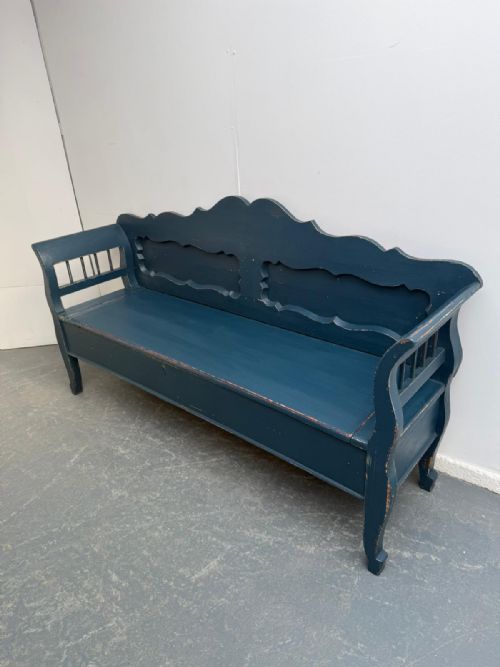


Scandinavian Benches
Scandinavian antique benches bring practical Nordic seating into a room, offering painted pine surfaces and clean birch lines that anchor a rustic or neoclassical interior.
Scandinavian Benches
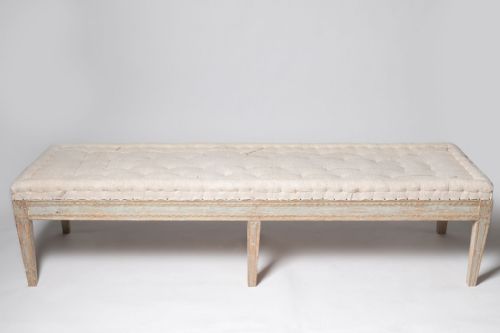
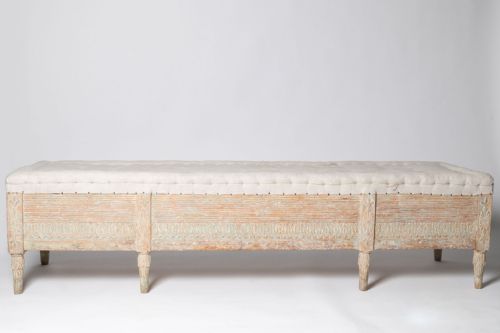
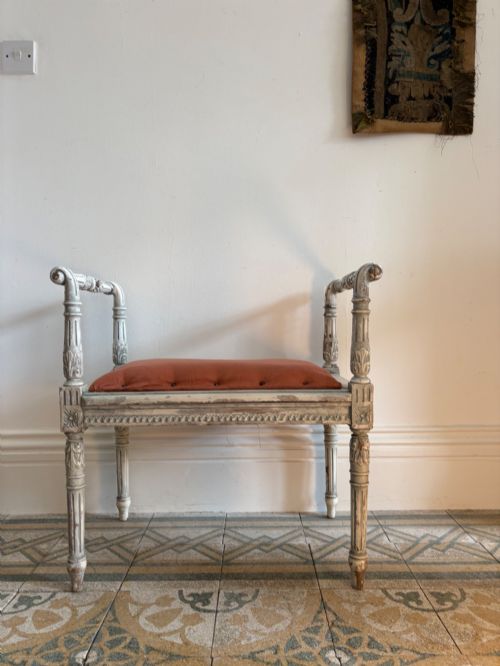
When searching for scandinavian antique benches, buyers encounter a range of seating that includes long painted settles, storage benches, and upholstered sofas spanning the eighteenth, nineteenth, and early twentieth centuries. Swedish and Hungarian examples dominate the selection, crossing stylistic territories from Gustavian neoclassical restraint to European folk art and Biedermeier elegance.
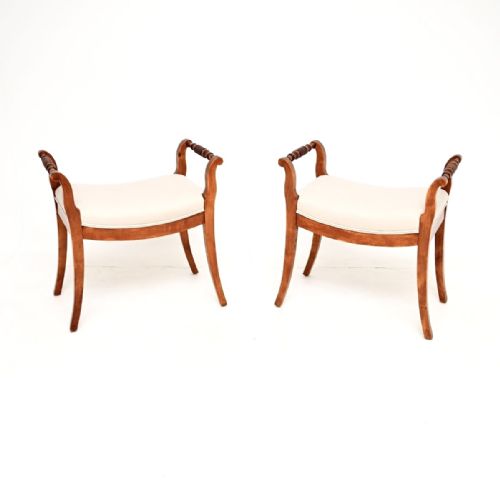
The most common forms found on this page are painted pine benches and settles, alongside birch and satin birch stools and sofas. Pieces often trace back to rural Swedish workshops, displaying simple country utility or the lighter, pale tones typical of northern European domestic design.
How they were made
Makers utilised solid pine and birch timbers, shaping boards and turning legs with traditional hand tools before applying layers of paint or leaving the grain exposed. Painted surfaces range from blue pigments to white lead-based finishes that have aged over decades.
Upholstered elements rely on traditional stuffing and textile coverings such as linen, silk, hessian, and various woven fabrics. Joinery typically combines pegged mortise and tenon joints with simpler box construction for storage compartments.
Scandinavian Benches Retail Price Guide 2026
Typical asking prices for scandinavian benches among the pieces listed under this phrase on Sellingantiques today, from the lower quarter to the upper quarter. They describe what is for sale here now, not the wider market.
The listings span the eighteenth, nineteenth, and early twentieth centuries, featuring pine, birch, and painted wood surfaces.
What varies in quality
The distinction between ordinary utility pieces and finer examples rests on the integrity of the original paint surface and the sophistication of the carved or turned details. Retained original pigment layers command greater attention than later overpainting.
Structural refinement also separates provincial country pine from urban Biedermeier or Gustavian pieces, where proportion, satin birch veneers, and carefully executed neoclassical motifs reveal the hand of skilled cabinetmakers.
John Tesch
The Scandinavian Benches Glossary
- Gustavian
- The Swedish neoclassical style spanning the late eighteenth and early nineteenth centuries, characterised by restrained carving, fluted legs, and pale monochrome paint.
- Settle
- A wooden bench with high backs, solid arms, and often an enclosed storage compartment beneath the seat designed to keep out drafts.
- Biedermeier
- A Central European and Scandinavian style popular in the nineteenth century that prioritises clean lines, utility, and the warm grain of blonde woods like birch.
- Satin Birch
- A dense hardwood with a distinctive mottled or shimmering grain figure frequently utilised by Scandinavian makers for nineteenth-century seating and tables.
- Hessian
- A coarse woven fabric made from jute or hemp fibres, traditionally employed as an underlying support or durable upholstery covering in period seating.
Scandinavian Benches: Frequently Asked Questions
What materials are typical for these benches?
The listings show construction primarily in solid pine and birch, frequently finished with paint or left as bare wood.
Upholstered variants incorporate fabrics such as linen, silk, hessian, and woven textiles on seats and sofas.
How do I identify a Gustavian piece?
Gustavian pieces reflect Swedish neoclassical design from the eighteenth and nineteenth centuries, featuring pale painted surfaces and restrained classical motifs.
Straight fluted legs and symmetrical proportions help distinguish this aesthetic from heavier folk art styles.
Where were these pieces made?
The available items originate predominantly from Sweden, alongside Hungarian examples represented in the pine bench category.
Production spans rural community workshops making practical pine settles as well as urban centres crafting refined birch furniture.
Are storage options common?
Several pieces in the inventory are designated as storage benches or settle benches with enclosed lower sections.
These functional forms were built to hold household goods while providing practical seating in period homes.