

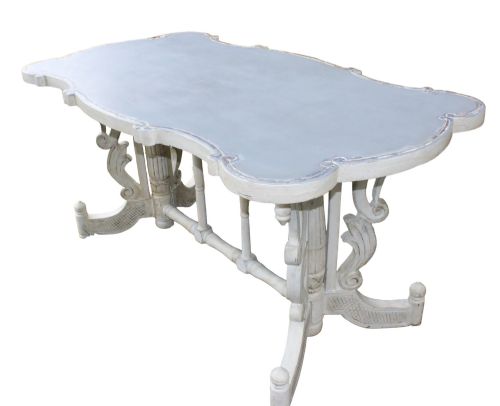
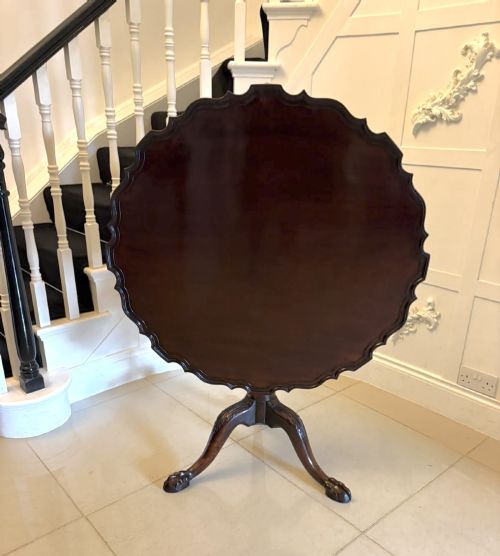
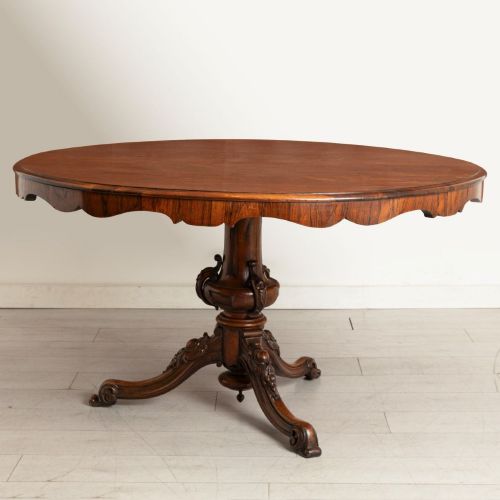
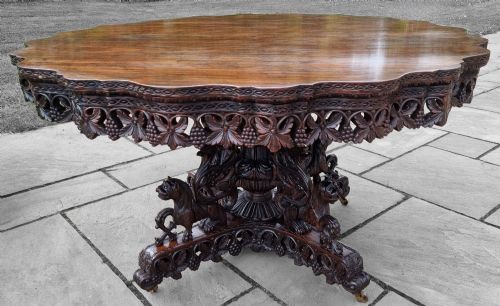



Scalloped Top Dining Table
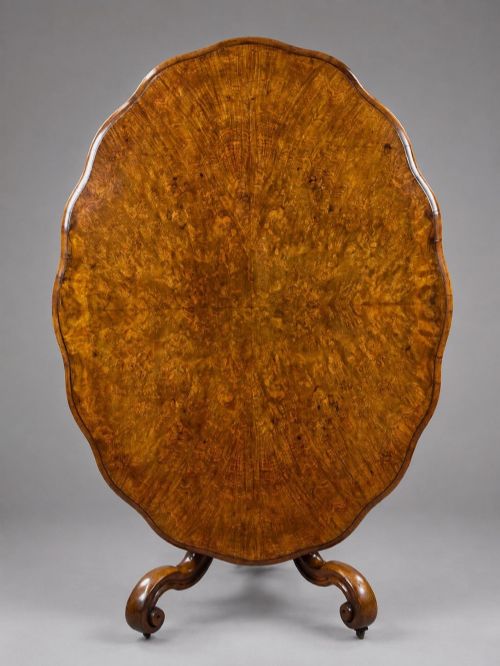
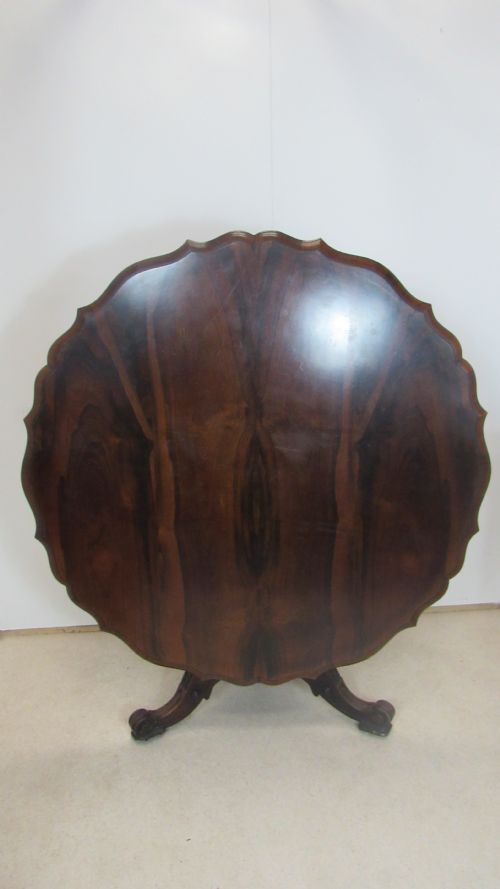
A scalloped top dining table offers a distinct silhouette, bringing curved edges and rich timber grains into the dining room.
Scalloped Top Dining Table
A scalloped top dining table bridges formal dining and intimate gatherings through shaped edges and circular or oval formats. These pieces emerge in styles ranging from George III and Neoclassical to Victorian and Art Deco, reflecting shifting tastes across centuries.
Most examples encountered on this page date from the Victorian era, utilising dense timbers like rosewood and burr walnut. Alongside dedicated dining tables, the selection includes centre tables, loo tables, and breakfast tables that serve a similar gathering function.
Origins span British workshops, continental Europe, and Anglo-Indian production, introducing diverse decorative elements such as marquetry and turned bases. Buyers find both pedestal supports and trestle frames, each dictating how chairs sit around the perimeter.
Materials and construction
Cabinetmakers relied on figured hardwoods like mahogany, rosewood, and burr walnut, often laid as veneers over stable secondary timbers to showcase rich grain patterns. Solid carved wood appears on bases and pedestals, paired with brass mechanisms for tilt-top actions.
Marquetry inlay adds detailed floral or geometric ornamentation to table surfaces, while paint finishes appear on continental and distressed pieces. Turned and carved solid rosewood or walnut pedestals provide sturdy support beneath shaped table tops.
Scalloped Top Dining Table Retail Price Guide 2026
Typical asking prices for scalloped top dining table among the pieces listed under this phrase on Sellingantiques today, from the lower quarter to the upper quarter. They describe what is for sale here now, not the wider market.
Assessing craftsmanship and finish
Quality rests in the precision of the shaped edge and the richness of the timber selection, particularly where burr walnut or figured rosewood veneers exhibit deep, balanced grain patterns. Finer examples display meticulous marquetry inlay and crisp carving on pedestals and bases.
Structural integrity in the tilt mechanism and the stability of the central pedestal or trestle base separate standard production from superior cabinetmaking. The integration of solid timber components with veneered surfaces determines the long-term durability of the shaped top.
John Kendal
The Scalloped Top Dining Table Glossary
- Tilt-top
- A tabletop mechanism allowing the surface to pivot to a vertical position for storage or movement when not in use. This clever design was particularly popular on smaller dining and centre tables.
- Marquetry
- The art of applying pieces of veneer to a structure to form decorative patterns and pictures. Craftsmen used various coloured woods to achieve detailed designs on tabletop borders.
- Trestle
- A support structure consisting of horizontal beams held up by two pairs of splayed legs. This form appears on Neoclassical dining tables listed here.
- Centre table
- A freestanding table designed to be viewed from all sides rather than pushed against a wall. These pieces often anchor the middle of a grand room.
Scalloped Top Dining Table: Frequently Asked Questions
How do I choose between a pedestal and a trestle base?
Pedestal tables feature a central column that often allows for easier chair placement around the curved top. Trestle bases offer structural framing at the ends, common in Neoclassical designs.
Your choice depends on the room layout and how many guests you intend to seat comfortably.
Were these tables used only for dining?
Many tables from these periods served multiple functions, including as centre tables, breakfast tables, or loo tables for evening games. The tilt-top mechanism allowed owners to clear floor space quickly when the table was not in use.
Their adaptable sizes make them suitable for modern living spaces as primary or secondary dining surfaces.
How do I care for a rosewood or walnut table?
Protect the polished timber surface from direct sunlight and excessive moisture by using coasters and mats. Regular dusting with a soft, dry cloth preserves the natural lustre of the veneer.
Avoid placing antique tables near direct heat sources to prevent the timber and veneer from splitting over time.