



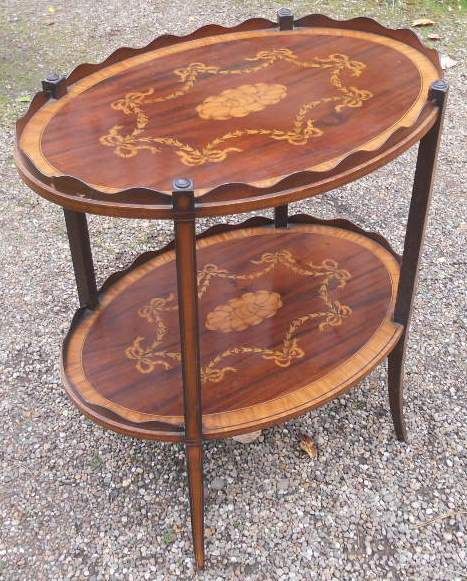

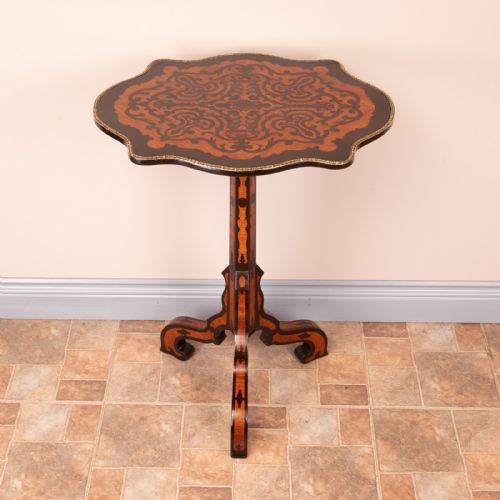


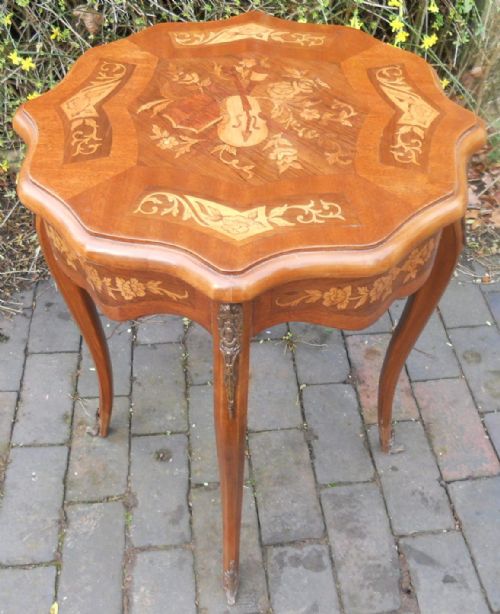
Scalloped Marquetry Table
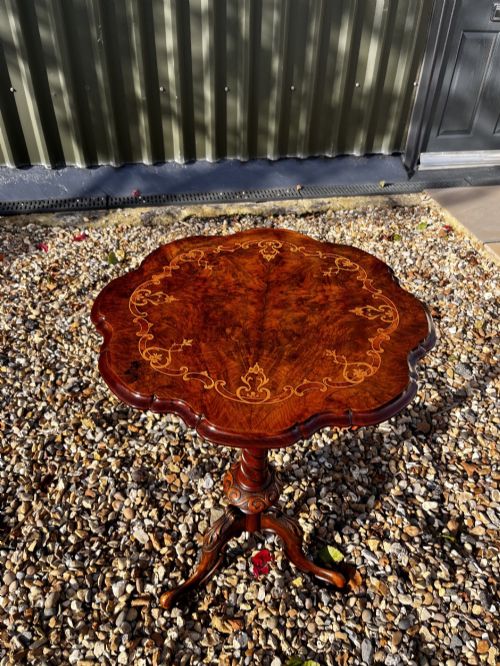
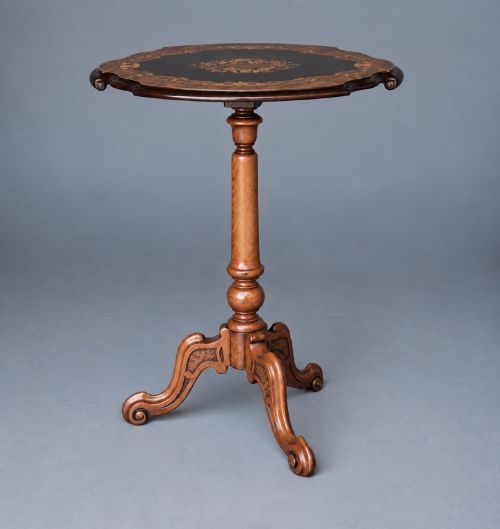
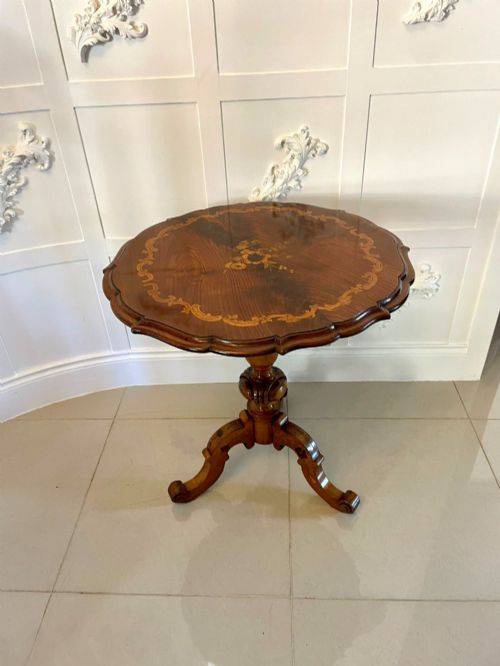
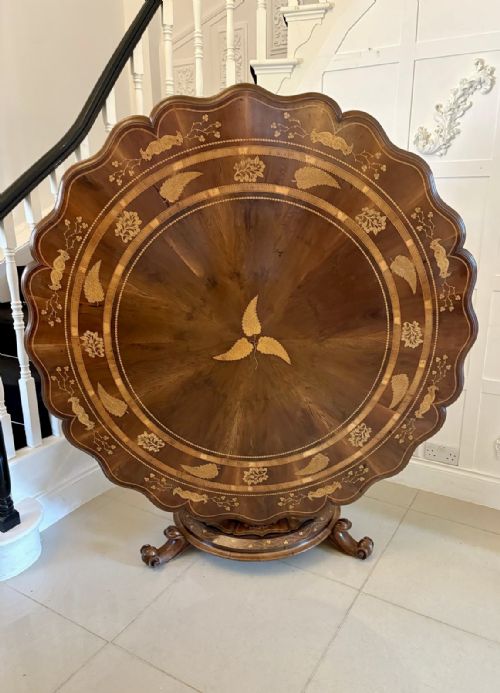
A scalloped marquetry table brings intricate floral and geometric wood veneers together in a distinctively curved antique form.
Scalloped Marquetry Table
A scalloped marquetry table combines patterned wood veneer work with an undulating edge along the top. The pieces found here span the Victorian, Edwardian, and George III periods, originating from English, French, and Irish workshops.
The dominant forms on this page include occasional tables, centre tables, and coffee tables, alongside specialised pieces like candle stands and flip-top tables. Most examples rely on circular or oval surfaces with shaped borders.
Makers utilised woods such as walnut, mahogany, yew wood, and burr walnut as a base for complex inlay work. These pieces function as decorative centrepieces or functional lamp and side tables in a traditional interior.
Materials and construction methods
Cabinet makers applied fine veneers of marquetry inlay, kingwood, rosewood, and satinwood over primary carcases of walnut, mahogany, or yew wood. Burr walnut and burr birch provided highly figured surfaces for the tops.
Decorative enhancements often include ormolu mounts and brass details, particularly on French Rococo revival examples. Inlay work was meticulously cut and fitted by hand to create floral and geometric motifs across the timber.
Scalloped Marquetry Table Retail Price Guide 2026
Typical asking prices for scalloped marquetry table among the pieces listed under this phrase on Sellingantiques today, from the lower quarter to the upper quarter. They describe what is for sale here now, not the wider market.
Even a humble flip-top table managed to smuggle intricate olive wood marquetry into the nineteenth-century parlour.
Distinctions in craftsmanship
Quality rests on the precision of the veneer work and the complexity of the floral or geometric marquetry. Pieces described as exhibition quality or featuring specialist regional woods like Killarney yew display superior hand-cut detail.
The choice of secondary timbers and the crispness of the shaped edge define the better examples. Integrated elements such as two-tier designs or tripod bases indicate higher workshop standards.
Egan Workshop·John Kendal
The Scalloped Marquetry Table Glossary
- Marquetry inlay
- The art of applying pieces of veneer to a structure to form decorative patterns. It differs from plain veneering by creating pictorial or geometric designs.
- Burr walnut
- Wood taken from a growth on a walnut tree, yielding highly prized swirling grain patterns. Cabinet makers selected it for prominent table tops.
- Ormolu
- Gilded bronze used for decorative mounts and feet on nineteenth-century furniture. It accentuates the curves of French revival pieces.
- Killarney ware
- Irish decorative woodwork typically featuring inlaid indigenous timbers such as yew and arbutus. It is associated with nineteenth-century production in County Kerry.
- Centre table
- A freestanding table designed to be viewed from all sides in the middle of a room. These often feature elaborate marquetry on the top surface.
Scalloped Marquetry Table: Frequently Asked Questions
What rooms suit a scalloped marquetry table?
These tables fit well as central display pieces in entrance halls or as occasional side tables in drawing rooms.
Their decorative tops demand a prominent position where light catches the wood veneer.
How do I care for antique marquetry?
Keep the wood away from direct sunlight and steady temperature fluctuations to protect the delicate veneer.
Apply a traditional wax polish occasionally to nourish the timber surface without building up residue.
Are these tables sturdy enough for daily use?
Most occasional and centre tables are built for light decorative use rather than heavy weight.
Care should be taken with tripod and candle stand bases to ensure they remain stable on uneven floors.
How are Victorian and Edwardian tables told apart?
Victorian examples often lean towards heavier proportions and revival styles like Rococo or Irish Killarney work.
Edwardian pieces generally present lighter mahogany frames with more restrained satinwood inlay.