




Scalloped Mahogany Accent Table
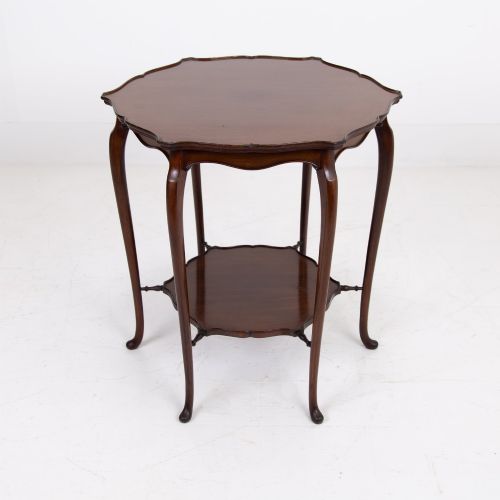
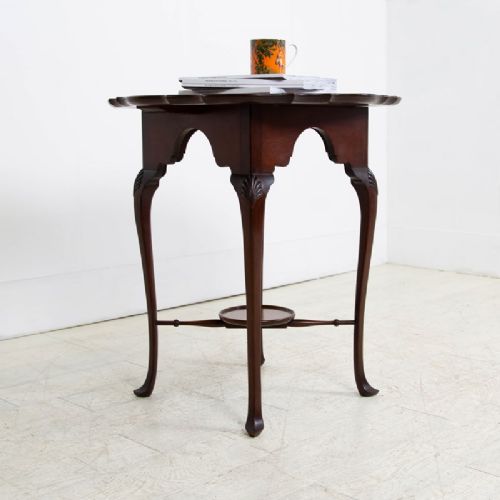
A scalloped mahogany accent table brings fluid carving and rich timber to a room, serving as a compact surface for lamps and drinks.
Scalloped Mahogany Accent Table
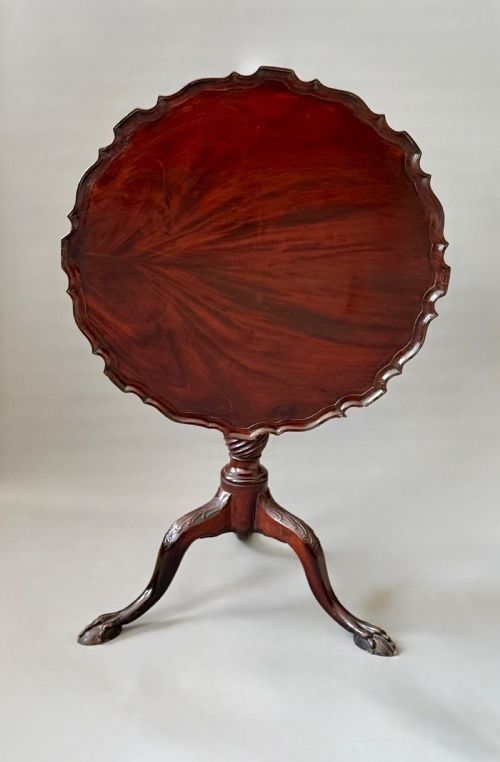
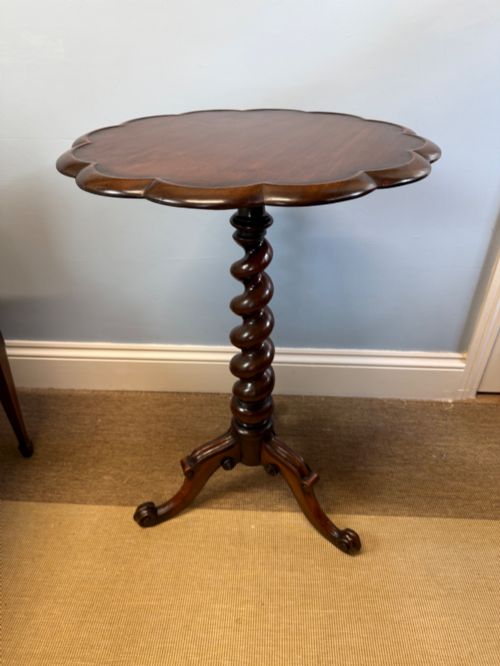
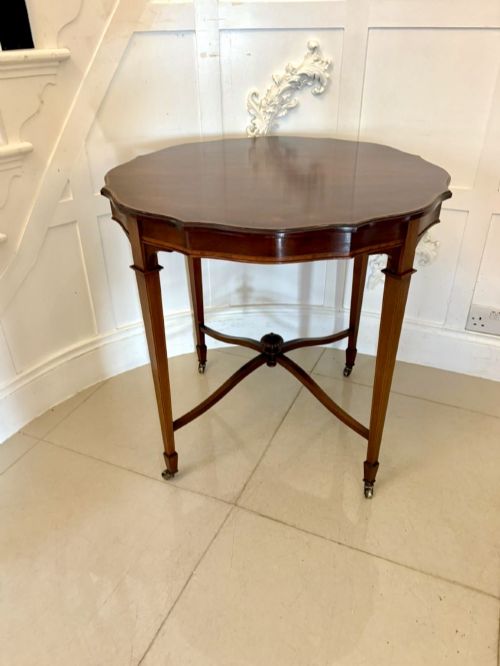
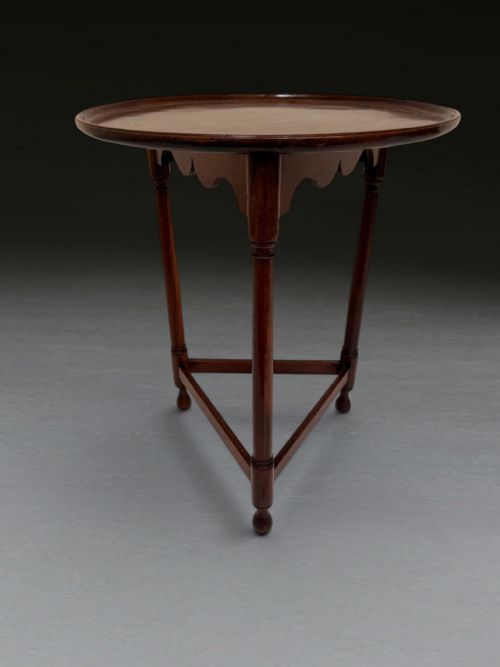
A scalloped mahogany accent table is a versatile small surface designed to sit beside seating or in corners, taking forms such as wine tables, tripod tables, and occasional tables. When you search for a scalloped mahogany accent table, you meet pieces spanning the eighteenth, nineteenth, and early twentieth centuries, drawing on Georgian, Victorian, and Edwardian periods.
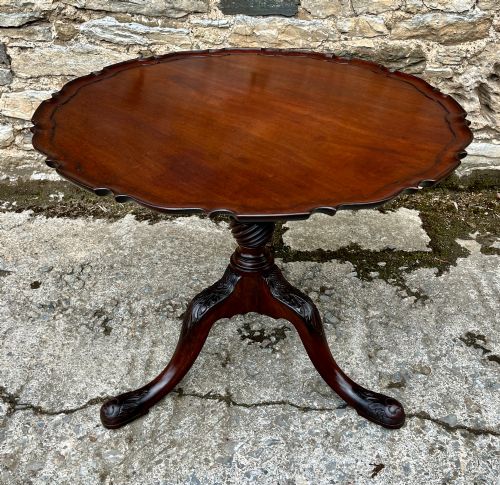
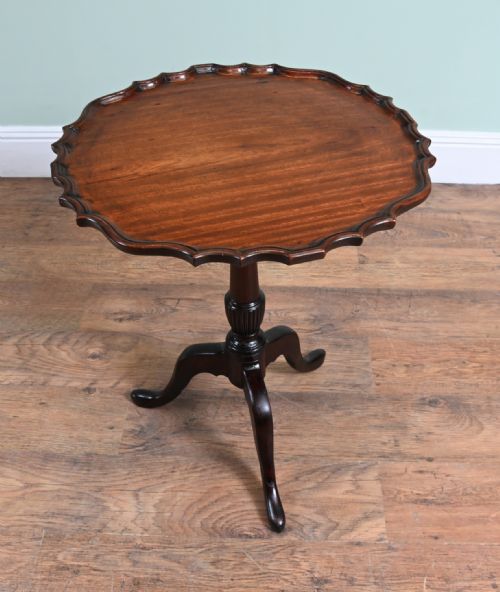
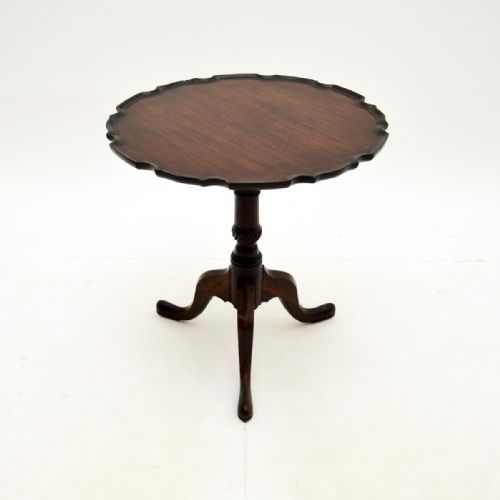
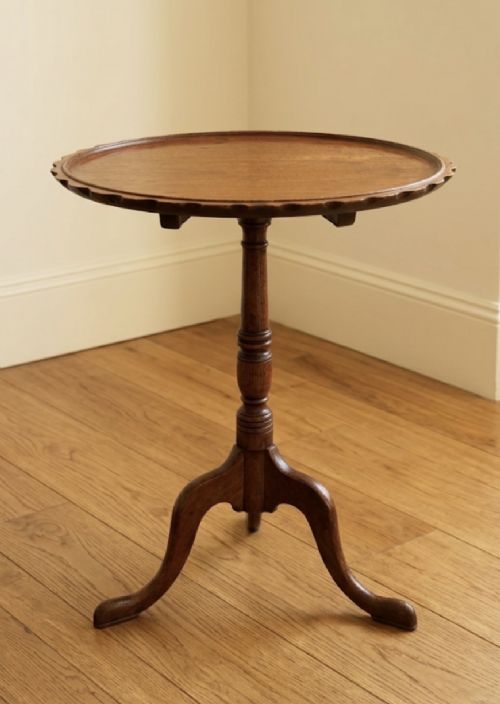
The defining characteristic is the shaped edge of the top, often referenced in the trade as a pie crust or scalloped outline. These tables appear frequently as tripod designs with tilting tops, birdcage mechanisms, or fixed pillar supports, reflecting the practical domestic needs of past centuries.
How they were made
Cabinet makers constructed these pieces primarily from solid mahogany and hardwoods, sometimes selecting figured grain for visual depth or incorporating satinwood inlay for contrast. Brass fittings appear on specific mechanisms like birdcage supports or tilt-top latches.
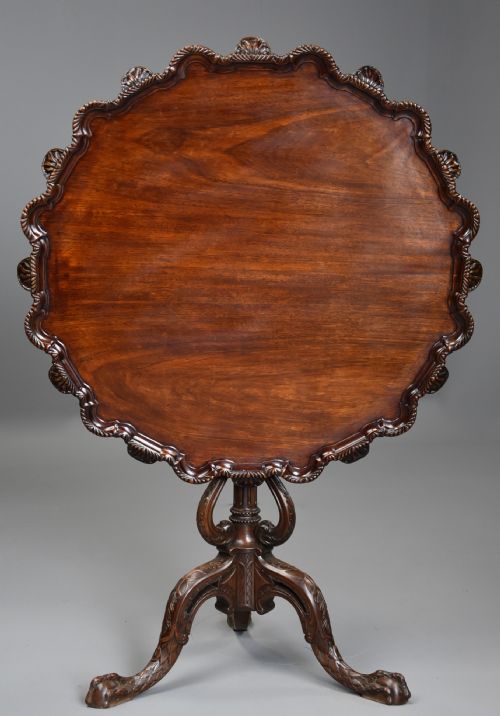
The scalloped edges and foliate motifs demanded skilled hand carving to shape the timber margins into curves and lobes. Turnery shaped the central pillars and tripod legs, joining them to the top with traditional peg and tenon methods.
Listings feature mahogany, satinwood, and brass across Georgian, Victorian, and Edwardian periods.
What varies in quality
Quality rests in the crispness of the hand carving along the scalloped edge and the selection of the timber grain. Finer examples display lively figuring in the mahogany and balanced proportions between the top, the turned column, and the splayed legs.
The integrity of the mechanism also defines the tier of the piece. Tables with smooth-functioning tilt actions, original birdcage pivots, and tight joinery sit firmly above later revivals that lack the same precision in the workshop.
Shapland and Petter
The Scalloped Mahogany Accent Table Glossary
- Pie crust table
- A small circular table featuring a raised, carved, scalloped edge resembling pastry work. This decorative moulding prevented items from sliding off when the top was tilted.
- Tripod table
- A freestanding small table supported by a central pillar resting on three legs. This construction remained stable on uneven floors in historic homes.
- Tilt top table
- A table equipped with a hinged mechanism allowing the surface to fold vertical when not in use. This design saved floor space in smaller rooms.
- Birdcage
- A revolving wooden framework beneath the table top that permits the surface to both tilt and rotate. It represents a refined piece of eighteenth-century joinery.
- Silver table
- An elevated display table with a raised edge designed for holding tea or silver services. These pieces often feature intricate carving and slender proportions.
Scalloped Mahogany Accent Table: Frequently Asked Questions
What is a scalloped mahogany accent table used for?
These tables function as convenient surfaces for lamps, drinks, or decorative objects beside chairs and sofas. Their compact footprints allow them to fit easily into smaller corners.
Historically, specific versions like wine tables and supper tables served particular domestic duties during evening gatherings and entertaining.
How do I identify an eighteenth-century piece?
Eighteenth-century examples display hand-cut joinery, dense timber weight, and carved details that show subtle irregularities from hand tools. The patination on the mahogany develops a deep, warm tone through decades of handling.
Revival pieces from later periods often imitate these forms but use machine-cut elements and different internal construction methods.
What does a tilt-top mechanism involve?
A tilt-top mechanism uses a hinged block or a birdcage fixture beneath the surface, allowing the table top to pivot ninety degrees. This let owners store the furniture flat against a wall when the room was cleared.
Original mechanisms should move smoothly without excessive wobble in the pivot joint.
How do I care for mahogany furniture?
Keep mahogany tables away from direct heat sources and strong sunlight to prevent the timber from drying out or fading. Dust gently with a dry, soft cloth rather than using silicone polishes.
Applying a traditional beeswax occasionally helps nourish the wood and maintain its natural lustre.