
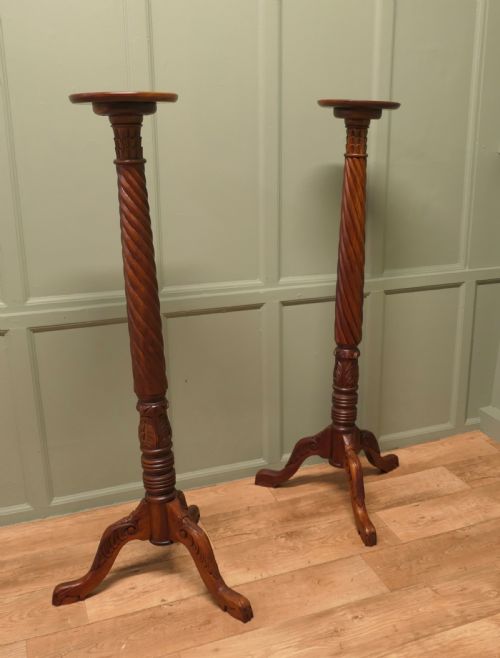
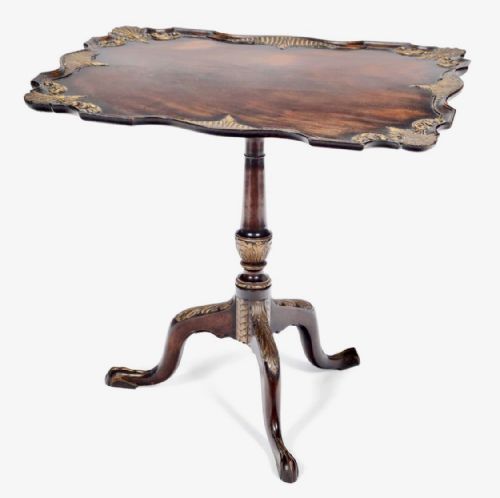
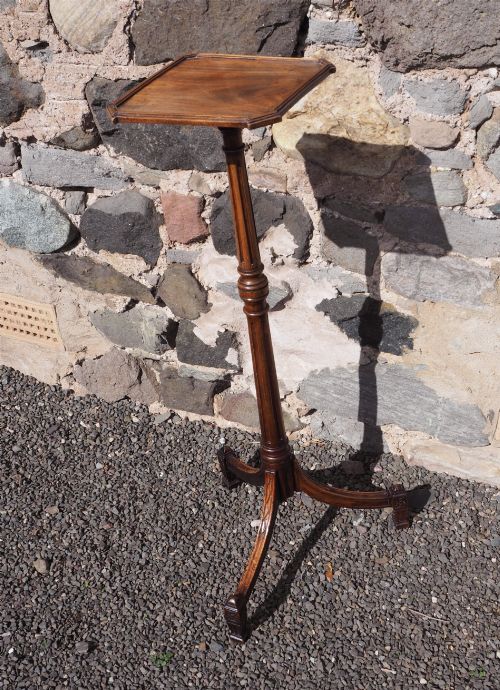
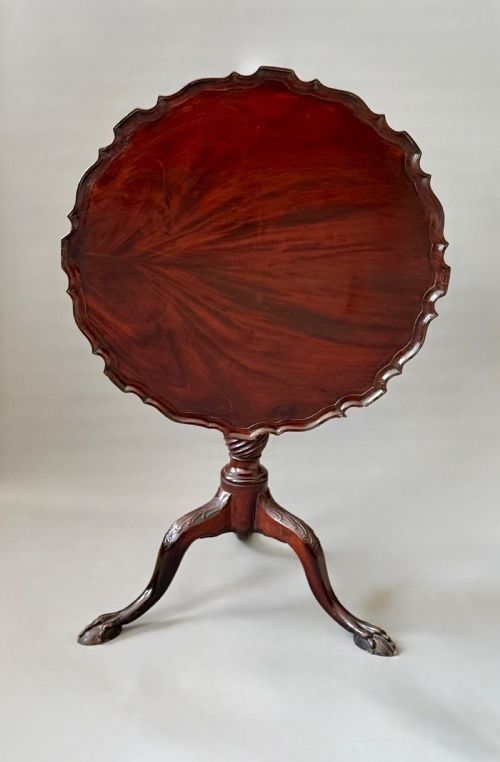
Georgian Carved Candle Stand
A georgian carved candle stand brings functional elegance into a room, offering a slender stage for illumination or small objects.
Georgian Carved Candle Stand
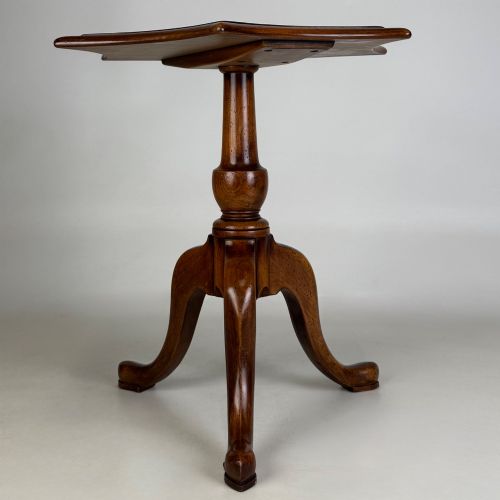
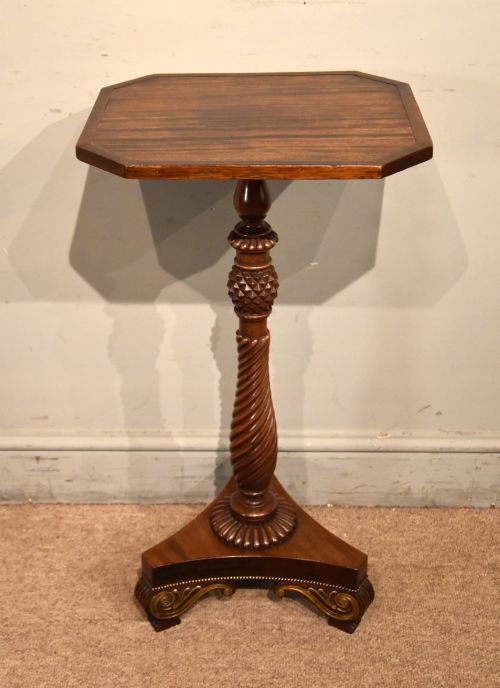
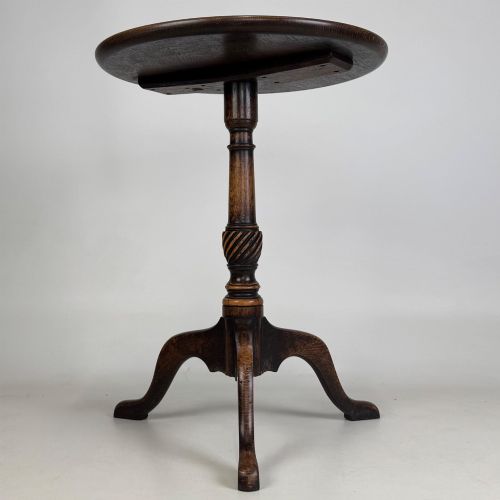
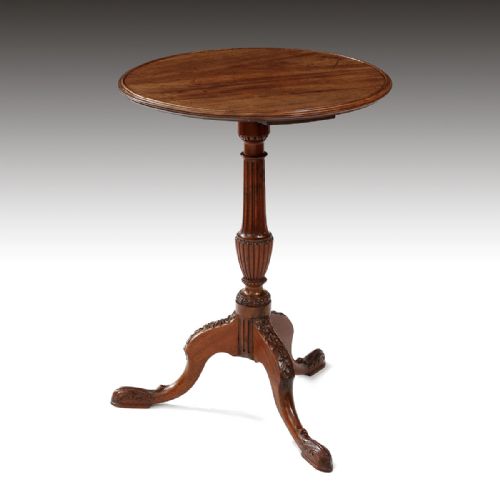
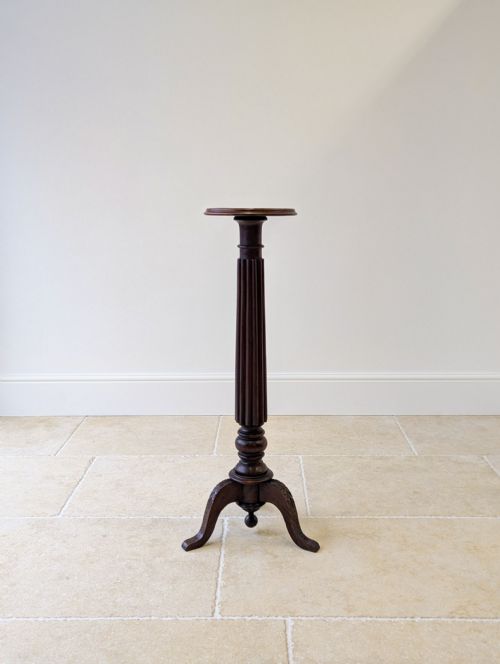
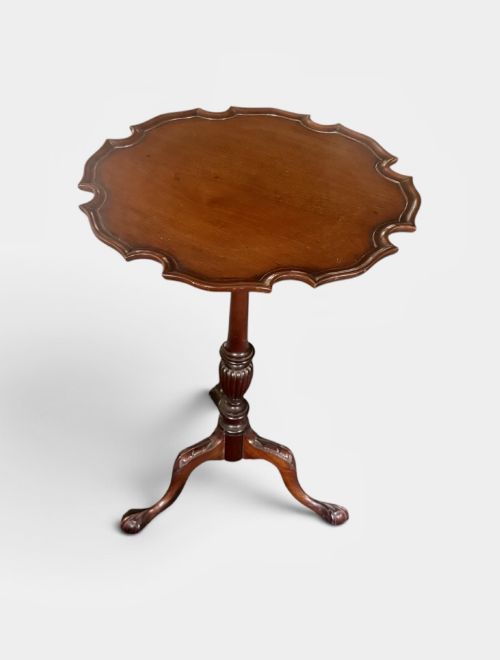
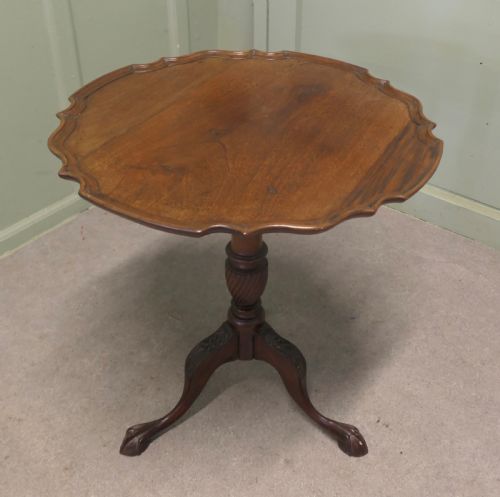
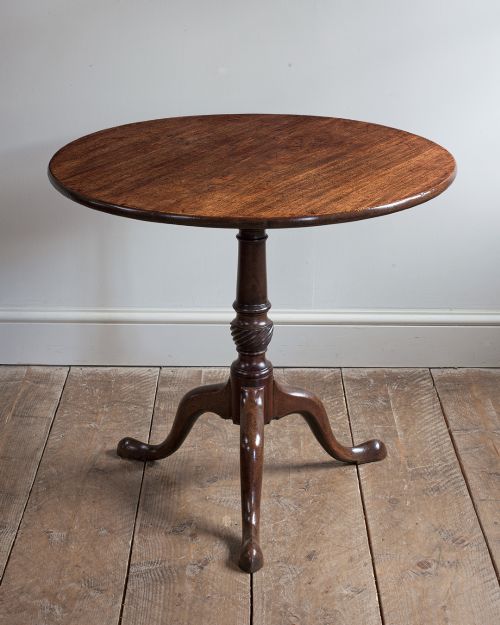
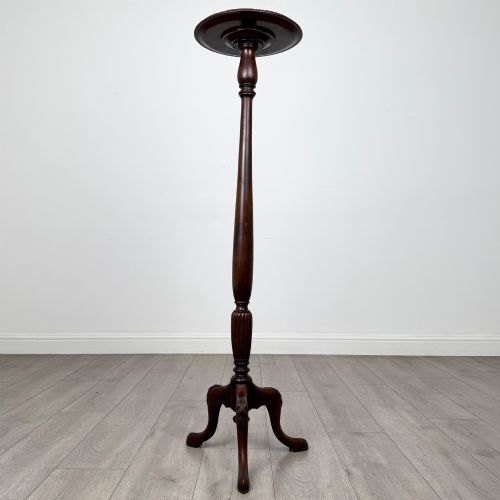
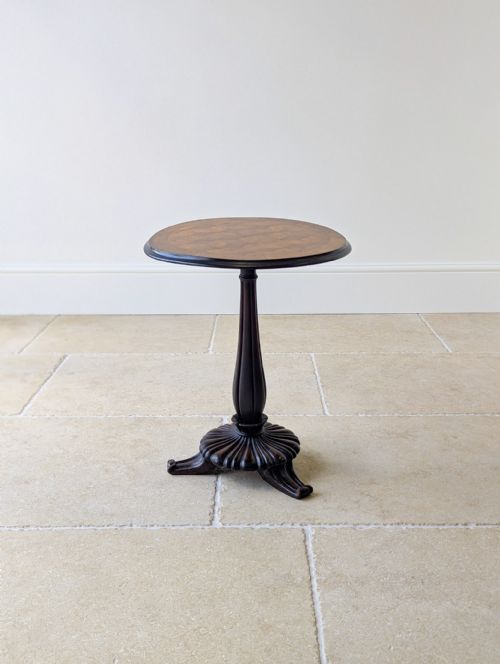
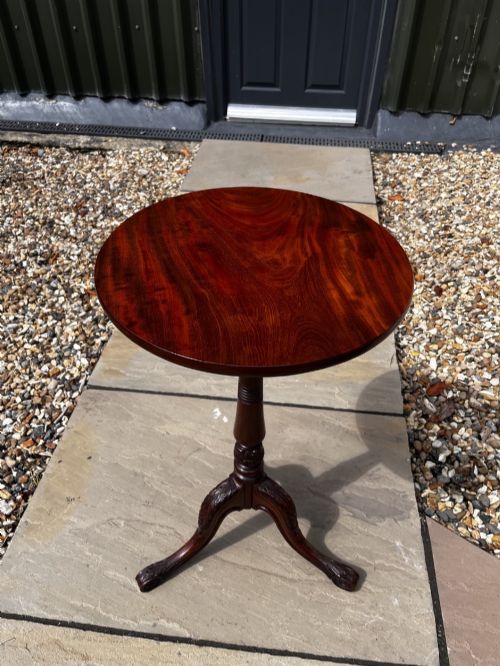
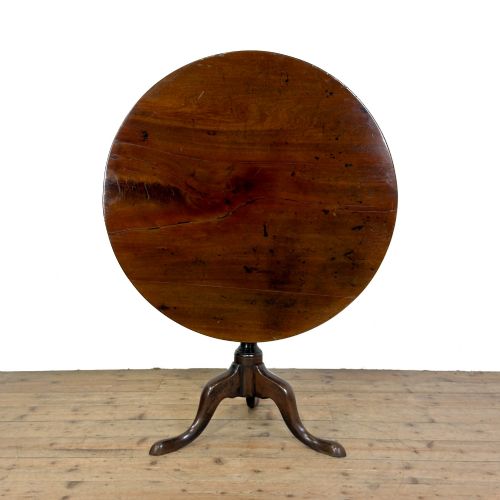
When searching for a georgian carved candle stand, buyers encounter a variety of tripod tables, torcheres, and wine tables dating from the eighteenth century onwards. The selection on this page leans heavily toward mahogany and walnut tripod formats, reflecting the prevalence of George III and Regency pieces.
Makers often utilised a pillar and three-leg configuration to support circular, tilt-top, or shaped pie crust surfaces. Alongside tall torcheres designed for single lights, smaller occasional tables and kettlestands appear frequently under this heading.
The materials span native timbers like oak and fruitwood alongside imported hardwoods, demonstrating how functional lighting furniture evolved from simple seventeenth-century forms into ornate eighteenth-century centerpieces.
Markers of Distinction
Quality rests heavily on the crispness of the carving and the depth of the timber's natural patina rather than intricate ornamentation alone. Superior examples display balanced proportions between the top and the supporting tripod legs, ensuring stability without visual heaviness.
The integrity of the structural joints, particularly where the central pillar meets the legs and the tabletop, separates standard production from exceptional cabinet work. Original brass fittings and untouched surface finishes further elevate a piece above later adaptations.
Listings under this phrase combine eighteenth-century George III items with later Victorian and Edwardian interpretations in mahogany, walnut, and oak.
Gillow
The Georgian Carved Candle Stand Glossary
- Tripod table
- A small occasional table supported by a central pillar and three legs. This format dominated eighteenth-century parlour furniture.
- Torchere
- A tall, slender stand designed to support a candlestick or lamp. They frequently feature carved columns and circular tops.
- Tilt-top
- A hinged tabletop mechanism enabling the surface to fold vertically. This innovation saved floor space when the stand was idle.
- Pie crust rim
- A raised, decoratively carved tabletop edge resembling pastry work. It prevented items from sliding off the surface.
- Patina
- The surface sheen and colour developed by wood over decades of handling and polishing. Collectors prize an undisturbed, rich finish.
Georgian Carved Candle Stand: Frequently Asked Questions
What is a georgian carved candle stand used for?
These stands originally supported single candles or lamps to illuminate dark corners of eighteenth-century rooms. Today, they function as compact side tables for holding small decorative objects, drinks, or plants.
Their narrow footprint makes them particularly useful beside armchairs or in hallways where larger furniture would obstruct movement.
How do I identify a George III stand?
George III pieces typically date from the mid to late eighteenth century and feature solid mahogany or walnut construction. Look for characteristic details like tripod snake feet, birdcage actions, and hand-carved acanthus leaf motifs on the central pillar.
Construction methods, such as hand-cut dovetails and pegged joints, provide further clues to this specific period.
Are tilt-top tables stable?
A well-made tilt-top table locks securely into a horizontal position using a brass catch or wooden peg system. When engaged properly, the top remains firm during normal daily use.
Wear in the mechanism can cause slight wobble, which experienced restorers can often adjust without altering the original timber.
How do I care for antique mahogany?
Keep wooden stands away from direct sunlight and strong heat sources to prevent the timber from drying out and cracking. Dust regularly with a soft, dry cloth and apply occasional high-quality wax to nourish the surface.
Avoid liquid polish containing silicone, as it builds up and damages the historic finish over time.