


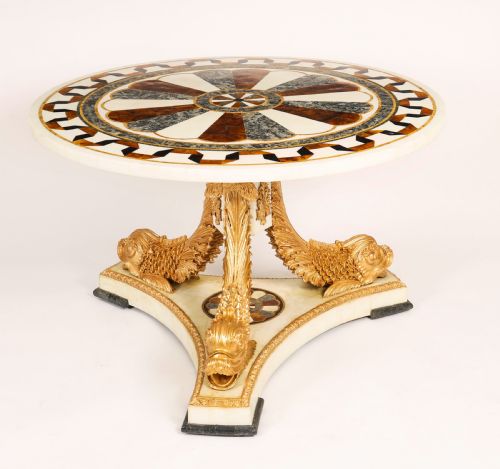
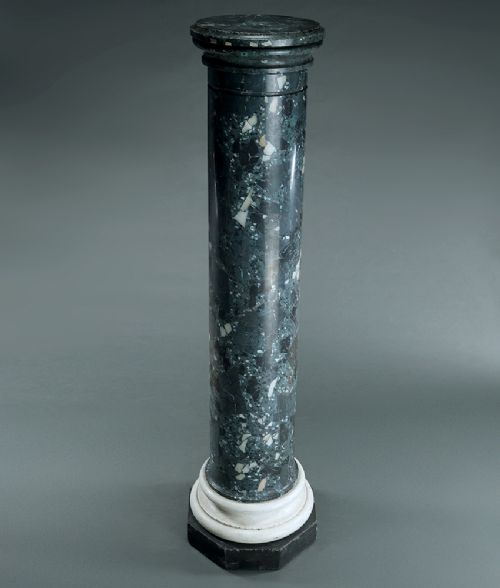


Scagliola Pedestal
A scagliola pedestal brings classical presence to a room through coloured plaster and glue mixed to mimic stone.
Scagliola Pedestal
When you search for a scagliola pedestal, you are looking for architectural columns and display supports designed to elevate sculpture or decorative urns. The examples on this page span the nineteenth century into the nineteen-thirties, taking the form of large square pedestals and painted wooden display columns.
Most pieces on this page lean into neoclassical tastes, often utilising simulated verde antico or faux marble finishes. These objects served grand interiors from Victorian times through the early twentieth century, offering the visual weight of stone without the full mass.
How they were made
Maker's methods rely heavily on pigmented plasters and glues applied to a wooden or plaster core to achieve the look of specimen marble. Artisans mixed colours by hand and polished the surface to a hard, smooth finish.
Selected pieces combine painted wood with slate or marble bases, while others incorporate ormolu collars for added detail. The underlying structure relies on joinery suited to holding steady weight.
Scagliola Pedestal Retail Price Guide 2026
Typical asking prices for scagliola pedestal among the pieces listed under this phrase on Sellingantiques today, from the lower quarter to the upper quarter. They describe what is for sale here now, not the wider market.
Nineteenth-century makers went to great lengths to paint wood so convincingly that visitors tried to lean on stone that was really pine.
What varies in quality
The distinction between a standard piece and a superior one rests entirely on the skill of the faux finish. Hand-mixed pigment depth and the smoothness of the final polish determine how convincingly the surface imitates genuine stone.
Proportion and structural honesty also divide the range, as well-balanced pedestals with solid socle bases and clean lines command greater visual presence than simpler painted supports.
The Woodley family
The Scagliola Pedestal Glossary
- Scagliola
- A composite material made from pigmented plaster, glue, and sometimes spar, used to imitate marble and other fine stones. It was polished to achieve a high sheen.
- Verde Antico
- A dark green serpentine breccia marble imitated in many decorative columns and table tops. The faux versions replicate its characteristic mottled green and white veining.
- Socle
- A short plinth or pedestal supporting a column or urn. It provides a stable footing for the structure above.
- Ormolu
- Gilt bronze mounted onto furniture or decorative objects. It appears as collars or decorative accents on specific pedestals.
- Neoclassical
- A style reviving classical architectural forms from ancient Greece and Rome. It dominates the design of pedestals and centre tables from the nineteenth century.
Scagliola Pedestal: Frequently Asked Questions
What is a scagliola pedestal?
A scagliola pedestal is a display column or plinth finished with a composite material that imitates stone. Craftsmen used pigmented plaster to create marble effects on wooden or plaster cores.
These pieces were built to support urns, busts, and heavy decorative objects in period interiors. They provide architectural height and classical decoration within a room.
How do you style a pedestal?
Pedestals work best in corners, hallways, or against prominent walls where they can support a sculptural piece or urn. Their vertical lines draw the eye upward and break up flat expanses of wall.
Ensure the weight of the placed object matches the proportions of the column. Keeping the surrounding space clear allows the form of the pedestal to stand out.
How do you identify faux marble?
Faux marble finishes, including scagliola and painted wood, reveal their nature upon close inspection of the surface texture and edges. True stone feels cold and shows natural mineral crystal structures.
Scagliola will feel slightly warmer to the touch than quarried marble and may show subtle trowel marks or joins beneath the polish. Painted wood reveals grain or brushwork under raking light.
What periods do these pieces date from?
The pieces on this page largely date from the nineteenth century through the nineteen-thirties. You will encounter Victorian interpretations alongside Regency and Neoclassical Revival designs.
Earlier nineteenth-century examples often favour heavier classical proportions, while the later pieces from the twentieth century continue the tradition of simulated stone finishes.