




Satsuma Ware Pottery
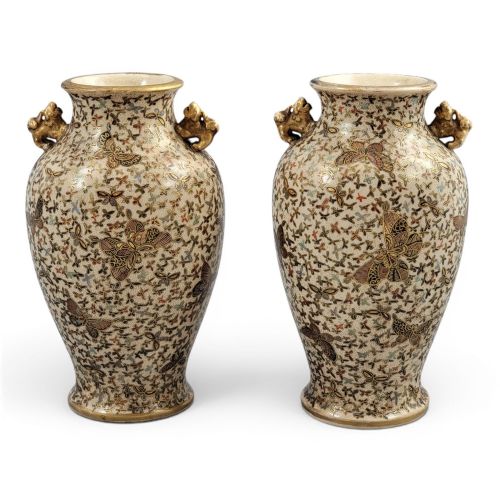
Satsuma ware pottery combines finely detailed enamel work with rich gilding, offering collectors intricate scenes from Japanese history and mythology.
Satsuma Ware Pottery
Satsuma ware pottery comprises earthenware vessels, bowls, vases, and figures originating primarily from Japan during the Meiji and Taisho periods.
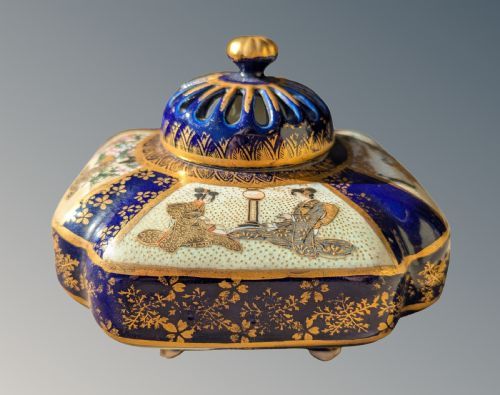
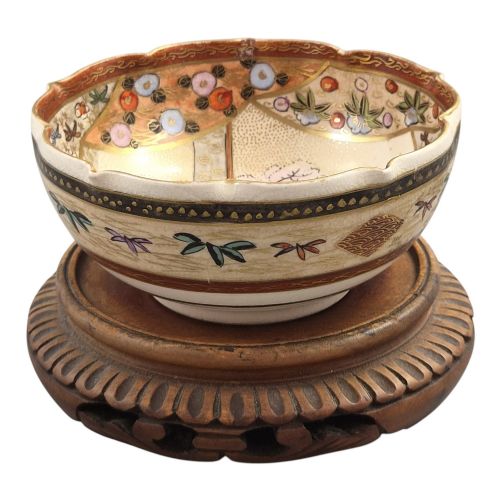
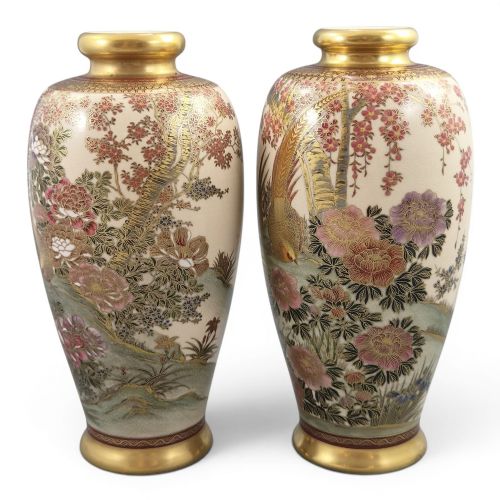
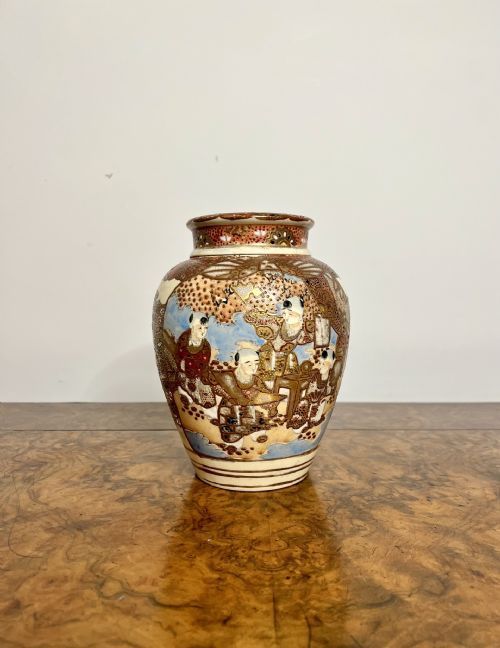
Buyers looking through these listings will commonly encounter decorative vases, incense burners, and small bowls painted with figurative processions, deities, or natural motifs.
The objects span production from the nineteenth century into the early twentieth century, reflecting both traditional Kyoto studio work and later regional output.
Materials and technique
These pieces are built from a pale earthenware body that is typically covered in a finely crackled transparent glaze.
Decorators applied rich enamel colours and gold leaf or gilt details by hand, frequently employing raised moriage techniques to give depth to robes and floral patterns.
Listings feature earthenware vessels adorned with enamel, gold leaf, and cobalt blue across the Victorian, Edwardian, and Meiji periods.
Variations in quality
The distinction between standard commercial output and exceptional studio pieces rests on the precision of the brushwork and the complexity of the figural grouping.
Early works signed by prominent Kyoto makers display a disciplined control over the gilt and enamel work that sets them apart from later or anonymous workshop pieces.
Kinkozan·Hotoda·Chosei·Nanzan·Shizan
The Satsuma Ware Pottery Glossary
- Moriage
- A decorative technique where slip or enamel is applied in raised dots or lines to create a tactile, three-dimensional surface effect on the ceramic body.
- Koro
- A traditional Japanese incense burner, frequently fitted with a pierced lid and supported on small feet.
- Okimono
- A small decorative figurine intended for display in a domestic interior.
- Shimazu mon
- The heraldic crest of the Shimazu clan, commonly appearing on Satsuma ceramics associated with the Satsuma domain.
- Rakan
- Depictions of enlightened followers of Buddha, often shown in large groupings on elaborate vases and jars.
Satsuma Ware Pottery: Frequently Asked Questions
What is Satsuma ware pottery?
Satsuma ware pottery is a distinct type of Japanese earthenware recognised by its creamy, crackle-glazed surface and intricate polychrome enamel and gilt decoration.
Originally produced in the Satsuma province of Kyushu, the style evolved significantly during the Meiji period when Kyoto workshops transformed it into highly detailed export art.
How do I identify Meiji period pieces?
Meiji period pieces are generally identified by dense, meticulous hand-painted scenes featuring figures, arhats, or thousand butterfly motifs combined with heavy gilding.
Many of these works bear artist signatures or studio marks on the base, connecting them to known kilns and decorators active between the late nineteenth and early twentieth centuries.
Are these pieces suitable for daily use?
These decorative items are generally intended for display rather than functional service, given the delicate nature of the enamel and gold leaf decoration.
Gentle dusting with a dry cloth is sufficient to maintain the surface without risking damage to the fine crackle glaze or raised details.
What does the crackle glaze signify?
The fine network of cracks across the glaze is a characteristic feature of the earthenware body, deliberately produced during cooling to create a textured background.
Over time, accumulated pigments or handling can darken these tiny fissures, which is a normal aspect of age for genuine nineteenth-century examples.