


Satinwood Marble Top Tables
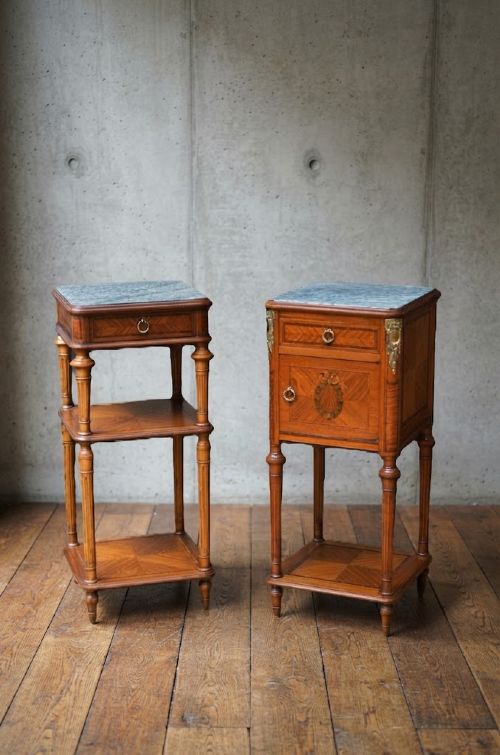
Satinwood marble top tables bring together cool stone and figured timber, offering practical surfaces that suit both grand reception rooms and quiet bedrooms.
Satinwood Marble Top Tables
Satinwood marble top tables encompass a varied group of furniture designed for utilitarian and display purposes, ranging from bedside cabinets and washstands to console tables and commodes. When searching for satinwood marble top tables, buyers encounter forms that span the nineteenth century, Edwardian era, and the early twentieth century.
The selection frequently includes bedside cabinets and washstands alongside occasional lamp tables and commodes. Pieces emerge from different regional traditions, including English makers and continental workshops following French revival styles.
Forms often incorporate useful compartments like cupboards and drawers beneath stone surfaces. These practical additions make the pieces adaptable for modern domestic interiors requiring both surface area and enclosed storage.
How they were made
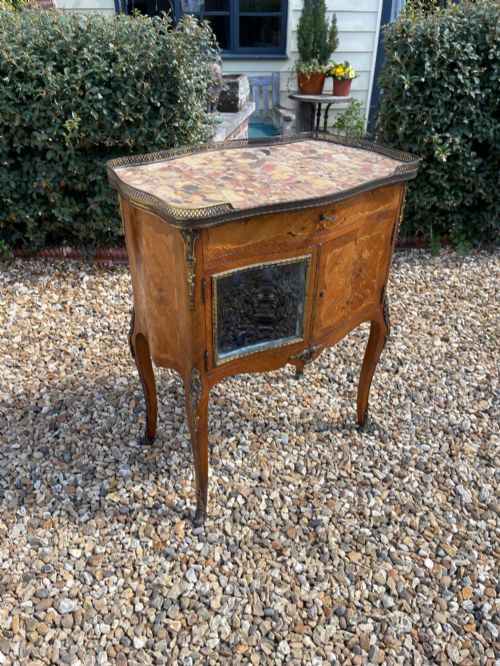
Construction relies heavily upon a foundation of timbers such as mahogany, walnut, or satin birch, overlaid with figured satinwood veneers and occasionally enhanced with parquetry or inlaid details. Ormolu, gilt bronze, brass, and glass elements appear as mounts or hardware, adding structural accents and decorative contrast to the timber carcasses.
Slabs of marble, including specimen marble varieties, form the durable upper surfaces designed to withstand moisture and daily use. Workshops shaped these stones to fit the contours of commodes, washstands, and bedside tables precisely.
Several pieces double as nocturnal sanctuaries for small belongings, housing everything from bedside candles to early morning water jugs.
What varies in quality
Distinctions in quality rest upon the selection of timber veneers and the intricacy of the underlying cabinetwork. Finer examples display carefully matched grain patterns and precise parquetry, whereas simpler pieces rely on plain surfaces.
The integration of the marble slab and the refinement of auxiliary materials such as ormolu mounts dictate the overall success of a piece. Superior execution is evident in the seamless fit between stone tops and wooden frames, alongside the handling of decorative details.
The Satinwood Marble Top Tables Glossary
- Satinwood
- A light-coloured, lustrous timber prized for its fine grain and reflective qualities. It was frequently used as a veneer on high-status nineteenth-century furniture.
- Ormolu
- Gilded bronze used for decorative mounts and accents on furniture. It provides a metallic contrast to timber surfaces.
- Parquetry
- Geometric patterns formed by small pieces of wood fitted together on a surface. This technique decorates tabletops and cabinet fronts.
- Guéridon
- A small French table supported by one or more central columns. The form developed during the seventeenth century and continued into later revival periods.
Satinwood Marble Top Tables: Frequently Asked Questions
How do I clean the marble top?
Use a damp cloth with mild soap for routine cleaning, avoiding harsh chemical cleaners that can etch the stone.
Dry the surface thoroughly with a soft cloth to maintain the polish and prevent water marks.
Are these tables suitable for bathrooms?
Many pieces functioned historically as washstands and incorporate marble surfaces intended to handle moisture.
Excessive humidity can affect antique wooden veneers, so stable room conditions remain preferable for preservation.
What is the difference between Edwardian and Victorian pieces?
Victorian examples tend to display heavier proportions and robust ornamentation typical of nineteenth-century revival styles.
Edwardian pieces often feature lighter constructions and simpler lines influenced by the turn of the century.
Can I use a bedside cabinet as a lamp table?
The dimensions and enclosed storage of bedside cabinets make them practical for holding lamps and books in living spaces.
Their flat marble tops provide stable surfaces that withstand daily use.