

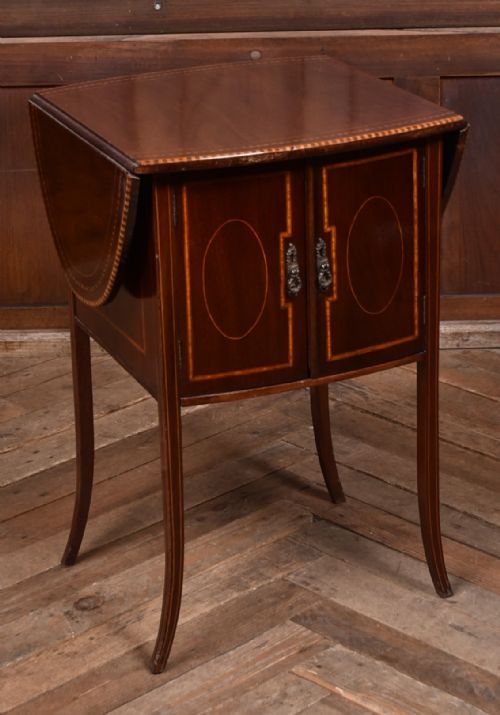


Satinwood Mahogany Side Cabinet
These satinwood mahogany side cabinet examples combine rich timber grains with delicate contrasting inlay, offering elegant storage and display surface for a refined interior.
Satinwood Mahogany Side Cabinet
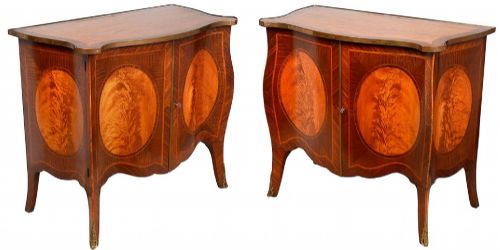
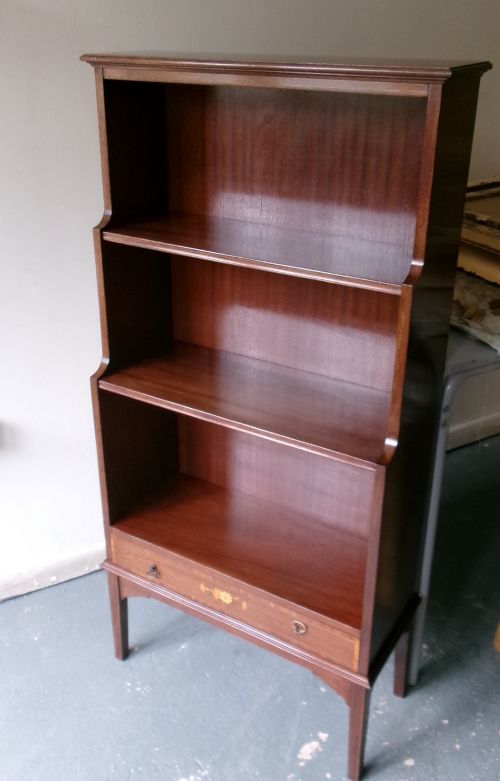
A satinwood mahogany side cabinet brings together deep reddish-brown primary timbers and pale golden contrasting veneers, creating striking visual contrast. These pieces emerge predominantly from the Edwardian era and the nineteenth century, drawing heavily on earlier eighteenth-century designs.
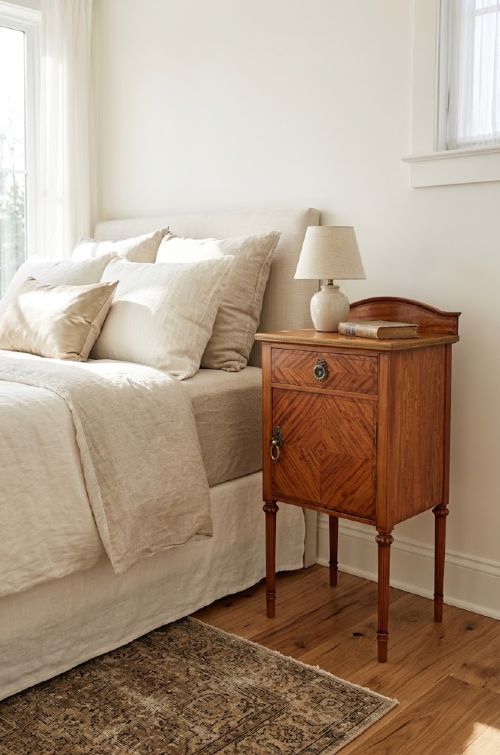
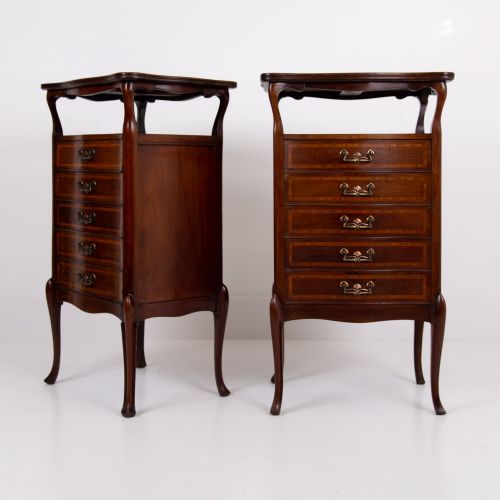
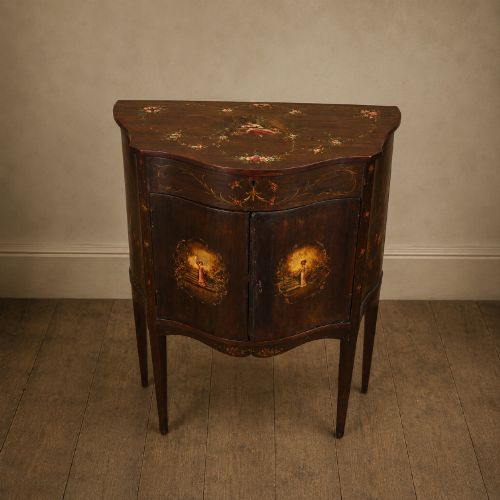
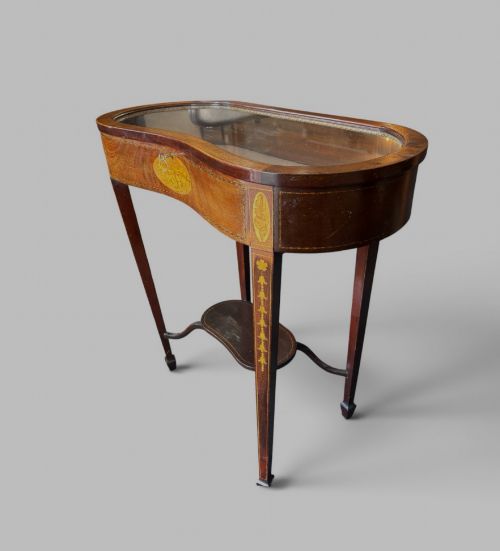
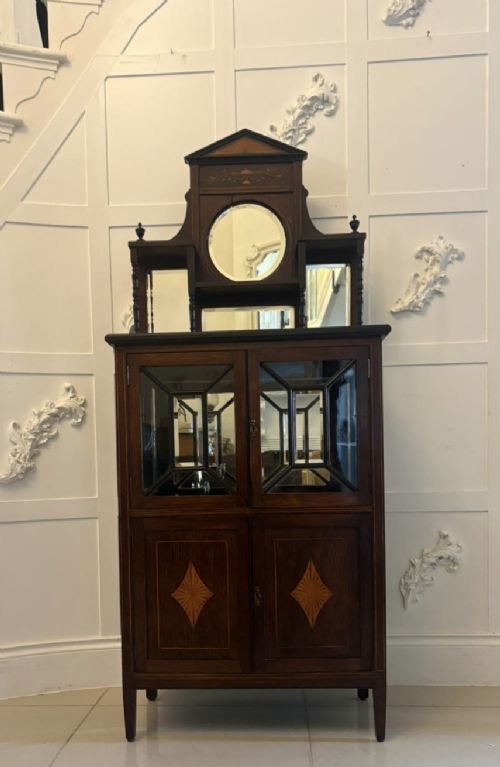
Buyers encounter forms ranging from serpentine commodes and bow-fronted cupboards to display cabinets and bedside tables. The Sheraton Revival style dominates the selection, accompanied by Adam Revival and neoclassical influences.
Originating largely as refined home furnishings, these cabinets often feature intricate marquetry, crossbanding, and fitted interiors designed to serve specific domestic functions while maintaining a decorative presence.
How They Were Made
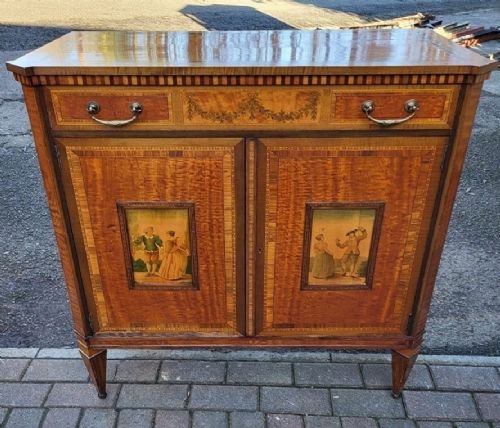
Cabinet makers utilised solid mahogany and supporting carcase timbers as a stable base for decorative veneers. Finely figured satinwood provided striking contrasting panels, whilst boxwood and painted details added linear definition to doors and drawers.
Craftsmen applied intricate inlay techniques, including marquetry pictorial motifs and geometric crossbanding, to break up large expanses of timber. Brass hardware, mirrored backs, and glass panels frequently completed the construction of display and storage pieces.
The listings span from the eighteenth century through to the Edwardian period, showcasing mahogany, satinwood, and boxwood materials.
What Varies in Quality
The sophistication of the timber selection dictates the visual impact of each piece, with highly figured mahogany grains and carefully matched satinwood veneers marking superior execution. Precision in the marquetry inlay and crispness of the painted decoration separate standard production from master craftsmanship.
Structural refinement shows in the handling of difficult shapes, such as serpentine fronts and demi-lune curves, which require expert timber bending and jointing. The integration of maker signatures, high-grade brass fittings, and finely fitted internal compartments further distinguish exceptional examples.
Maple and Co·Collinson and Lock·Edwards and Roberts·Howard and Sons
The Satinwood Mahogany Side Cabinet Glossary
- Satinwood
- A durable, lustrous timber with a golden-yellow sheen used extensively for veneers and stringing. It provides a bright contrast against darker woods like mahogany.
- Crossbanding
- A decorative border technique where veneer strips are laid perpendicularly to the surrounding grain. This frames drawer fronts and cabinet doors with precise geometric boundaries.
- Demi-lune
- A half-moon shape characteristic of commodes and side tables designed to sit flush against a wall. This profile became particularly popular during the Sheraton Revival period.
- Marquetry
- The art of forming decorative patterns using fitted pieces of different coloured veneers. Craftsmen assemble these pictorial designs to adorn tabletops and cabinet doors.
- Serpentine
- A gently curved cabinet front featuring a convex centre flanked by concave ends. This undulating shape demands advanced woodworking skill to execute properly.
Satinwood Mahogany Side Cabinet: Frequently Asked Questions
Where did people place these cabinets?
These pieces found homes in drawing rooms, hallways, and bedrooms as functional storage and display surfaces.
Demi-lune and serpentine variants typically stood against prominent wall spaces, while smaller cupboards served beside beds.
How do I spot Sheraton Revival work?
Sheraton Revival pieces draw on late eighteenth-century classical motifs, featuring symmetrical layouts and tapered legs.
They rely heavily on satinwood inlay, painted swags, and urn motifs rather than heavy carving.
What is the difference between Edwardian and Victorian pieces?
Victorian examples often display heavier proportions and rich, dark timber finishes with robust construction.
Edwardian interpretations tend toward lighter structures, brighter satinwood contrasts, and delicate neoclassical revivals.
How should I care for satinwood and mahogany?
Keep wooden furniture away from direct sunlight and heat sources to prevent timber splitting and veneer lifting.
Apply gentle, silicone-free furniture polish occasionally to maintain the natural lustre of the polished surfaces.