

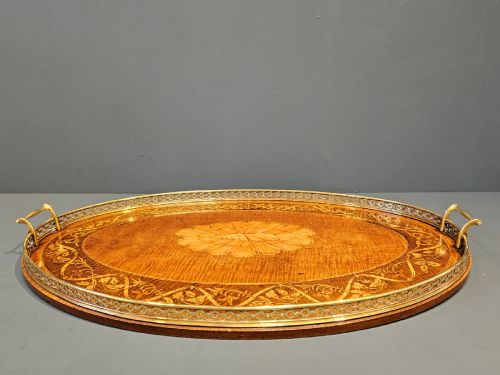
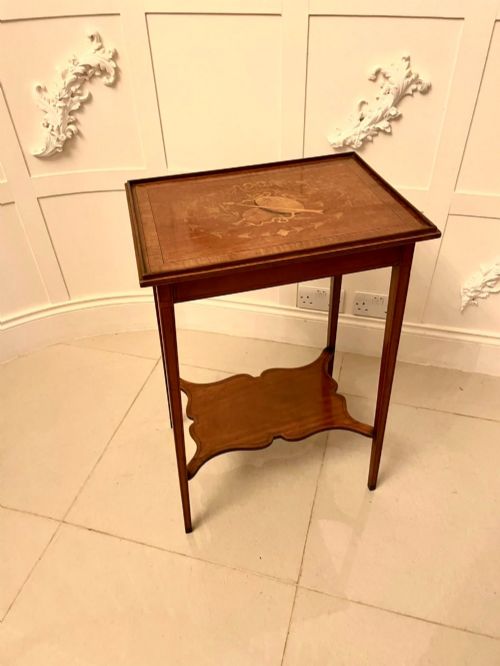
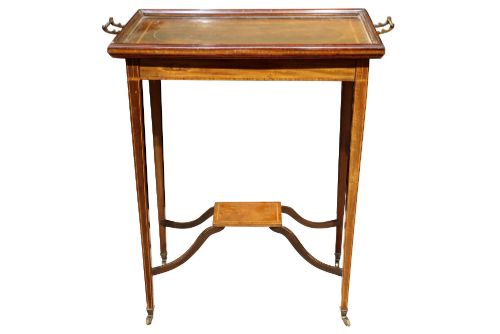
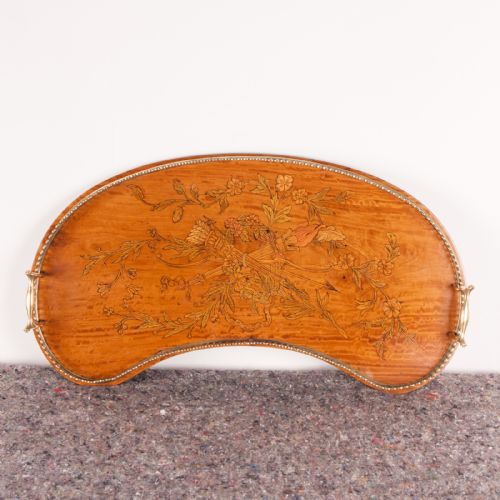





Satinwood Inlay Tray
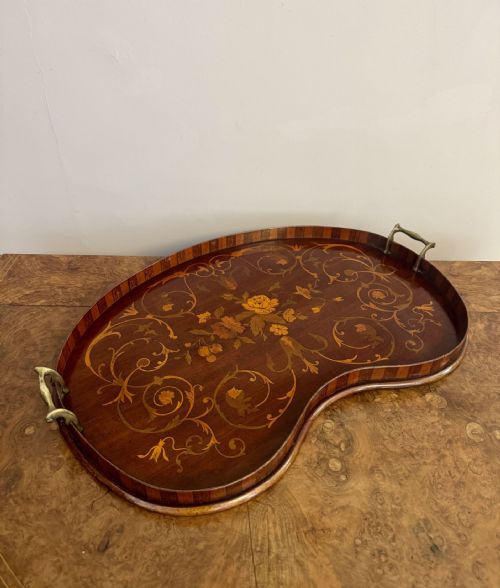
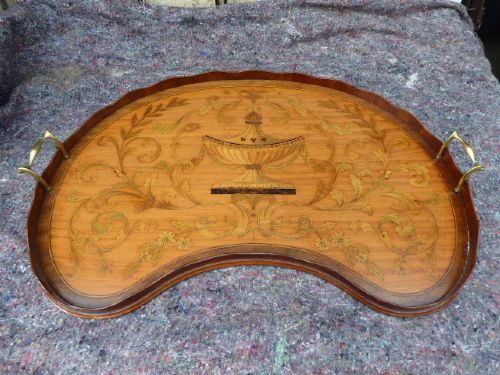
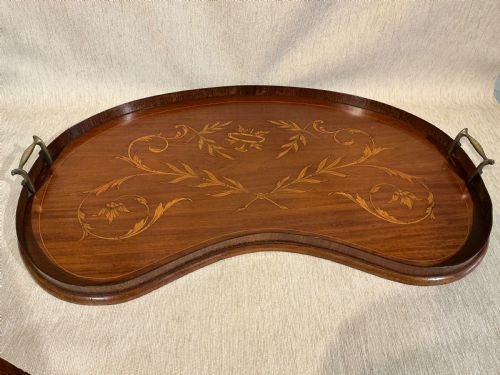
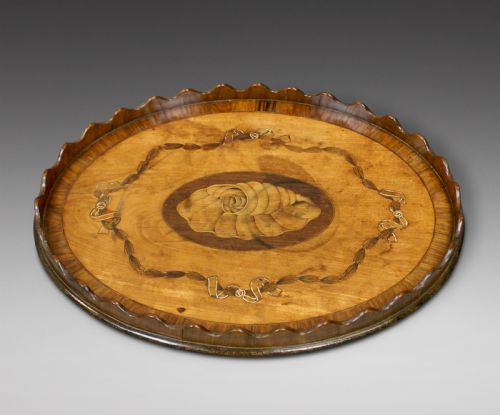
A satinwood inlay tray brings a bright, figured timber surface to tea service or display, combining rich contrast with precise classical ornament.
Satinwood Inlay Tray
Makers such as Edwards and Roberts, Waring and Gillow, and Rupert Favell produced these refined domestic objects utilising marquetry and geometric stringing. While many items function purely as serving trays, others integrate permanently into occasional tables, etageres, and pen stands with silver mounts and feet. The timber selection ranges from pale shimmering satinwood to deep reddish mahogany, frequently enhanced by shell, urn, or floral motifs.
Materials and construction
Cabinetmakers built these trays using solid mahogany or framed softwood carcases faced with fine wood veneer and satinwood inlay. Marquetry techniques allowed artisans to piece together contrasting woods like boxwood and ebony to form elaborate classical swags, ribbons, and central medallions. Brass galleries were then pinned or screwed around the perimeter to secure glassware and porcelain during transit.
Surfaces received multiple layers of hand-rubbed polish to protect the delicate grain structure and accentuate the natural chatoyancy of the satinwood. Hand-cut dovetails and pegged joints appear on related occasional tables and etageres, while smaller ink trays incorporate cast silver mounts and protective feet.
Satinwood Inlay Tray Retail Price Guide 2026
Typical asking prices for satinwood inlay tray among the pieces listed under this phrase on Sellingantiques today, from the lower quarter to the upper quarter. They describe what is for sale here now, not the wider market.
A few intrepid owners still use delicate Victorian trays to carry morning tea, risking minor heart palpitations over every clinking teacup.
Assessing quality and execution
Quality rests upon the crispness of the marquetry cutting and the choice of highly figured timber veneers. Finer examples display meticulous shading in the inlay work, where individual pieces of wood were scorched in hot sand to achieve three-dimensional depth in floral and urn motifs. Lesser pieces rely on stamped transfers or coarse, unshaded stringing.
The integrity of the brass gallery and the precision of the mitred corners also separate standard production from exceptional workshop output. Heavy brass handles fitted flush to the timber and substantial wood thickness without warping denote superior nineteenth-century and Edwardian craftsmanship.
Edwards and Roberts·Waring and Gillow·Rupert Favell
The Satinwood Inlay Tray Glossary
- Satinwood
- A hard, durable timber with a lustrous, golden-yellow sheen used extensively for veneers and banding. Its reflective surface catches the light differently depending on the viewing angle.
- Marquetry
- The art of creating decorative patterns on wood furniture by fitting together thin slices of various coloured woods. This technique requires immense precision to ensure tight joints between the individual elements.
- Brass gallery
- A pierced or spindled metal rail fitted around the edge of a tray or table top to prevent items from sliding off. These fixtures add both structural containment and decorative contrast to the timber.
- Etagere
- A set of open shelves or tiered trays supported by slender columns, used for displaying small decorative objects. They appeared frequently in Edwardian drawing rooms.
- Stringing
- A thin, linear inlay of contrasting wood used to outline panels, drawers, or table edges. It provides a neat, geometric border that frames the principal decoration.
Satinwood Inlay Tray: Frequently Asked Questions
How were satinwood trays used?
These trays served primarily for carrying tea sets, serving beverages, or presenting calling cards in formal drawing rooms. Their decorative surfaces also made them suitable for permanent display on side tables and etageres.
Over time, many transitioned from active service to decorative table-top accents, protecting delicate mahogany and satinwood finishes from heat and moisture.
Can I use an antique tray for serving?
Using them for light service remains possible, provided you handle the antique polish and fragile veneer with care. Moisture and alcohol can damage nineteenth-century finishes quickly.
Most owners prefer to use them for static display or dry tabletop organisation to preserve the delicate marquetry and brass galleries.
How do I date a satinwood tray?
Dating relies on stylistic clues, timber preparation, and construction methods visible beneath the base. Edwardian Sheraton Revival pieces often feature brighter satinwood and machine-milled brass, whereas Victorian examples tend to show heavier mahogany carcases.
Georgian and eighteenth-century items display hand-sawn veneers and simpler, highly restrained classical inlay patterns without later factory standardisation.
What is the difference between an etagere and a tray?
A tray is a portable serving surface with raised edges, while an etagere is a multi-tiered piece of occasional furniture with fixed shelves. Some hybrid forms feature removable trays resting on folding or permanent stands.
Both incorporate satinwood inlay and mahogany construction, blurring the line between functional tableware and occasional furniture.