
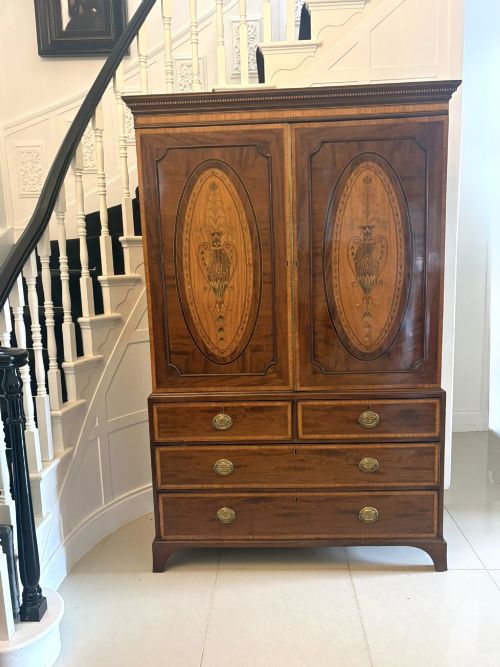
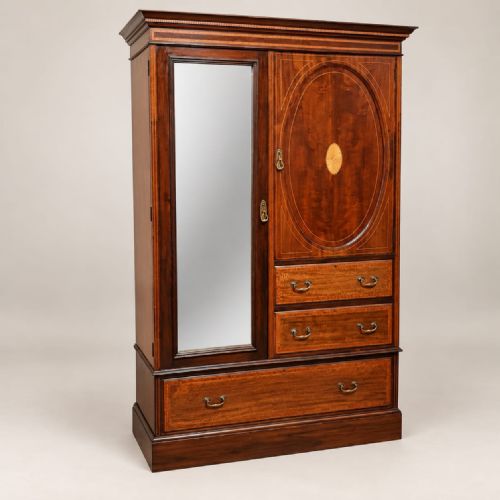
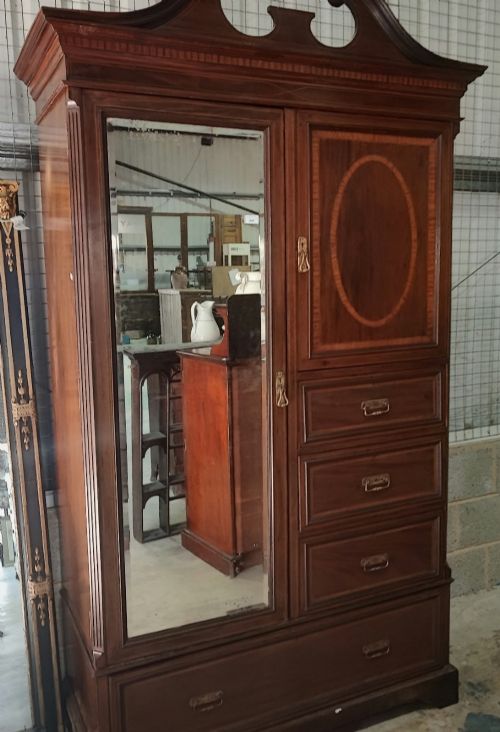
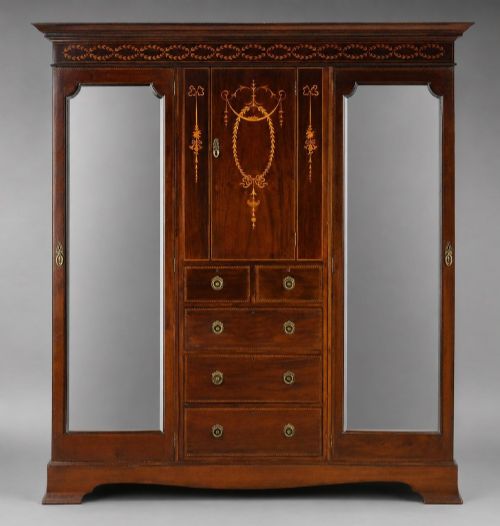
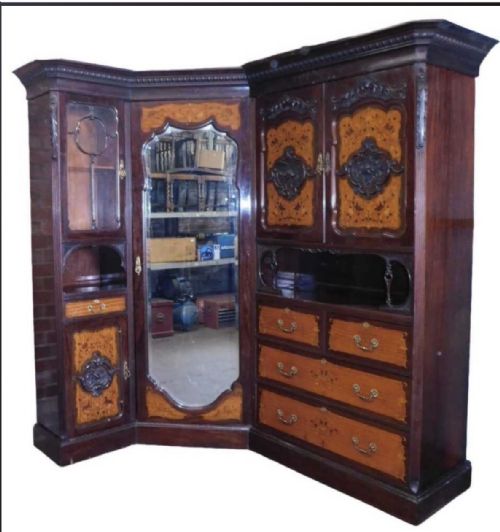


Satinwood Inlaid Wardrobe
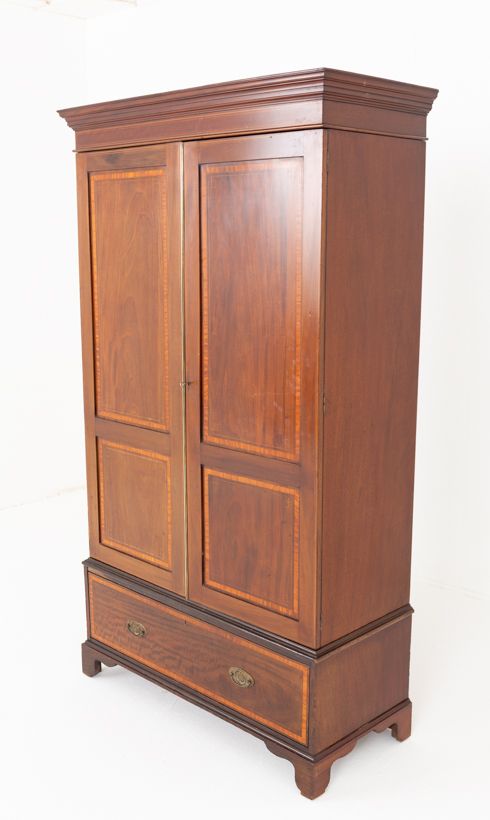
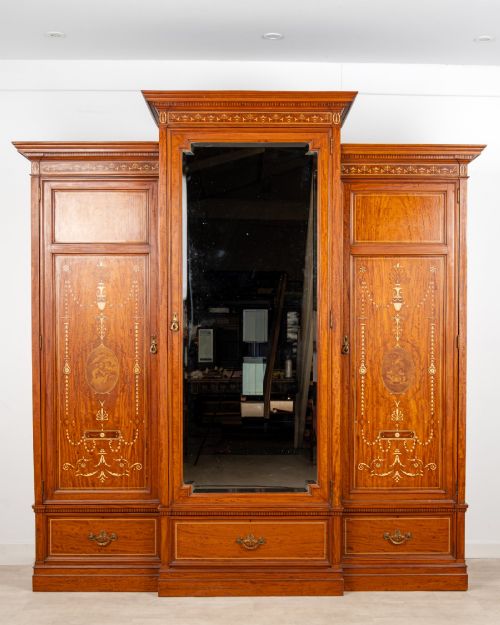
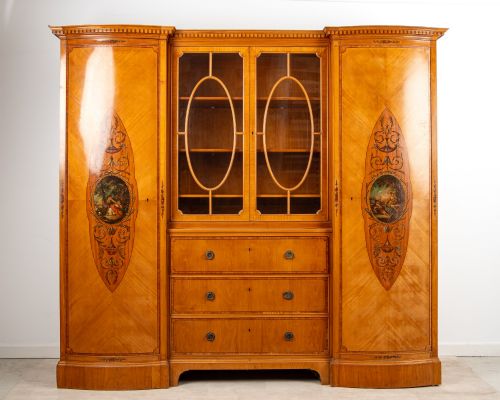
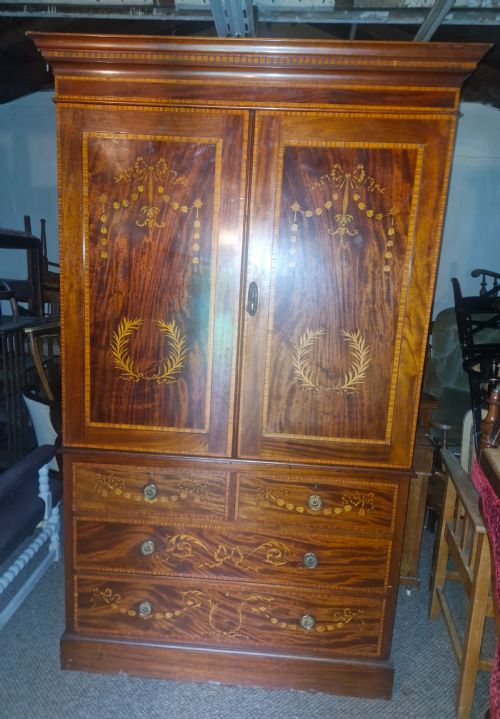
These satinwood inlaid wardrobe pieces combine figured timbers with fine linear marquetry to anchor a grand bedroom.
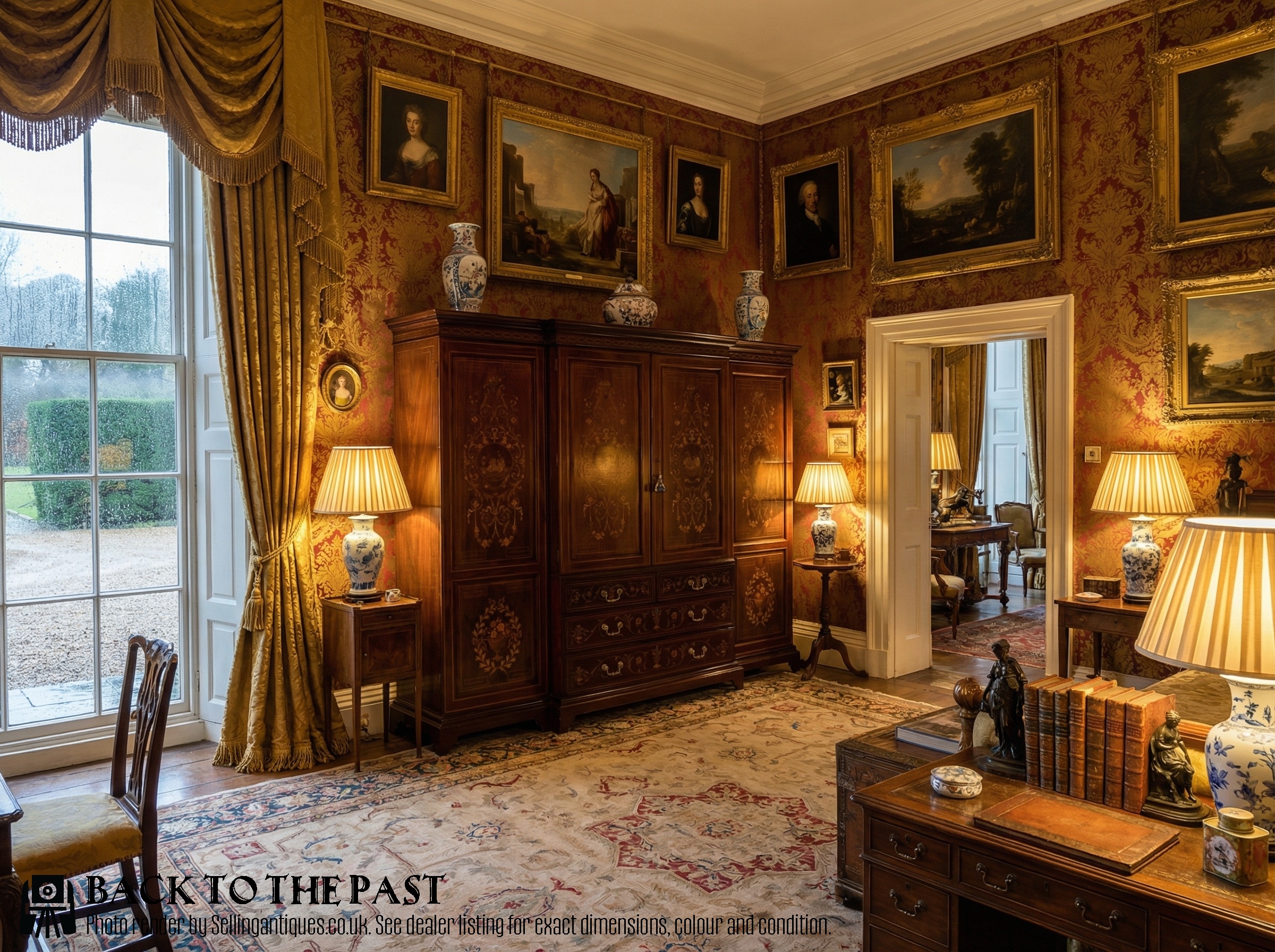
Satinwood Inlaid Wardrobe
When you search for a satinwood inlaid wardrobe, you encounter large storage furniture originating primarily from the Georgian, Victorian, and Edwardian eras. The selection spans expansive triple and four-door breakfront designs, compactum configurations, and traditional linen presses designed for domestic utility.
Edwardian interpretations and late nineteenth-century Sheraton Revival pieces dominate the pieces available to collectors today. These are supplemented by earlier George III gentleman's presses and larger breakfront armoires incorporating hanging space alongside internal drawers.
Materials and Construction
Cabinet makers built these wardrobes using a structural carcase of mahogany, rosewood, or solid satinwood, applied as thick veneers or solid panels. Secondary timbers provide internal stability for deep linen presses and complex compactum shelving.
Decoration relied on contrasting wood veneers, specifically boxwood and satinwood, cut and fitted into precise geometric banding or floral motifs. Brass hardware secures the doors, while glazed and bevelled mirror glass panels frequently form the central door sections.
Satinwood Inlaid Wardrobe Retail Price Guide 2026
Typical asking prices for satinwood inlaid wardrobe among the pieces listed under this phrase on Sellingantiques today, from the lower quarter to the upper quarter. They describe what is for sale here now, not the wider market.
The inventory spans the Edwardian, Victorian, and Georgian periods, utilising satinwood, mahogany, rosewood, and boxwood.
Assessing Craftsmanship
The distinction between standard commercial output and superior craftsmanship rests on the crispness of the boxwood inlay and the choice of primary timber figure. Richly figured satinwood combined with mahogany creates strong visual depth that plain timber surfaces lack.
Internal configuration also separates basic two-door wardrobes from elaborate compactum units fitted with original sliding trays, linen slides, and graduated drawers. Fully fitted interiors by known makers command attention through integrated carpentry rather than superficial decoration.
Edwards and Roberts·Druce and Co·Waring and Gillow·Shapland and Petter·Maples and Co
The Satinwood Inlaid Wardrobe Glossary
- Compactum
- A multi-section wardrobe combining hanging space, sliding linen trays, and multiple internal drawers within a single unified piece of furniture.
- Linen Press
- A tall storage cabinet featuring upper sliding shelves enclosed by doors, positioned above a base of wider graduating storage drawers.
- Breakfront
- A cabinetry design where the central section projects forward from the flanking outer wings to create architectural depth.
- Marquetry
- The decorative craft of applying small pieces of varied wood veneers onto a structural carcase to form pictorial or geometric patterns.
- Sheraton Revival
- A late nineteenth-century design movement replicating the lighter neoclassical forms, satinwood banding, and tapered supports popularized during the eighteenth century.
Satinwood Inlaid Wardrobe: Frequently Asked Questions
How do I move a large wardrobe?
Most large wardrobes and compactums are modular pieces built to dismantle into distinct components for transport. The heavy cornice, central carcase, side wings, and base drawers separate to facilitate movement through historic doorways.
Professional installation ensures that structural joints and mirrored doors realign correctly upon reassembly in a new room.
What is a compactum wardrobe?
A compactum provides multi-functional bedroom storage by integrating hanging wardrobes, sliding linen trays, and drawers into one piece. These units maximise internal capacity while maintaining a single cohesive facade.
They often feature central mirrored doors flanked by panelled hanging compartments and internal compartments tailored for gentlemen's attire.
How do I date an inlaid wardrobe?
Dating relies on combining the underlying wood species, carcass construction techniques, and prevailing stylistic revivals. Georgian pieces show hand-cut dovetails and restrained banding, whereas Edwardian examples frequently use factory-cut veneers and extensive painted panels.
Maker stamps and stamps on brass locks or drawer linings provide further confirmation of the manufacturing decade.
Can I fit modern hangers inside?
Many antique wardrobes feature shallow internal depths because historical clothing was folded rather than hung on modern angled hangers. Some Edwardian and Victorian pieces offer adequate depth for standard hangers, while older Georgian presses require careful measurement.
Owners sometimes adapt internal wooden hanging pegs or rails to accommodate contemporary garments without altering visible exterior surfaces.