


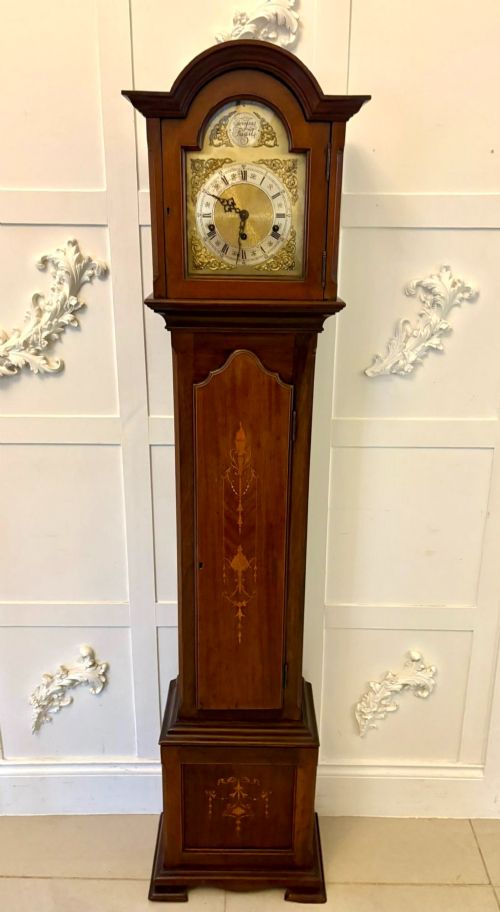
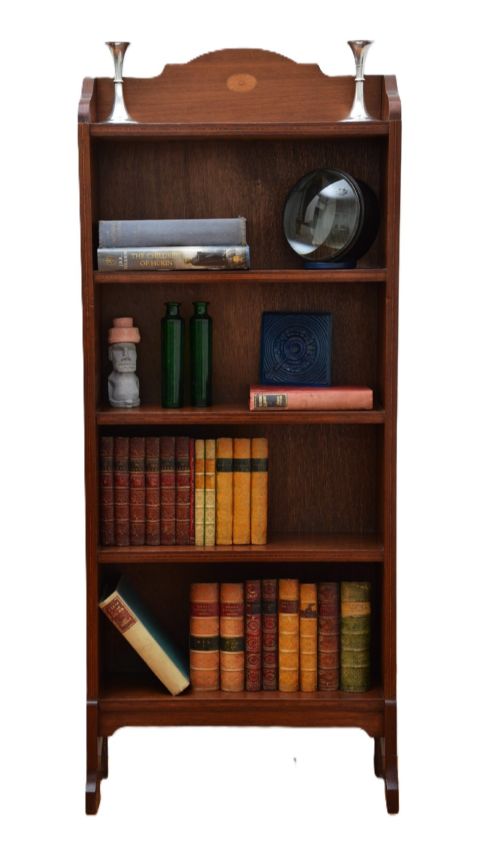
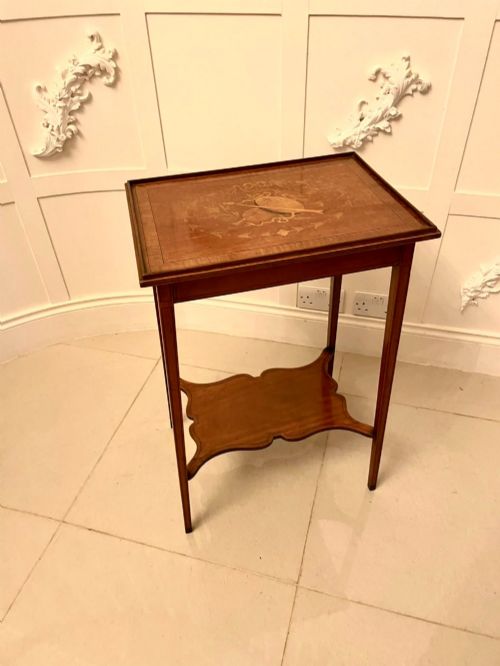
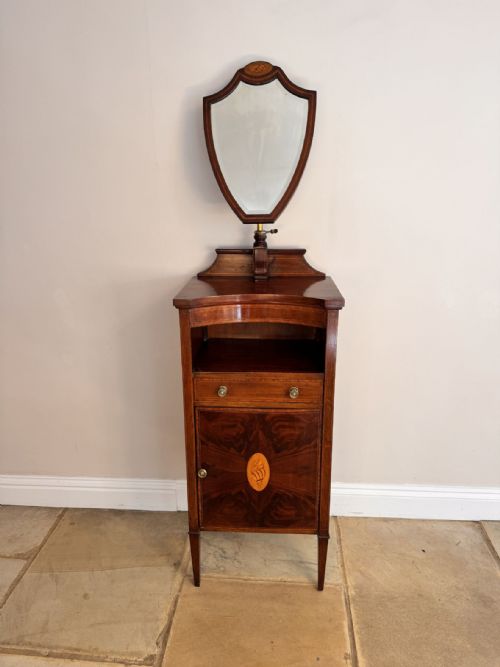
Satinwood Inlaid Stand
A satinwood inlaid stand brings together polished light woods and delicate marquetry from the Georgian, Victorian, and Edwardian eras.
Satinwood Inlaid Stand
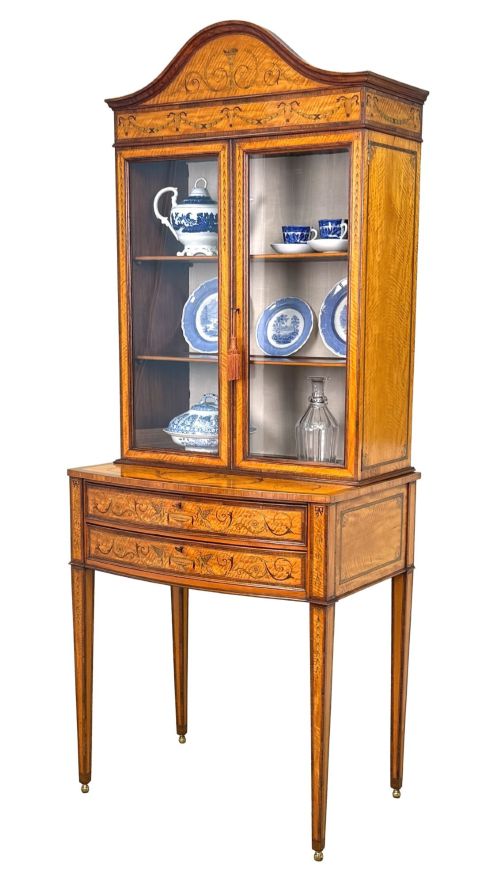
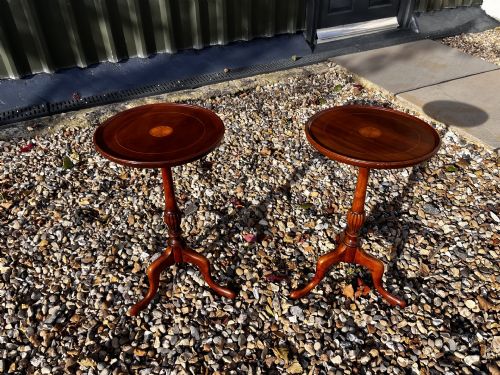
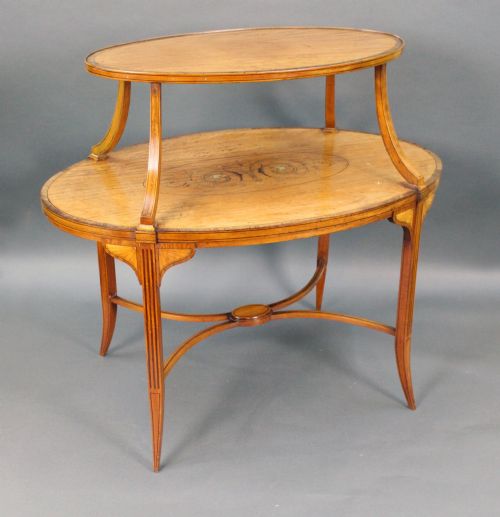
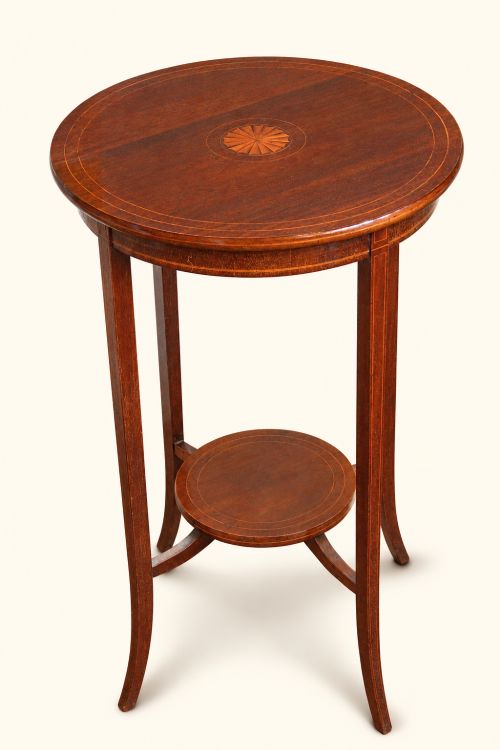
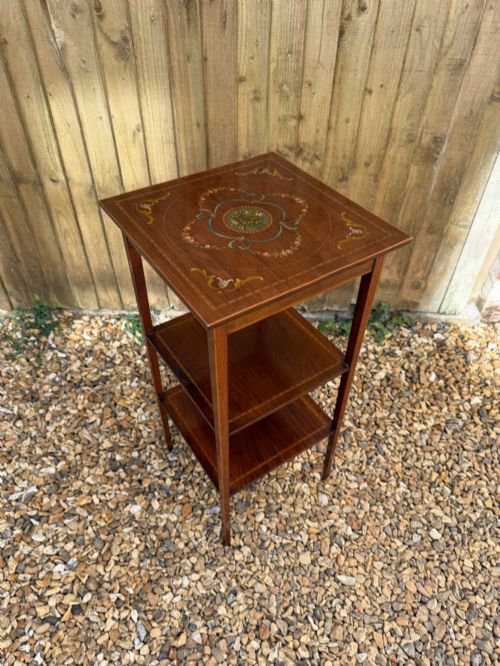
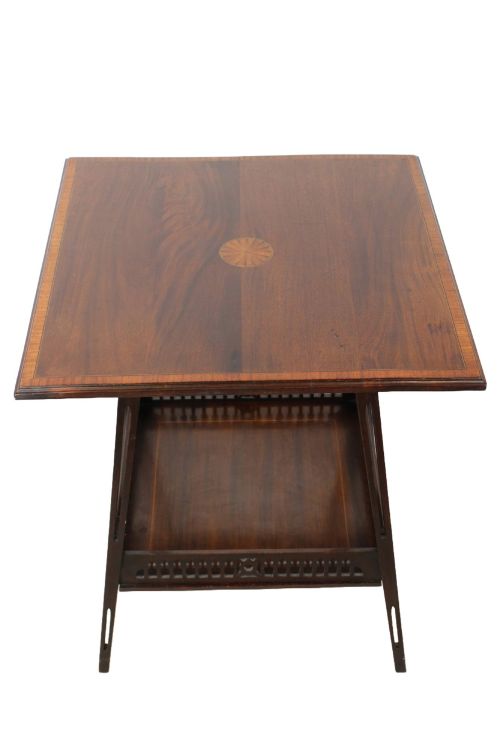
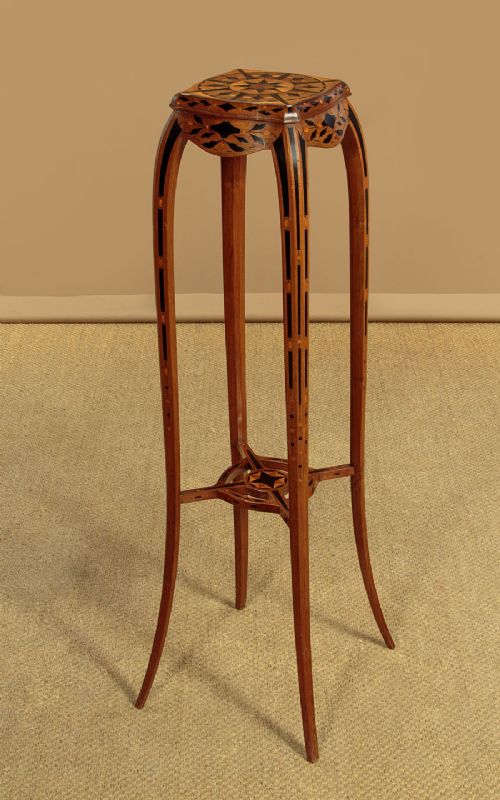
A satinwood inlaid stand encompasses occasional tables, lamp tables, torchere stands, and jardiniere supports designed to hold decorative objects or assist in daily domestic life. These pieces emerge predominantly from the Edwardian period, the Victorian era, and the 18th and 19th centuries, reflecting the enduring popularity of neoclassical and Sheraton Revival aesthetics.
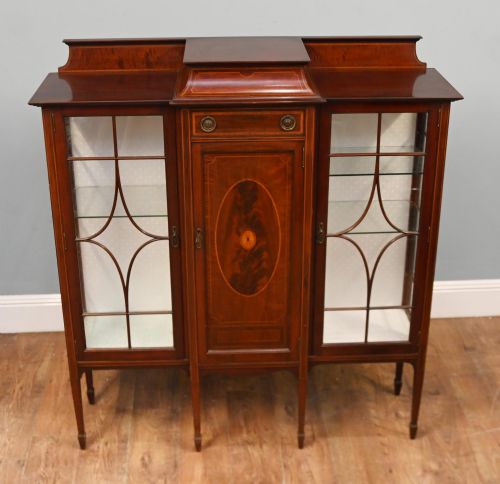
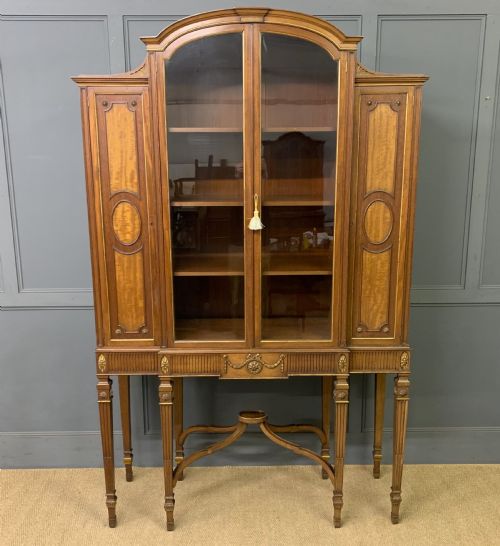
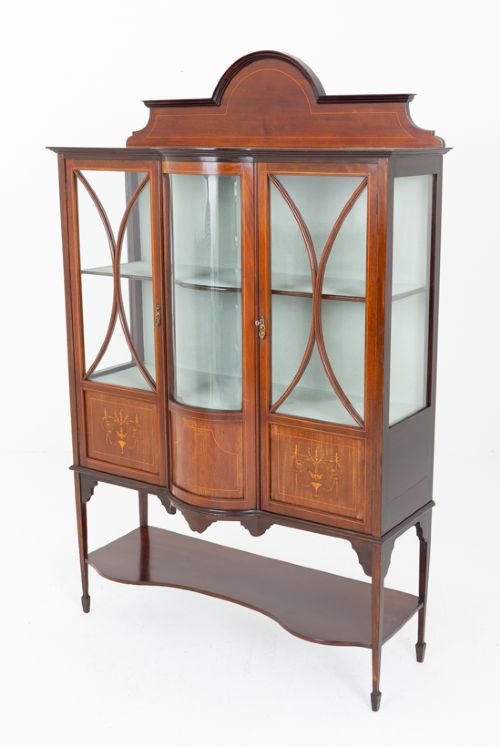
The most frequent iterations encountered on this page include compact occasional tables, tiered jardiniere stands, and urn stands intended for display in drawing rooms and parlours. Cabinet on stand forms also appear, combining elevated display spaces with structured storage compartments supported by slender legs.
Materials and construction
Cabinetmakers utilised dense hardwoods such as mahogany and walnut as foundational carcass materials, applying figured satinwood veneers and contrasting borders across visible surfaces. Marquetry decoration incorporated boxwood and other fine timbers to create delicate floral or geometric motifs set into the grain.
Joinery methods relied on precise cabinetmaking techniques to stabilise large panels of veneer against seasonal timber movement. Brass galleries, handles, and mounts were frequently added to secure edges and accent the polished timber surfaces.
Satinwood Inlaid Stand Retail Price Guide 2026
Typical asking prices for satinwood inlaid stand among the pieces listed under this phrase on Sellingantiques today, from the lower quarter to the upper quarter. They describe what is for sale here now, not the wider market.
Listings feature satinwood inlaid stands spanning the Georgian, Victorian, and Edwardian eras, constructed from mahogany, walnut, and exotic veneers.
Distinctions in quality
The measure of quality rests on the precision of the marquetry inlay and the choice of timber figure, where tightly grained satinwood and crisp boxwood banding command greater admiration. Finer pieces demonstrate seamless veneer matching across curved surfaces and robust structural joinery that withstands centuries of use.
Attribution to documented workshops or the presence of subtle structural refinements, such as hand-cut dovetails and cast brass galleries, elevates specific examples above standard commercial production.
Trevor Page and Co·Gillows·Waring and Gillow·Collinson and Lock·Edwards and Roberts·Wright and Mansfield
The Satinwood Inlaid Stand Glossary
- Satinwood
- A hard, dense tropical timber prized for its lustrous, golden-yellow sheen and smooth grain. It served as the primary veneer for high-status furniture during the Georgian and Edwardian periods.
- Marquetry
- The art of forming decorative patterns from small pieces of veneer applied to a wooden structure. Craftsmen cut contrasting woods like boxwood and rosewood to create floral or neoclassical motifs.
- Torchere
- A tall, slender stand designed to support a candlestick or lamp. These elevated pieces often featured circular tops and inlaid decoration along the shaft.
- Jardiniere
- A decorative container or stand intended to hold plants or flowers. In period furniture, these frequently incorporated lead or metal liners to protect the surrounding timber.
- Sheraton Revival
- A late 19th and early 20th-century design movement that reinterpreted the light, neoclassical forms of the 18th-century designer Thomas Sheraton. Pieces from this revival heavily feature satinwood and delicate inlay.
Satinwood Inlaid Stand: Frequently Asked Questions
What is a satinwood inlaid stand used for?
These versatile stands served varied domestic functions, from holding heavy decorative urns and table lamps to supporting trailing houseplants in formal reception rooms. Smaller occasional tables provided convenient surfaces for books and tea service.
Over successive generations, their roles shifted as interior fashions evolved, transforming functional holders into pure display furniture for porcelain and collectables.
How do I date a satinwood stand?
Dating relies on examining the secondary timbers used in internal construction, the style of the brass hardware, and the character of the veneer. Georgian examples display heavier architectural proportions, while Edwardian pieces often favor lighter Sheraton Revival aesthetics.
Construction marks and workshop labels underneath drawers or bases provide the most definitive chronological anchors for pieces from the late 19th and 20th centuries.
Where should I place a stand at home?
These decorative items suit corners, hallways, and drawing rooms where their figured timbers and inlaid details can catch natural light. Pairing a torchere with a corner or placing a lamp table beside seating highlights their compact proportions.
Direct sunlight should be avoided to protect sensitive satinwood veneers and natural polishes from fading over time.
How do I care for antique satinwood?
Maintenance requires gentle dusting with a soft, dry cloth and avoiding silicone-based polishes that can degrade historic finishes. Environmental stability is paramount, keeping pieces away from direct heat sources and drastic humidity shifts.
Occasional application of high-grade beeswax preserves the moisture and lustre of the timber without building up heavy surface residues.