
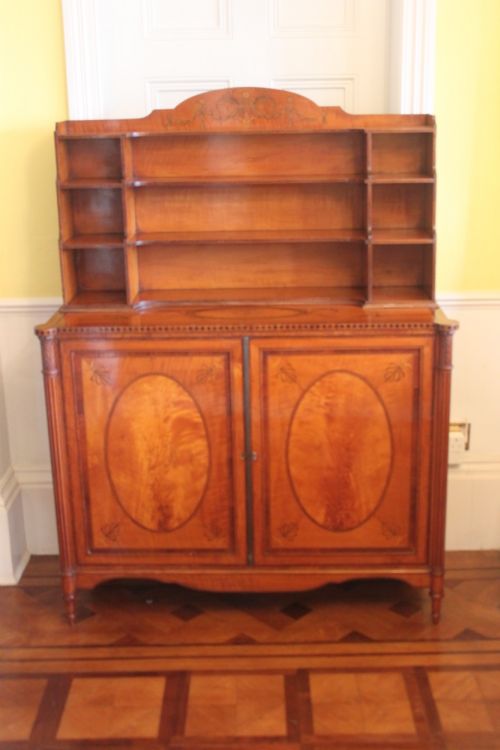

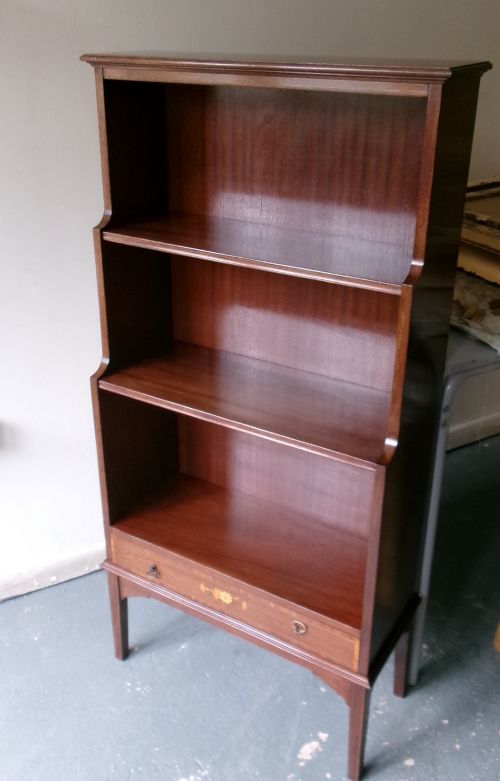
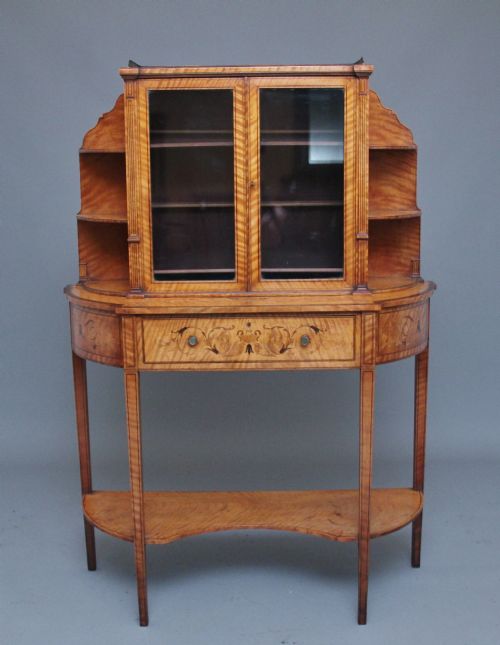

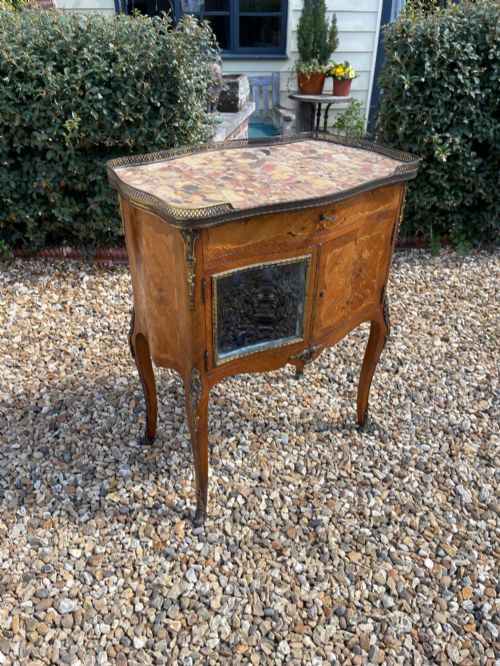

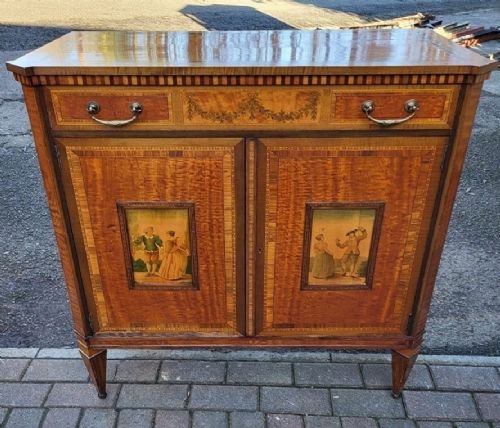
Satinwood Inlaid Side Cabinet
A satinwood inlaid side cabinet brings luminous timber and delicate marquetry into a room, offering both display space and concealed storage.
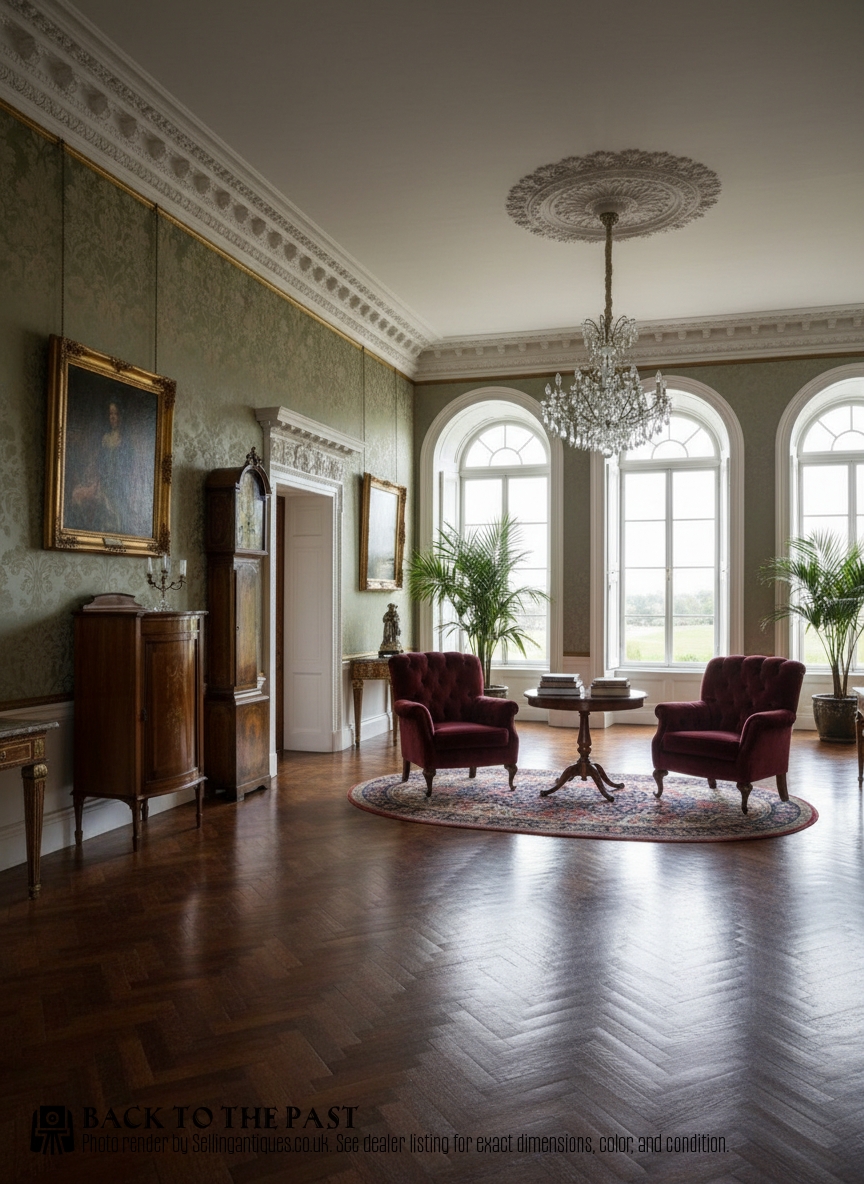
Satinwood Inlaid Side Cabinet
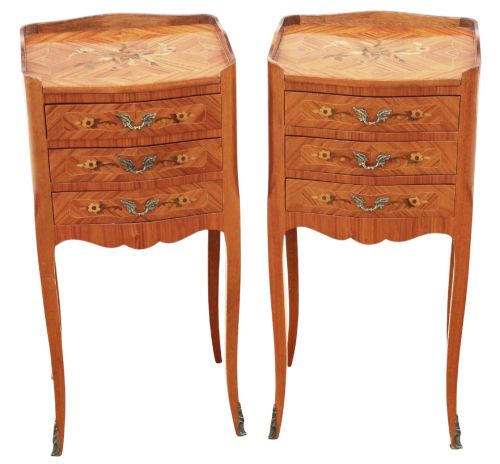
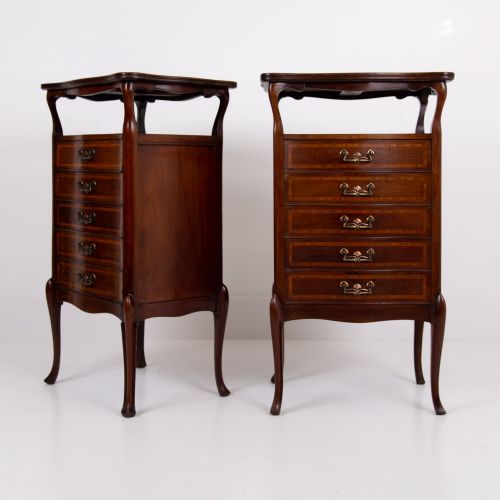
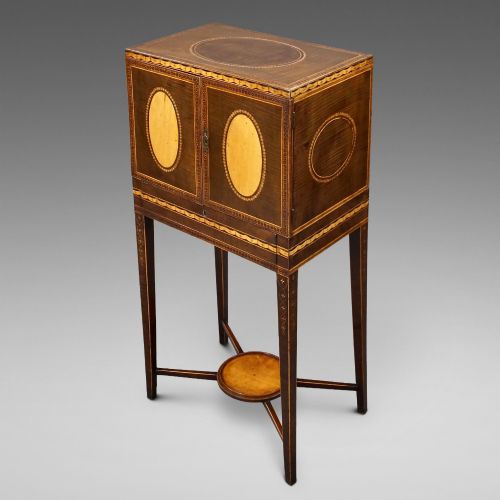
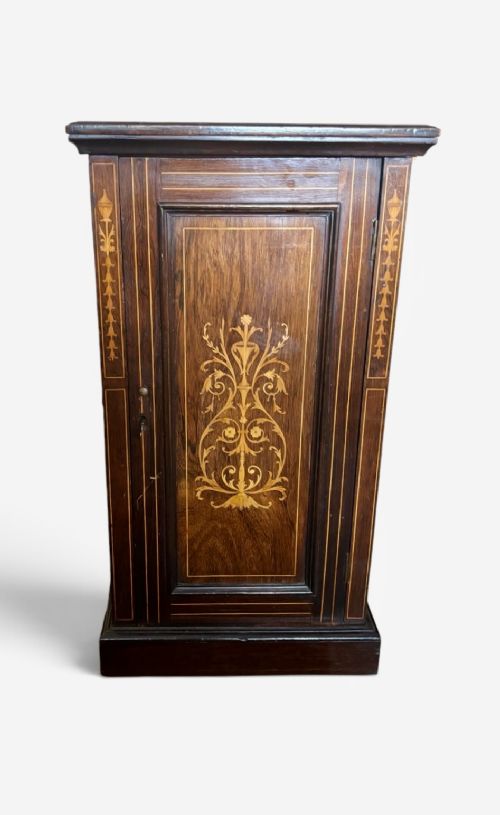
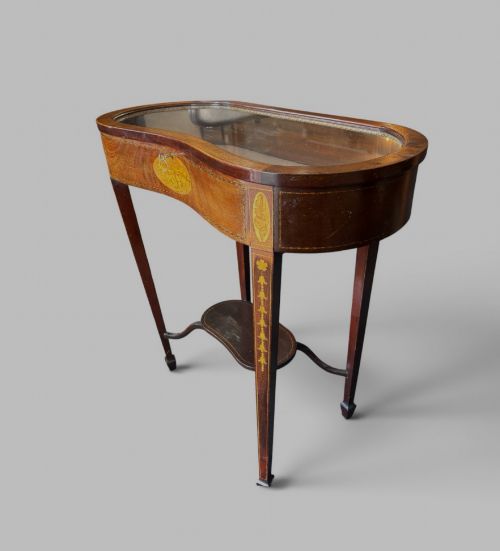
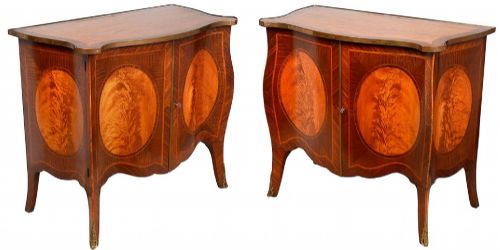
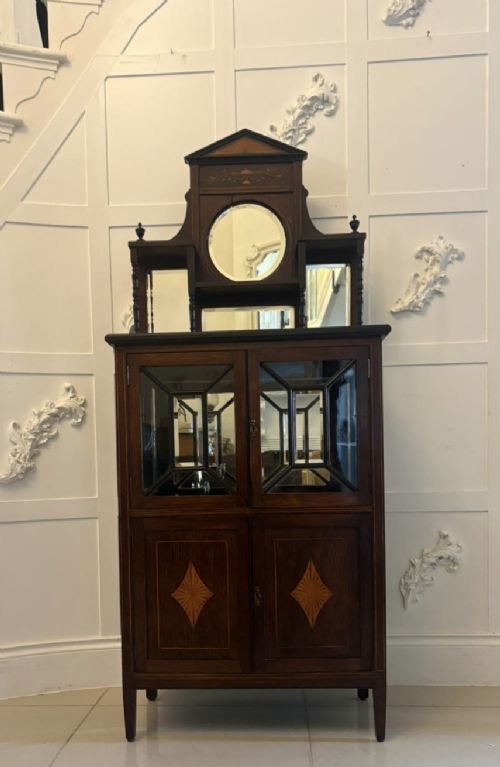
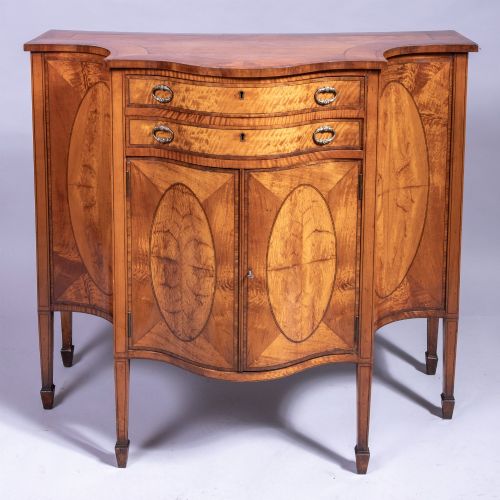
The physical forms vary from bow-fronted side cabinets and pier cabinets to demi-lune commodes and display cabinets with mirror backs. Many pieces combine mahogany or rosewood structures with satinwood veneers, accented by boxwood and delicate stringing.
Construction and Materials
Cabinet makers utilised dense secondary timbers like mahogany and rosewood as a sturdy carcase, applying figured satinwood veneers to the exterior surfaces. Marquetry and parquetry motifs demand precise hand-cutting of contrasting woods such as boxwood and harewood.
Fine brass hardware, gilt bronze mounts and mirrored glass often complete the construction, reflecting the prevailing Neoclassical and Revival tastes of the Georgian, Victorian and Edwardian periods.
Listings span the eighteenth century to the 1930s, uniting Georgian craftsmanship with Victorian and Edwardian revival movements.
Judging Quality and Execution
Quality rests upon the crispness of the marquetry and the choice of timber figure, where tightly curled satinwood and balanced grain patterns elevate a piece far above standard production. The fluidity of hand-cut inlay and the integration of crossbanding demonstrate superior cabinet-making skill.
Proportion and architectural harmony define the finest examples, particularly in Sheraton revival and George III pieces, where precise curves and restrained classical ornamentation govern the design.
Maple & Co.·Collinson & Lock·Gillows·Edwards and Roberts·Waring & Gillow
The Satinwood Inlaid Side Cabinet Glossary
- Satinwood
- A lustrous, fine-grained tropical timber with a natural golden sheen, utilised extensively for cabinet veneers and stringing.
- Marquetry
- Decorative patterns formed by fitting together contrasting veneers of wood or other materials onto a structural carcase.
- Crossbanding
- A narrow strip of veneer laid around the border of a panel so that the grain runs at right angles to the central design.
- Demi-lune
- A half-moon shape characteristic of commodes and side tables designed to stand flush against a wall.
- Parquetry
- Geometric mosaic woodwork used for floors or cabinet surfaces, created with small blocks of timber.
Satinwood Inlaid Side Cabinet: Frequently Asked Questions
What is a satinwood inlaid side cabinet?
A satinwood inlaid side cabinet is a storage and display piece featuring the pale, golden timber characteristic of eighteenth, nineteenth, and early twentieth-century British design.
These cabinets typically combine a mahogany or rosewood carcase with geometric or floral veneer work.
How were they used historically?
These cabinets served to display porcelain, silver, and decorative objects in formal drawing rooms and parlours.
Lower cupboards provided discreet storage for linens, books, or dining accessories.
How do I date a satinwood cabinet?
Dating relies on examining construction methods, timber choices, and stylistic revival cues such as Neoclassical or Sheraton motifs.
Georgian originals display hand-cut dovetails and period-specific secondary woods, whereas Edwardian and revival pieces often utilise standardised machine-cut elements.
How do I care for satinwood furniture?
Preserving satinwood requires placement away from direct sunlight and heat sources to prevent the veneers from drying and cracking.
Regular dusting with a dry, soft cloth maintains the natural lustre without heavy chemical polishes.